
There is something about 3am that feels different from any other hour. 2am still feels like night. 4am is almost morning. But 3am is its own kind of alone. Most of us have been there. Our brain starts working on lists we still have to accomplish and reminds us of something cringe-worthy that happened in the 7th grade. Then the somatic feelings start to creep in, the restlessness, the desperation, the intrusive thoughts that feel like they are going to crawl out of your skin. The minutes turn into hours, and it feels like nothing can help you settle.
I have experienced many nights like this. More and more, I have caught myself turning to AI tools to talk through what I am feeling or make sense of these moments. It was not until recently that I started thinking about how often we are all doing this, and what it actually means. And then I came across a post about OpenAI launching “Trusted Contact,” a feature that lets users designate someone to be notified if the system detects signs of a serious mental health crisis. I was surprised this feature existed outside of a mental health platform and made me think- when someone in crisis reaches out to one of these tools, are the steps we are taking actually enough to keep them safe?
It’s safe to say that clinicians haven’t reached a consensus on AI. Some of us are embracing it to reduce the administrative burden, while others refuse to let it anywhere near a session. The reality is that AI is here, it is growing, and it needs clinicians to help ensure it works as a support. Not a replacement, but a partner, a resource, a guide. I say this not just as a clinician, but as someone who has sought out support in a desperate time of need.
After the birth of my child, I found myself in a place I did not expect and did not recognize. I remember coming home from the hospital after nearly forty eight hours without sleep and feeling like I could lose consciousness at any moment. I remember a buzzing sensation in my mind and body. The world kept moving around me, but I could not connect to any of it. I wanted to be still, but I was needed. My body ached in agonizing pain, and it still did not feel like mine. I remember feeling like I had gone through something traumatic, similar to the dissociation I experienced after a car accident years before, that strange awareness that something has happened, but your brain cannot fully process it yet. Except this time, there was no stillness to recover in. There was a baby who needed me constantly.
The sleep deprivation was relentless, and my thoughts were not my own. I would sit up at night wondering what I had done. Wondering why I felt no joy. Feeling anger toward my partner, toward my baby, toward myself. There was no end in sight, and things kept getting worse. I became obsessed with every aspect of the baby, treating it like a puzzle I could solve. If I could just figure out the sleep, the feeding, the schedule, everything else would follow. I was so consumed by what was not working that I could not see what was.
I went looking for answers everywhere. TikTok. Google. Forums. AI tools. And every time the tools provided me with more information, I sank deeper. What I needed was someone to recognize that I was not okay and point me toward real support.
Looking back, even with my clinical background, I still did not fully understand what was happening to me until I was deep inside it. If I could not see it in myself, what happens to someone who has never been to therapy, who has no insight into what may be going on?
The danger with these tools is that they are agreeable by design; they offer comfort and ideas, and, without challenge, it can feel as though you are getting the support you need. The harm is that these tools are not yet able to identify when someone is sinking and needs support. As clinicians, we learn not to be agreeable, we learn to challenge and sit in discomfort. We ask the hard questions underneath the one being asked. That is the work these tools are not yet built to do.
I see real value in these tools for psychoeducation, brief coping tools, and triaging. But there are risks worth naming. Suicidality does not always look like what we expect. It can look like the functioning person at your job, the friend who seems to be doing better, the new mom who appears to be managing. Clinically, we know that risk can actually increase when someone starts to feel better, even before the darkness has fully lifted. That is when a plan becomes possible. What AI tools can unknowingly do is help someone in that window get organized, finances, logistics, and loose ends, across multiple conversations, with no single thread connecting it all. And when someone reaches a point of critical need, the resources these tools provide are often outdated, passive referrals with very low follow-through, another barrier to care.
So where do we go from here? A few things need to happen. First, there needs to be clear boundaries around what these tools should and should not do. Psychoeducation, brief coping tools, and triaging, yes. Treatment no. Second, if AI tools are going to become accessible to support someone’s mental health, they need to be able to distinguish between the severity of someone’s symptoms and their readiness for care. When I was postpartum, I needed a medication manager, not more information. And third, we need the clinical voices building these tools to reflect the communities using them. Psychology has a long history of Eurocentric frameworks that miss, and sometimes harm, the people they are meant to serve. Without diverse clinicians in the room, people who understand the layers of culture, identity, and lived experience that shape how someone asks for help, we risk repeating that same mistake at scale.
We came into this work for different reasons. Some through our own adversity and struggles. Others, because we felt a calling to help others heal. What we all share is a passion and genuine care for the people we serve. We understand that someone may not be ok, but cannot find the words. That comes from our years of training, lived experiences, and our understanding that humans are complex. Which is why we need to be in the room.
At the end of the day, this is about the person desperately looking for support at 3am. The new mom who is trying to figure out why her baby will not sleep. The person desperately searching for connection in their hardest moment. Without us, these people can get missed, and real harm can occur. These tools have real potential that can only be realized if the people who understand people are in the room helping shape it. That is us. That has always been us.
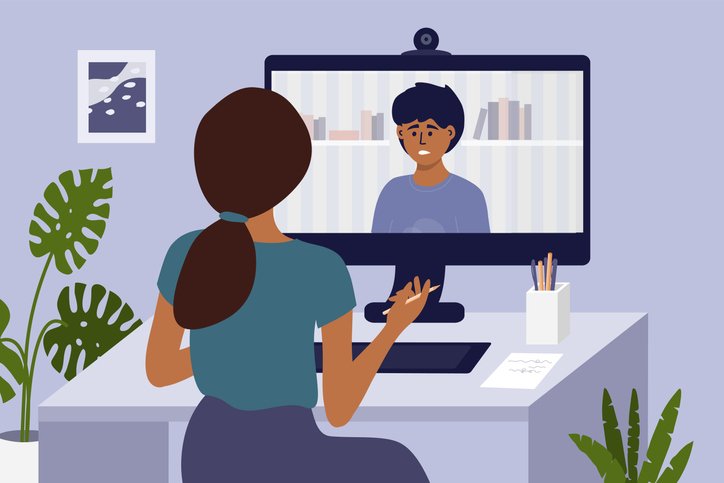
Photo credit: Olga Strelnikova, Getty Images
Dr. Josephine Mora is a first generation Latina and Licensed Marriage and Family Therapist with an EdD in Counseling Psychology. Licensed since 2017, her work has centered on supporting underserved and marginalized communities and breaking down barriers to mental health care. She has worked at the intersection of clinical practice and technology, including AI safety in mental health platforms, and is passionate about ensuring that the communities most often left out of these conversations are centered in how these tools are built.
This post appears through the MedCity Influencers program. Anyone can publish their perspective on business and innovation in healthcare on MedCity News through MedCity Influencers. Click here to find out how.
