
Listen to this article
Estimated 5 minutes
The audio version of this article is generated by AI-based technology. Mispronunciations can occur. We are working with our partners to continually review and improve the results.
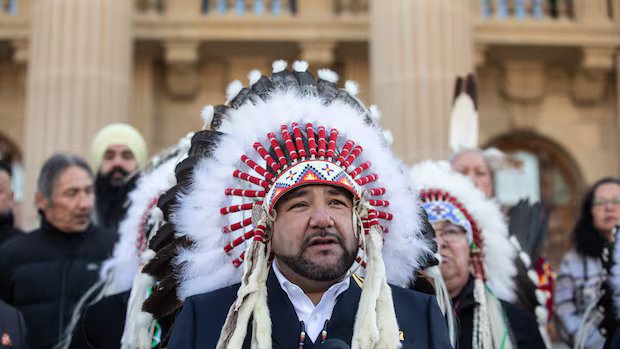
First Nations leaders in Alberta are turning to a campaign that saw record on-reserve voter turnout in an effort to tip the scales against the separatist movement during October’s provincial referendum.
Grand Chief Trevor Mercredi of Treaty 8 First Nations told CBC News they want to replicate the 2015 “Rock the Vote” campaign, which resulted in the highest on-reserve participation in a federal election since Elections Canada began calculating First Nations turnout in 2004.
“The Indigenous Rock the Vote was very successful,” Mercredi said. “We have to get our people out to vote and we have to campaign.”
Albertans will head to the polls Oct. 19 to answer 10 ballot questions, including whether Alberta should remain a province of Canada or commence the legal process of holding a second binding referendum on leaving the country.
One of the biggest challenges facing First Nations people is that many don’t have a civic address on-reserve or the required ID to vote, such as a driver’s licence.
“That’s the biggest problem right now, is making sure our people have the proper documents to move forward,” Mercredi said.
Tania Cameron of Niisaachewan Anishinaabe Nation in Treaty 3 in northwestern Ontario created the 2015 First Nations Rock the Vote campaign from her living room with no budget, sponsors or political affiliations.
Back then, she said her goal was to get rid of former Conservative prime minister Stephen Harper’s government, which happened in the 2015 federal election. Now, she’s offering to help First Nations in Alberta defend their treaty rights from the separatist movement.
“We need to unite and we need to take action today,” Cameron said.

In 2015, Cameron developed an ID toolkit by taking Elections Canada’s guidance and putting it into her own words, including ID requirement examples. She then hosted registration drives across the country to help get people on the voting list.
Anyone without the ID required to vote could sign up by using a confirmation of residency form that First Nations leadership can sign for band members, she said.
We can do it again: ‘Rock the Vote’ organizer
Ensuring people have the information they need to vote is only one task. The other is fuelling motivation.
Cameron said there needs to be community education in the months leading up to the Alberta referendum to explain what’s at stake, which will require volunteers and training.
It’s a big job, but Cameron said there’s a proven track record.
In the 2015 federal election, Alberta led on-reserve voter turnout. In 2011, 33.3 per cent of First Nations people voted on-reserve, according to Elections Canada. In 2015, the voting rate skyrocketed to 56.6 per cent.
“If it was done once, it can be done again,” Cameron said. “This could be huge.”

Liberal Ministers tried to win Indigenous support for the government’s ambitious major projects agenda, one day after the Assembly of First Nations rejected proposed changes to project approvals involving consultations and environmental protections.
Elections Alberta doesn’t track on-reserve votes or ballots cast by First Nations people off-reserve.
Edmonton has the second-highest Indigenous population in an urban centre in Canada, while Calgary has the fourth, according to Statistics Canada.
If a Rock the Vote campaign can mobilize the Indigenous voters in those cities along with allies to treaties, Cameron said there’s a good chance the referendum will end in their favour.
Mercredi hopes so.
“Our nations and our rights and our resources are not to be traded around,” Mercredi said.

The annual general assembly of the Assembly of First Nations (AFN) passed an emergency resolution on Thursday to protect treaty rights from threats posed by the Alberta separatist movement.
It states no province has the legal authority to alter, reduce or extinguish treaty rights, or the constitutional relationship between First Nations and the Crown.
Former national chief Matthew Coon Come declared Quebec chiefs, who faced a provincial separation referendum in 1995, stand in solidarity with Alberta chiefs
“Their fight is our fight,” Coon Come said. “Their struggle is our struggle.”
AFN National Chief Cindy Woodhouse Nepinak also spoke out at the meeting against separatism.
“They’re not taking any land with them,” Woodhouse Nepinak said. “That’s going to stay right here with First Nations people. This is our country and we say what happens.”
No matter how the vote goes on Oct. 19, Chief Kelsey Jacko of Cold Lake First Nations said communities will be ready to protect their treaties, which pre-date the creation of Alberta as a province.
“We’re going to be fighting in court,” Jacko said. “Nothing can go ahead.”
