
Kathryn Beaumont helped bring one of Disney’s most recognizable heroines to life, but her contribution to “Alice in Wonderland” extended far beyond the recording booth. As the animated classic celebrates its 75th anniversary, the actress is looking back on voicing Alice, physically performing scenes for Disney’s animators, and forming an unexpectedly comfortable relationship with Walt Disney himself. Her memories also offer a rare firsthand account of the studio’s creative process during a defining period in Disney animation history.
Beaumont discussed her experience during a 2017 conversation with radio host Joe Sibilia. The episode was recently re-aired on “Nostalgia Tonight with Joe Sibilia” to commemorate the 75th anniversary of “Alice in Wonderland.” The 88-year-old actress explained that Disney needed someone capable of making Alice sound authentically British without alienating American moviegoers.
“He was looking for a voice for Alice that was pleasing to both sides… that wasn’t too British for American ears and vice versa,” Beaumont said. “They decided that my voice fit the best for the role, and I was excited to be able to perform for him.”
Born in London, Beaumont was only a child when she was selected to voice Lewis Carroll’s curious young heroine. Disney’s search required more than finding an actress with the appropriate accent. Alice needed to serve as the audience’s emotional anchor while surrounded by the exaggerated voices and unpredictable personalities of Wonderland.
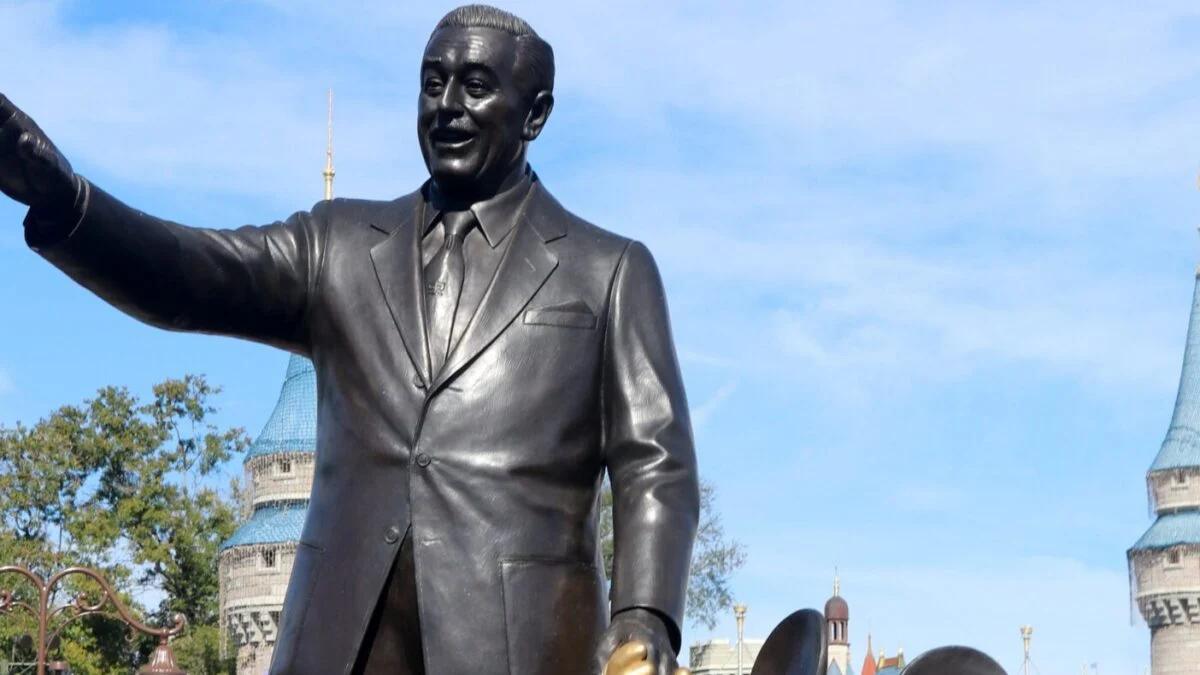
The Actress Shares Her Candid Impression Of Walt Disney
Although Beaumont was initially intimidated by the legendary filmmaker, she remembered Disney quickly putting her at ease. “He just immediately made me comfortable. I forgot my fear,” she recalled.
Disney’s behavior around the studio also challenged Beaumont’s expectations. Despite overseeing an expanding entertainment company, he remained visible and approachable to the actors and artists working on his productions. “You would see him walking down the hall. He’d come into the cafeteria at lunchtime,” she explained. “It was just this wonderful, casual, friendly relationship.”
Their interactions occasionally extended beyond the studio. Beaumont was invited to Disney’s home, where she experienced one of his most famous personal passions: trains. “I did ride Walt’s train,” she shared. “There were a couple of events at his house and you could go around the backyard on the little train track. That was an exciting experience.”
Disney’s backyard railroad, known as the Carolwood Pacific Railroad, reflected his lifelong fascination with trains and preceded the opening of Disneyland in 1955. Beaumont’s ride therefore placed her inside a personal piece of Disney history years before locomotives became an integral part of his first theme park.
Beaumont Did Much More Than Record Alice’s Voice
Beaumont’s influence on the finished character was not limited to Alice’s dialogue. The actress also performed scenes on camera so the animation team could study her expressions, posture, and movement. This live-action reference footage was never intended to appear in the completed movie. Instead, it gave the artists a human foundation from which to build a believable animated performance.
“They also wanted me to do what they called the live-action, that wasn’t for the audience, that was for the animators,” Beaumont explained. “They wanted to make sure they were able to make the human look very realistic with all the motions.”
That process makes Beaumont’s contribution particularly significant. Audiences are not merely hearing her voice when they watch Alice chase the White Rabbit or navigate Wonderland. Elements of her physical performance are also embedded in the character’s reactions and movements.
The technique did not mean animators simply traced everything the actress did. Her performance functioned as a visual guide that artists could study, refine, and exaggerate to fit the animated world.
Kathryn Beaumont Remembers Working With Comedy Legends
The young performer also worked alongside several established stars, including Ed Wynn, who voiced the Mad Hatter, and Jerry Colonna, who played the March Hare.
Beaumont admitted that she expected the famous comedians to behave like their eccentric characters even when the microphones were off. “They were so well-known, and I was in awe of both of them,” she said. “I expected, because they were comics, that they were going to be funny all the time.”
Instead, she discovered that both performers approached their work with considerable focus. “But they were both very serious in between,” Beaumont continued. “Yet, they made me feel very at home, and I just felt blessed to be able to work with them.”
‘Alice In Wonderland’ Led Directly To ‘Peter Pan’
Beaumont barely had time to step away from Alice before Disney placed her at the center of another animated classic. After finishing promotional work for “Alice in Wonderland,” she returned to the studio and began recording as Wendy Darling in 1953’s “Peter Pan.”
“As soon as I got back from [promoting ‘Alice in Wonderland’], they started right away on ‘Peter Pan,’” she recalled. “I was recording immediately, almost as soon as I got off the plane from doing promotion for ‘Alice in Wonderland.’”
She again supplied both the voice and live-action reference performance for her character, giving Beaumont a direct creative connection to two of Disney’s most enduring heroines.
The Walt Disney Company formally recognized that contribution in 1998 when Beaumont was named a Disney Legend. According to Disney’s official D23 biography, she continued voicing Alice and Wendy for various Disney projects and theme park attractions before retiring from voice acting in 2005.
