
Listen to this article
Estimated 5 minutes
The audio version of this article is generated by AI-based technology. Mispronunciations can occur. We are working with our partners to continually review and improve the results.
Alberta’s elections agency says a government decision to take a second run at redrawing provincial ridings will be a challenge, as the clock ticks toward an October 2027 vote.
A spokesperson for Elections Alberta, Robyn Bell, said in an email that the agency needs at least 1½ years, if not two years, to recalibrate its systems and election plans with new ridings.
But Premier Danielle Smith’s United Conservatives have thrown a wrench into that plan.
Smith told the house this week they will soon introduce a motion to revisit recently proposed boundary changes, with a fall deadline to get the work done.
The new review will be overseen by a UCP-majority committee of MLAs and would leave Elections Alberta with about one year before the next election, if the deadline is met.
“Reducing the preparation time will most certainly impact the cost of implementation, as [is] the case with most large-scale projects,” Bell said.
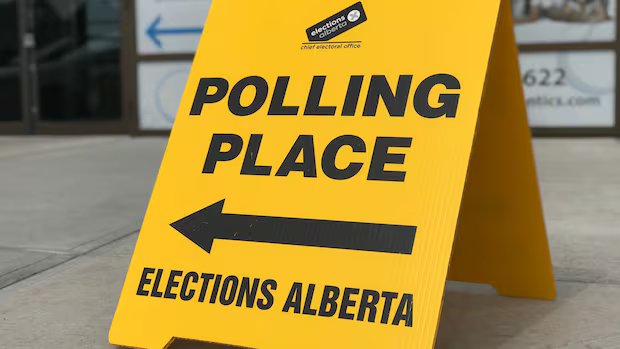
She said once it receives the riding maps, the agency needs to update its computer systems, internal election management software and public-facing websites while also planning for new polling stations and returning offices.
It also needs to produce new forms, maps and other documentation, and then educate the public on everything that’s changed, Bell said.
Alberta’s electoral boundaries have become a source of controversy as recent recommendations on new ridings from a bipartisan commission split along party lines and put forward profoundly different proposals.
The UCP-appointees on that commission formed a minority opinion. They protested the majority’s proposal to dissolve two rural ridings and add seats in Edmonton and Calgary to match the province’s shifting population.
The minority proposed creating more than a dozen rural and urban hybrid ridings and maintaining the rural seats the majority sought to nix.
The majority group, formed by commission chair and retired judge Dallas Miller along with two NDP-appointees, called the minority’s proposal indefensible and a clear attempt at gerrymandering.
Edmonton AM8:28Critics say parts of electoral boundaries commission’s final report constitute gerrymandering
The Alberta Electoral Boundaries Commission recently released its final recommendations, but it was accompanied by a starkly different minority report. The minority, backed by two UCP commissioners, proposed redrawing several urban ridings, combining them with rural seats in a move the majority calls gerrymandering. The majority is made up of the commission’s chair and two appointees from the Opposition NDP. Dave Cournoyer writes about Alberta politics on his Substack, Daveberta.
Gerrymandering is a U.S. political term for redrawing voting boundaries in order to favour one political party — in this case the UCP, which finds its bedrock support in rural areas.
Miller, in his own separate recommendation, urged the government not to move forward with the minority’s maps. If the province couldn’t accept the majority’s opinion, Miller suggested increasing the number of legislature seats by four, rather than two, to preserve rural representation, while using the majority report as a starting point.
Smith says that’s what the government is doing, and denies accusations from the Opposition NDP that she’s just taking a roundabout way of designing riding maps to rig the 2027 election in the UCP’s favour.

At an unrelated press conference Friday, Smith said Elections Alberta will get help.
“The office has made requests before to increase the budget for additional pressures that they’ve had,” Smith told reporters in Cardston, Alta., a town about 210 kilometres south of Calgary.
“Elections Alberta will get all the resources that they need to make sure that they can run a full and fair general election.”
But NDP justice critic Irfan Sabir said in a statement Friday that even risking the integrity of provincial elections shows the lengths Smith’s government is willing to go to stay in power.
“Of course the UCP government didn’t consider the time and resources it would take to implement their rigged boundaries map,” Sabir said.
“Election integrity matters but not for the UCP. This is who they are.”
On Friday, Smith pushed back on the criticism. The way the government’s motion is written implies that the minority report has been rejected, she said.
When asked for her opinion of he minority report, she pointed to Miller’s remarks and how he called it problematic. She didn’t elaborate.
She said Miller’s proposal to do a second review was an “elegant solution” and pointed to how the majority, too, had said they weren’t pleased to be reducing seats in rural Alberta.
“I think effective representation won out,” Smith said, explaining that she expects the additional seats to stop some already sprawling rural ridings from getting any bigger.
The additional seats will bring Alberta’s legislature to 91 members, up from 87. When the province legislated the start of the process in 2024, it only permitted the creation of two additional seats. That legislation also allowed the commission to look past municipal boundaries as a guiding principle when drawing new maps.
The new review the government is initiating will see a second bipartisan panel with the same membership structure develop new maps, using the same information and public hearing feedback collected by the first commission. This panel will report to the committee of MLAs.
