
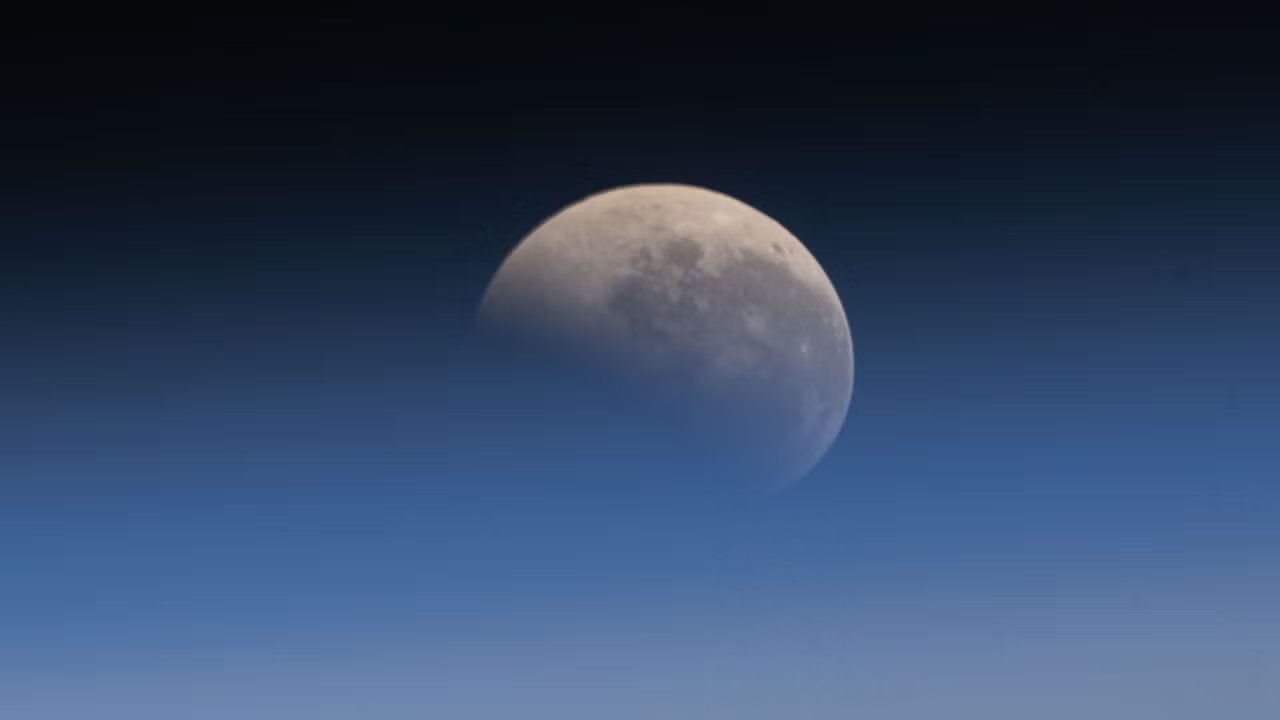
Don’t forget to look up next week: On Thursday, August 27, there will be a partial “blood moon” lunar eclipse.
In case you forgot, a lunar eclipse occurs when Earth comes directly between the moon and sun, casting a shadow that makes the moon appear red.
Here’s what to know.
What’s happening?
Last week, Europeans were treated to a full solar eclipse on August 12, while North Americans mostly missed out (though some caught a glimpse of a partial eclipse).
However, since eclipses come in pairs—next week, Americans are in for a treat. A pretty remarkable partial lunar eclipse will occur over North America, starting in the evening of Thursday, August 27 and going into the early morning hours of Friday, August 28.
Though partial, it’s practically a total lunar eclipse—with about 96% of the full moon’s surface “plunging into Earth’s shadow,” giving it what appears to be a deep orange or red color, according to BBC’s Sky at Night Magazine.
How to see the partial lunar eclipse
The partial lunar eclipse will be visible from much of North and South America, and parts of Europe and Africa, according to NASA.
The eclipse starts Thursday, August 27 at 9:23 p.m. ET, but the best viewing time, known as the “maximum eclipse,” when the moon is most covered, occurs Friday, August 28 at 12:13 a.m. ET.
Eclipse-watching tips from NASA
Can skygazers stare at the moon during the eclipse? Unlike with a solar eclipse, it is safe to view a lunar eclipse with the naked eye. However, people might want to use binoculars or a small telescope for the best viewing, according to our friends at NASA.
