
Listen to this article
Estimated 3 minutes
The audio version of this article is generated by AI-based technology. Mispronunciations can occur. We are working with our partners to continually review and improve the results.
A pilot immigration program to help rural communities find skilled workers for hard-to-fill jobs saw 800 people receive permanent residency in the first two months of this year — and hundreds of applications are streaming in for a limited number of available spaces.
The Rural Community Immigration Pilot, or RCIP, began in 2025. It allows 14 small communities across Canada to recommend people with skills and jobs in selected sectors for permanent residency.
Each community can select up to 25 fields as priority professions for their area — anything from health and manufacturing to skilled trades and transport.
Ward Mercer, RCIP program manager for the North Okanagan Shuswap region in British Columbia, said his region recommended 340 people for permanent residency through the program last year and 90 of them had received PR status as of Feb. 28.
He said the number of immigrants looking for permanent residency “massively outpaces” the number of spaces available, so the community had to be strategic when selecting which professions would be prioritized.
His region is seeking early childhood educators, auto mechanics, people in the construction trades and social workers.
“When we look at the labour market as a whole, we recognize that there were some areas where there [were] pre-existing foreign nationals who needed to be transitioned to permanent residents,” Mercer said.
“But we also noticed that there were vacancies and hard to fill positions that could be filled by foreign nationals because there’s no local labour force there.”
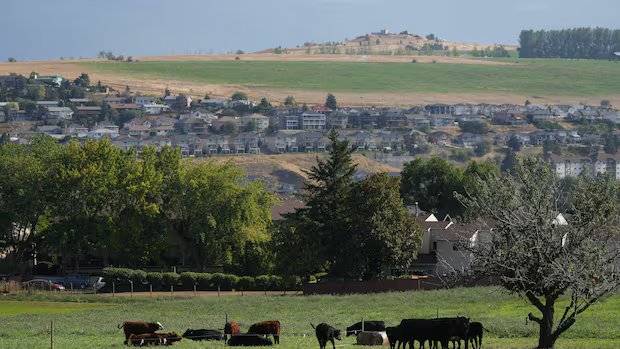
North Okanagan Shuswap had a population of about 136,000 in 2021, according to the census. Mercer said it has a bit of a retirement community feel, with “a huge portion” of the population not in the local workforce due to age.
With many young Canadians still struggling to find jobs — youth unemployment in May was at 13.4 per cent, more than double the national average — some have said Canada should focus its efforts on hiring more young people.
Demand driven by immigration cuts
RCIP is one of six economic immigration pilots. The others include one seeking francophone immigrants for communities outside Quebec, one looking to get francophone international students to stay after graduation, and separate pilots for caregivers and agriculture workers.
Together, the six economic immigration pilots were allotted about 8,200 permanent residency spaces in 2026. A spokesperson for Immigration, Refugees and Citizenship Canada said the department doesn’t publish individual permanent residency targets for the various pilots.
While some communities are seeing demand in line with the number of residency spots available, bigger centres in provinces like B.C. and Ontario are seeing demand outstrip the number of spaces.
“We are on pace at this point to receive potentially over 7,500 applications at the end of five years. We can only recommend 330 to 350 people a year,” Mercer said.
He said that demand is driven in part by broader cuts to immigration, which have pushed many people looking to become permanent residents to apply under RCIP.
Mercer said that while his community has seen some highly qualified candidates come through the program, there is a human cost for those with a less certain pathway to life in Canada.
“People come here and they are begging to use this program, and there’s opportunity there for people to take advantage of them,” he said.
“I think it’s an interesting look at the knock-on impacts of federal policy down all the way to a regional level and a regional pilot.”
