
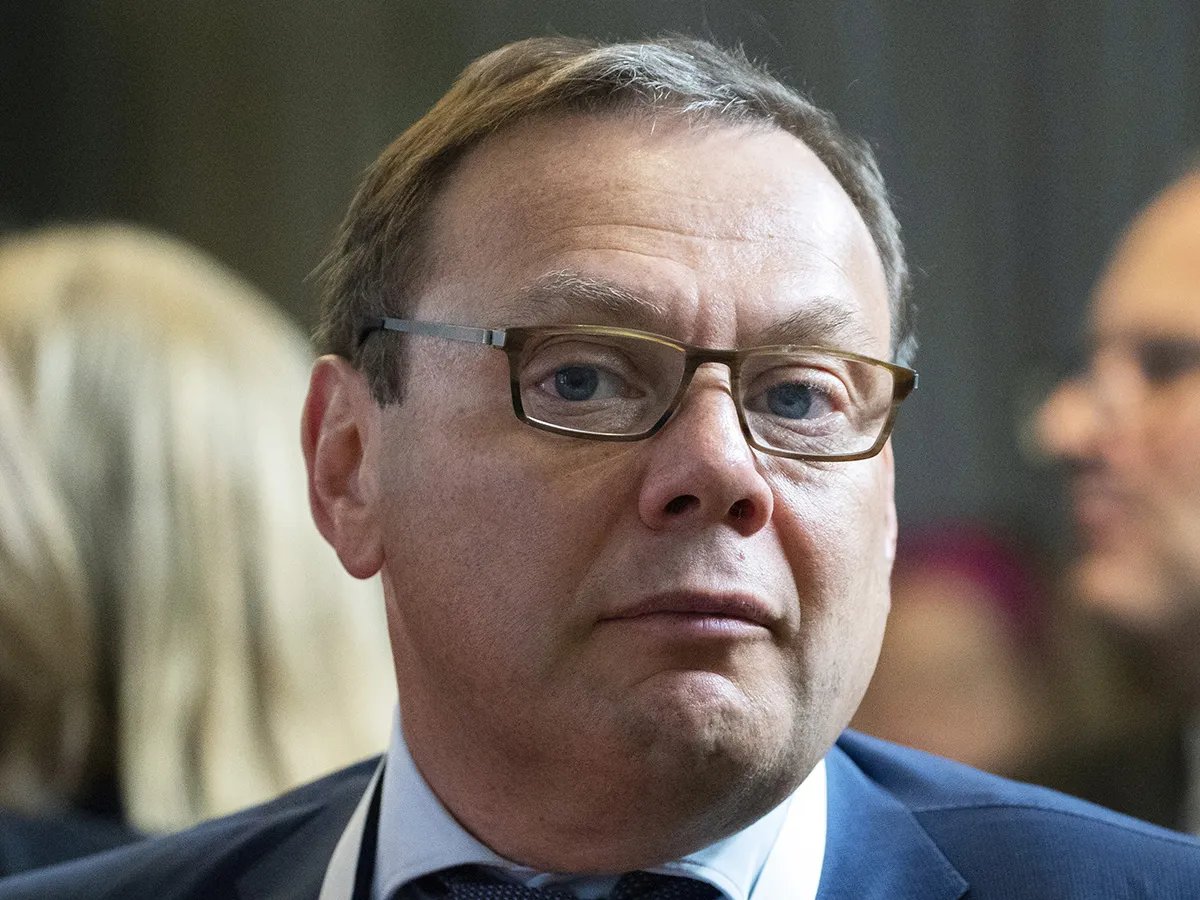
Two daughters of a Russian oligarch once considered part of Russian President Vladimir Putin’s inner circle have lost their court appeal to be removed from Canada’s sanctions list, a punishment in response to Russia’s war against Ukraine.
Laura Fridman, about 32, and Katia Fridman, about 29, say they are unfairly caught in the crossfire of international outrage over Russia’s invasion in 2022, a war, they told court, they do not support.
The women are the eldest of four children of Mikhail Maratovich Fridman, 62, once ranked the second-richest man in Russia as founder and main shareholder of Russia’s largest private bank and of a conglomerate that owned a chain of supermarkets, other retail outlets, a TV station, and huge industrial investments.
In court in Canada, the sisters said their father’s estimated net worth was $12.8 billion.
Their father was placed on Canada’s Russia sanctions list two months after Russia’s invasion. Fridman was identified by Ottawa as “a top Russian financier and associate of President Putin” and deemed an enabler of Russia’s war effort. Ottawa’s sanctioning included him on a list of “oligarchs” and “close associates of the regime.”
A month later, in May 2022, Laura and Katia Fridman were added to the list, as was their mother, Olga Ayziman. They were not added for their independent influence, power, or wealth, but for being family members of Mikhail Fridman.
The three women appealed to the Canadian government to be taken off the sanctions list. Ayziman was removed, likely because she had separated from Fridman in 1999 and divorced in 2005.
Ottawa refused to remove Fridman’s daughters, however, and they challenged the refusals in Federal Court in 2023. They lost their cases, with the court finding Ottawa’s decision “transparent, intelligible and justified and therefore reasonable.” The sisters took their objections to the Federal Court of Appeal.
At issue is being listed on Canada’s Russia Regulations under the Special Economic Measures Act, a law that prohibits anyone inside Canada and Canadians outside Canada from engaging in economic activities with those named on the list.
The sisters argued Ottawa should restrict its interpretation of a “family member” to relatives who retain “a sufficient link” with Russia or Putin, or “complicity” for Russia’s actions. The sisters said they have no such link. They also argued there is nothing suggesting they have assisted or are willing to assist their father evade sanctions.
The sisters had also declared opposition to Russia’s invasion as part of their request for delisting — but with caution. After launching their legal challenges in Canada, they applied for a confidentiality order from the court to keep their opposition to the war secret. The court denied the requests.
Federal Court of Appeal Judge Siobhan Monaghan, writing on behalf of a unanimous panel of three judges, did not agree with their appeal arguments.
The law requires “only that the Governor in Council be satisfied there are reasonable grounds to believe the person is a family member” of someone also on the sanctions list, says the judgment released Friday. No caveats are needed. Under the broad powers of the act, Ottawa’s decision to keep the sisters on the list is legally reasonable as they do not deny their familial relationship with Fridman, only declare independence from him.
Monaghan said the government’s reasons in the sisters’ case was explained to them by Ottawa: It meets the aims of the sanctions program by preventing a listed person from using family to evade restrictions, making life difficult for those “supporting or facilitating the Russian regime” to encourage an end to hostilities, and to denounce “Russia’s breach of international security.”
The sisters’ lawyer, Stephanie Desjardins, said they would not comment on the case or the family.
Mikhail Fridman was born in Ukraine when it was under Soviet rule. He also has Israeli citizenship. Fridman has not knowingly challenged his sanctions listing in Canada and did not participate in his daughters’ court challenges.
He has, however, been fighting in court in Europe against sanctions placed on him by the European Union. A court ruling in Europe in 2024 found insufficient evidence he had provided material support to the Kremlin.
Fridman stepped down from the board of the conglomerate he co-founded, called Alfa Group, and from other holding companies so the firms might avoid sanctions.
In 2016, he had been ranked as Russia’s second-richest man by Forbes, but by 2023, sanctions seemed to have taken a toll; he dropped to ninth place.
His wealth has since been recovering, according to the Forbes list of the world’s richest people. As of this month, the publication estimated his net worth at US$16.5 billion, up from US$11.8 billion in 2022, currently ranking him as the 171st richest person in the world.
News reports quoted a letter Fridman sent soon after Russia’s invasion to the staff of one of his international companies saying: “I am convinced … that war can never be the answer. This crisis will cost lives and damage two nations.”
• Email: ahumphreys@postmedia.com | Twitter: AD_Humphreys
Our website is the place for the latest breaking news, exclusive scoops, longreads and provocative commentary. Please bookmark nationalpost.com and sign up for our newsletters here.
