
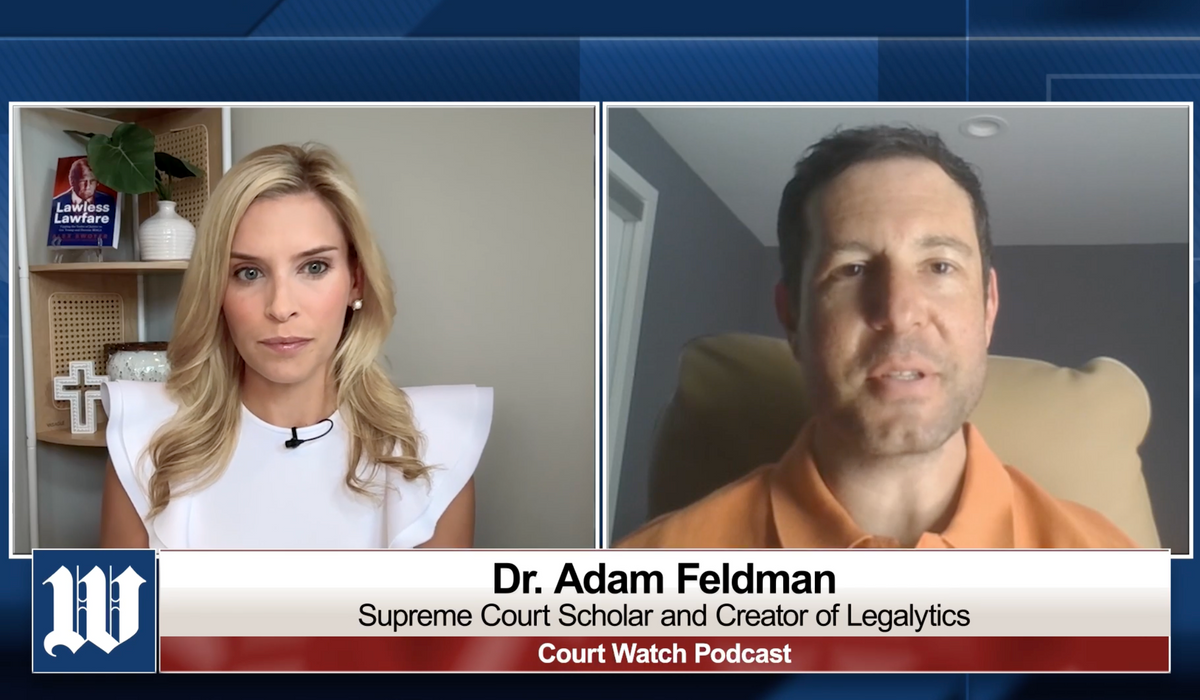
From ideological splits to unanimous rulings, the numbers tell a story about how the Supreme Court operated this term.
[SWOYER] One of the things you and I always talk about, I feel like every July, is kind of a read of where the justices align, don’t align, any particular things that you thought were spectacular about the term. What did you think from this year compared to the past? Was there anything in particular that stood out to you?
[FELDMAN] A few things, definitely. There was a lot of cases, many of them dealt with politics, dealt with Trump, the executive branch, presidential power. And unlike in previous terms, it didn’t go 100% in Trump’s direction. So the justices showed that there were some policies they were willing to uphold, some they were willing to overturn.
We also saw some close cases where the conservative justices weren’t all in the majority. And some of these are really big cases.
We’ve seen in the past where the conservative justices aren’t always in the majority in close cases, but usually these aren’t the hot-button cases. And for at least several of them this term, it was really a mix of justices with some of the conservative and liberal justices, both in the majority and in dissent.
[SWOYER] We kind of talk about, when a justice comes on the Court, they’re new, it kind of takes maybe a few terms to kind of see exactly maybe where they’re going to fall or who they’re going to align with the most. Justice Kavanaugh and Chief Justice Roberts seem to be in the middle a lot. And then enter Justice Amy Coney Barrett. She kind of seems to be there too. Who do you think is the middle of the road? I mean, is there someone you can pinpoint? Is it Roberts?
[FELDMAN] I think Roberts tries to be that center of the court. He’s the one who kind of actively tries. And he has an incentive that the rest of the justices don’t, which is that when he’s in the majority, he gets to assign who writes the opinion. And for big cases, he oftentimes takes that for himself.
One example of that is Trump v. Barbara this term. And he’s done that very often in previous terms.
Now, Kavanaugh and Barrett oftentimes are the second and third most frequent justices in the majority. And so that trio really makes up the center of the court. But I think in terms of the center of power, the gravity really goes towards Roberts more than the other two justices that are in the middle there.
[SWOYER] Last time you and I spoke about last term, Justice Ketanji Brown Jackson was the one who spoke the most words during oral arguments. Is that still the case?
[FELDMAN] Yeah, she, without question, speaks the most across the term she has since she joined the court in 2022. She did it again this term. She definitely picks certain cases where she has a lot more to say. Oftentimes it’s going through kind of lengthy expositions about history or things that she finds relevant. Sometimes it goes towards questions, but oftentimes it’s really trying to explain a narrative.
And that leads to really, really long speaking turns that the other justices don’t tend to take. The last justice that really did something like that was her predecessor, Justice Breyer.
[SWOYER] When we see her do this, what type of cases do they usually tend to be? Is there a certain type of legal question or area of law?
[FELDMAN] They tend to be issues surrounding individual rights. And so civil rights is a big part of that. If there is something about the question of oppression or a group that is arguing that they are given unequal treatment, these equal protection type of claims, those are the ones that she tends to speak the most in. We saw that in some of the immigration cases this term.
[SWOYER] I remember the affirmative action she was very interested in… it was interesting to hear her and then read Justice Thomas compare and contrast the two on race issues and I also think of the voting rights case this term, for example. Who writes the most?
[FELDMAN] Yeah, if we look at overall opinion count, it tends to be Justice Thomas because he writes the most separate opinions each term almost consistently for the last decade. He wrote the most concurrences this term, and that’s where he really got his numbers up. Justice Jackson wrote the most dissents this term.
The justices split pretty evenly across majority opinions. Pretty much a norm of practice. So it’s really where we get the most opinions tends to be through separate opinions.
[SWOYER] Do we take anything from that? Like who talks the most, who writes the most? What type of information does that give you?
[FELDMAN] It’s really interesting when we think about it because neither of those really play in to the law that the Supreme Court sets or interprets. It doesn’t actually set law. So oral arguments, you’re getting points in trying to ask questions, clarify policy or whatever objectives justices have. But ultimately, that doesn’t mean that they’re going to write the opinion or even have a lot of input in the opinion.
Sometimes we see justices speak hardly at all or not at all and then write the opinions of the court. We saw that with Justice Thomas for numerous years where he didn’t really raise anything during oral arguments.
Same thing goes for concurrences and dissents. These don’t set law. They give certain points. They tell what the justices think that the law should be or how it should be interpreted and read, but they don’t actually set the law. So it’s interesting, since the justices don’t actually have to write any separate opinions, we see Roberts almost every term write few if any separate opinions at all, including this term where he wrote zero separate opinions.
They don’t have to do that. It’s not part of their job. So when they’re doing it, they’re choosing to for whatever reason that they think that the interpretation of the law should be different than that of the majority.
Watch the video for the full conversation.
