
Subscribe to The Frayed Edge, a weekly newsletter on how to build a cleaner, fairer fashion system.
Hello,
This is Shayeza Walid, BoF’s sustainability reporter, and welcome to this week’s edition of The Frayed Edge. At a moment when so much feels uncertain – and so much of the world is under the shadow of war – writing about practical, achievable ways the fashion system can become cleaner, fairer and more just feels both grounding and necessary.
Wherever you’re reading from, I hope you and your loved ones are safe during an unsettling time.
Now to the news. In the past two weeks, fashion sustainability advocates got some good news and some bad news on the regulatory front. The EU finalised its scaling back of key sustainability legislation while Califorina made headway in setting the first US textile recycling laws into motion.
Nike came under new scrutiny after a joint investigation by ProPublica and The Oregonian found the sportswear giant is moving its Indonesian production hubs to lower-wage and more climate-vulnerable areas in the country. I’ll get into all that. , But first, I want to delve into an H&M project in Bangladesh that is tackling one of fashion’s under-addressed issues: water use.
As always, send us your thoughts, tips, feedback and questions.
Solving Fashion’s Water Waste Problem
While decarbonisation has been front and centre in fashion’s efforts in making the industry more resilient and adaptive, the issue of wastewater, a result of multiple water-heavy processes needed for textile manufacturing such as dyeing, washing, cooling boilers among others has long been a stubborn environmental blind spot. Now the issue, which is increasingly critical in the face of global clean water scarcity, is beginning to see more tangible technical progress.
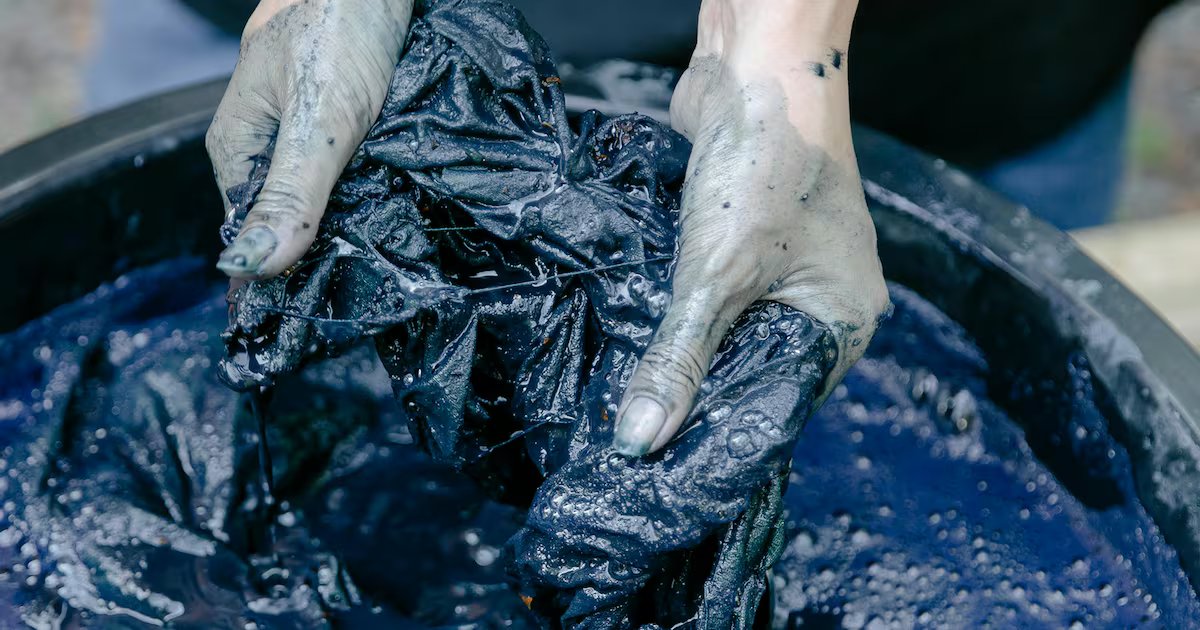
A new industrial-scale pilot by Vancouver-based water treatment start-up Viridis and H&M Group in Dhaka, Bangladesh’s capital, deployed technology across three textile mills designed to clean and reuse water generated during textile dyeing — a process used to make coloured fabrics like denim but one that produces large volumes of chemically contaminated wastewater.
The pilot treated water from several stages of production and removed nearly all visible dye and organic pollutants, making it suitable for reuse in subsequent dye cycles. Meaning the factories could reuse much of the same water instead of discharging it, a shift that could significantly cut both freshwater demand and pollution across textile manufacturing.
The closed-loop model also demonstrated the potential to recover certain auxiliary chemicals, pointing to a pathway that could reduce both freshwater consumption and effluent discharge in one of fashion’s most resource-intensive production stages.
Still, pilots remain only a first step. Scaling wastewater innovation across fragmented global supply chains will require significant capital investment, supplier incentives and tighter enforcement of discharge standards in key manufacturing hubs. As regulators, investors and civil society increase scrutiny around water stewardship, particularly in climate-vulnerable regions, wastewater treatment is fast becoming a litmus test for whether fashion can move beyond incremental efficiency gains toward systemic operational change.
Circularity Makes Headway in California
While the EU has finalised its scale back of sustainability due diligence laws, which you can get full break down of in our story here, in California the US’ first extended producer responsibility (EPR) scheme for textiles – a policy that would require brands to fund the collection, sorting and recycling of the clothes they sell after consumers are done with them— has moved closer to launching, as the state advances operational implementation.
In early March, Landbell USA, a sustainability-focused local industry non-profit, was named by CalRecycle, the state’s recycling authority, as the organisation, technically known as a producer responsibility organisation, a convening and governing body, that will essentially work with regulators and industry stakeholders to design and operate the statewide system for collection, sorting, reuse and recycling.
The move reinforces California’s position as a sustainability bellwether. The state helped set the pace on EPR for plastics and packaging — now spreading across Oregon, Illinois, Colorado and Washington — while textiles have lagged behind. With parallel debates unfolding in the UK and EU around how producer responsibility should function in practice, California’s rollout may offer one of the clearest early signals of how textile EPR could work at scale.
So How Will It Work?
Under the law, producers selling textiles into California will be required to register with the PRO, report the volume and type of products they place on the market and pay eco-modulated fees designed to fund statewide infrastructure. Those funds will support collection systems, sorting and reuse networks and recycling capacity, while incentivising more durable and recyclable product design over time.
CalRecycle is expected to continue rule making and programme development through 2026, including finalising performance targets, reporting standards and enforcement mechanisms. Early implementation steps — including producer registration and data reporting — are expected to phase in ahead of full operational rollout later in the decade, as infrastructure scales and compliance requirements tighten.
For brands, the shift marks a structural change: moving from voluntary circularity initiatives toward regulated accountability for post-consumer waste. How quickly the system scales — and how costs are distributed across the value chain, will determine whether California’s model becomes a template for other regional markets across the US.
Nike’s Move to Low-Wage Labour Areas in Indonesia

A new ProPublica and The Oregonian investigation is renewing scrutiny of Nike’s labour practices in Indonesia, which found the sportswear giant and other apparel brands are shifting employment in their Indonesian supply chain away from high-wage parts of the country and into less-developed areas.
Over the past decade, Nike’s suppliers expanded sharply in lower-cost parts of Central and West Java while shedding tens of thousands of jobs in higher-wage areas near Jakarta — a shift that reflects how global sourcing strategies are increasingly playing out within countries, not just across them.
The numbers are significant. Nike suppliers employ roughly 280,000 workers in Indonesia, its second-largest production centre. From 2015 through last year, factories cut about 36,000 jobs in areas where minimum wages approach living-wage benchmarks, while adding nearly 112,000 positions in regions where minimum pay, typically around $165 a month, falls well short of what workers need to get by.
Rough estimates cited in the reporting suggest the geographic shift could have saved suppliers roughly $200 million in labour costs in 2025 alone.
For workers, the transition carries risks beyond pay. Labour advocates say newer production hubs tend to have weaker union presence, less oversight and greater vulnerability to abuses.
Investigations in Central Java have documented issues ranging from gender-based harassment to unsafe working conditions, while workers interviewed described relying on second jobs or informal side income to make ends meet.
Nike says manufacturing growth in less-developed regions supports broader economic development and maintains that suppliers everywhere must meet its code of conduct.
This is far from Nike’s first labour controversy. Last month the company faced criticism after ProPublica found that company’s long-standing wage narrative –– after interviews with roughly 100 workers across more than 10 factories found most earned at or just above local minimum wages — is far below what many advocates consider a living wage and well short of the company’s claim that supplier workers earn roughly 1.9 times minimum wage.
But the latest findings underscore a broader and increasingly familiar industry dilemma: as brands continue to chase lower costs across evolving supply chains, the challenge is not in setting labour standards, but in proving they hold wherever production moves instead of hiding behind plausible deniability claims.
What Else You Need to Know:
- The EU Sustainability Rules Roll Back Finalised: The European Union’s sweeping revision of corporate sustainability rules initially designed to hold companies accountable for environmental and human-rights risks across their supply chains reduces the number of companies covered by the laws, easing compliance pressures but increasing concerns over accountability. [The Business of Fashion]
- Nike’s New CSO: My colleague Mike Syke, reported in “The Kicks You Wear” that Cimarron [The Business of Fashion]
- A Dent in Luxury’s Bright Patch: The escalating US-Israel conflict with Iran is rattling the aura of stability created by Dubai and the wider region, threatening one of the industry’s few bright spots – with a prolonged geopolitical shock leading to possible spillover effects in Europe and the US. [The Business of Fashion]
- Resale StartUp Croissant Secures Funding: The resale pricing app raised $28 million in its latest funding rounds – the latest fashion-tech startup to bolster its finances as investor demand in resale holds firm. [The Business of Fashion]
- EBay Worker Layoffs : The resale giant announced it is laying off 800 employees, cutting roughly 6 percent of the company’s global workforce, only a week after it said it would acquire Depop. [The Business of Fashion]
