
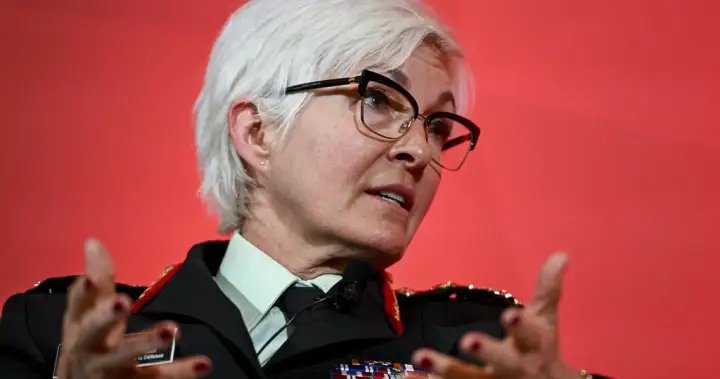
Canada is playing host this week to military leaders from both the United States and China amid cross-border tensions with the Trump administration and Ottawa’s attempts to improve relations with Beijing.
Canada’s chief of defence staff, Gen. Jennie Carignan, is co-hosting an annual meeting of military leaders from Indo-Pacific countries this week in Victoria, B.C.
The conference, now in its 28th year, is co-chaired by the commander of the U.S. Pacific Command, Adm. Samuel Paparo.
Canada’s turn at hosting the 32-nation conference comes amid worsening tension between Ottawa and Washington after negotiations toward a new trade deal between the two countries collapsed earlier this month.
Stephen Saideman, an international affairs professor at Carleton University, said in an interview Monday that he expects many Indo-Pacific military leaders’ conversations will focus on the unpredictable and undependable nature of the U.S. president and his secretary of war, Pete Hegseth.
“It absolutely puts (Canada) in a difficult spot, because all our planning is premised on this relationship with the United States,” said Saideman.
“What Hegseth and Trump are doing is absolutely making it harder for the militaries of the world to cooperate with the Americans. And we’re not an exception in any of this.”

Prime Minister Mark Carney announced that Canada would impose retaliatory tariffs on American products after talks with the Trump administration on a new trade deal collapsed on Aug. 21 – a response to the 50 per cent tariffs Trump has leveled on billions in Canadian products.

Get breaking National news
Get breaking Canada news delivered to your inbox as it happens so you won’t miss a trending story.
Since those talks failed, Trump’s cabinet has blamed Canada for walking away from what they suggest was a good deal. Canadians, however, overwhelmingly support Carney’s decision to walk away, with 63 per cent of Canadians voicing that view in Ipsos polling exclusively for Global News.
An even larger majority, 73 per cent, said they back Ottawa’s “dollar for dollar” counter-tariffs on $28 billion worth of U.S. goods, matching the up to 50 per cent tariffs imposed by Trump.
On Monday, U.S. Treasury Secretary Scott Bessent dismissed the idea that Canada could “retaliate,” including taking a shot at the country’s military.
“We’re not at war with Canada. How are we going to be at war with Canada? What, are they going to take their two submarines from the (West) Edmonton Mall and sic them on us,” Bessent said during an interview with CNBC.
Throughout Trump’s various threats against Canada, officials have suggested that despite political bluster, the working relationship between American and Canadian military and intelligence agencies remain strong.
That sentiment was shared by Paparo in 2023 when he visited the HMCS Ottawa to speak about the “strength and solidarity of Canada and the U.S. and the importance of cooperation for an enduring, free and open Indo-Pacific.”
What he will say this year as tensions escalate remains to be seen.
The theme of this year’s Indo-Pacific Chiefs of Defence conference focuses on strengthening collective security in what they call a “dynamic” landscape in the region. In addition to senior military leaders, the conference will hear from undisclosed non-military experts.
Most of the conversation will be behind closed doors, but a joint press availability with Carignan and Paparo is expected on Wednesday at the conference’s close.
© 2026 Global News, a division of Corus Entertainment Inc.
