
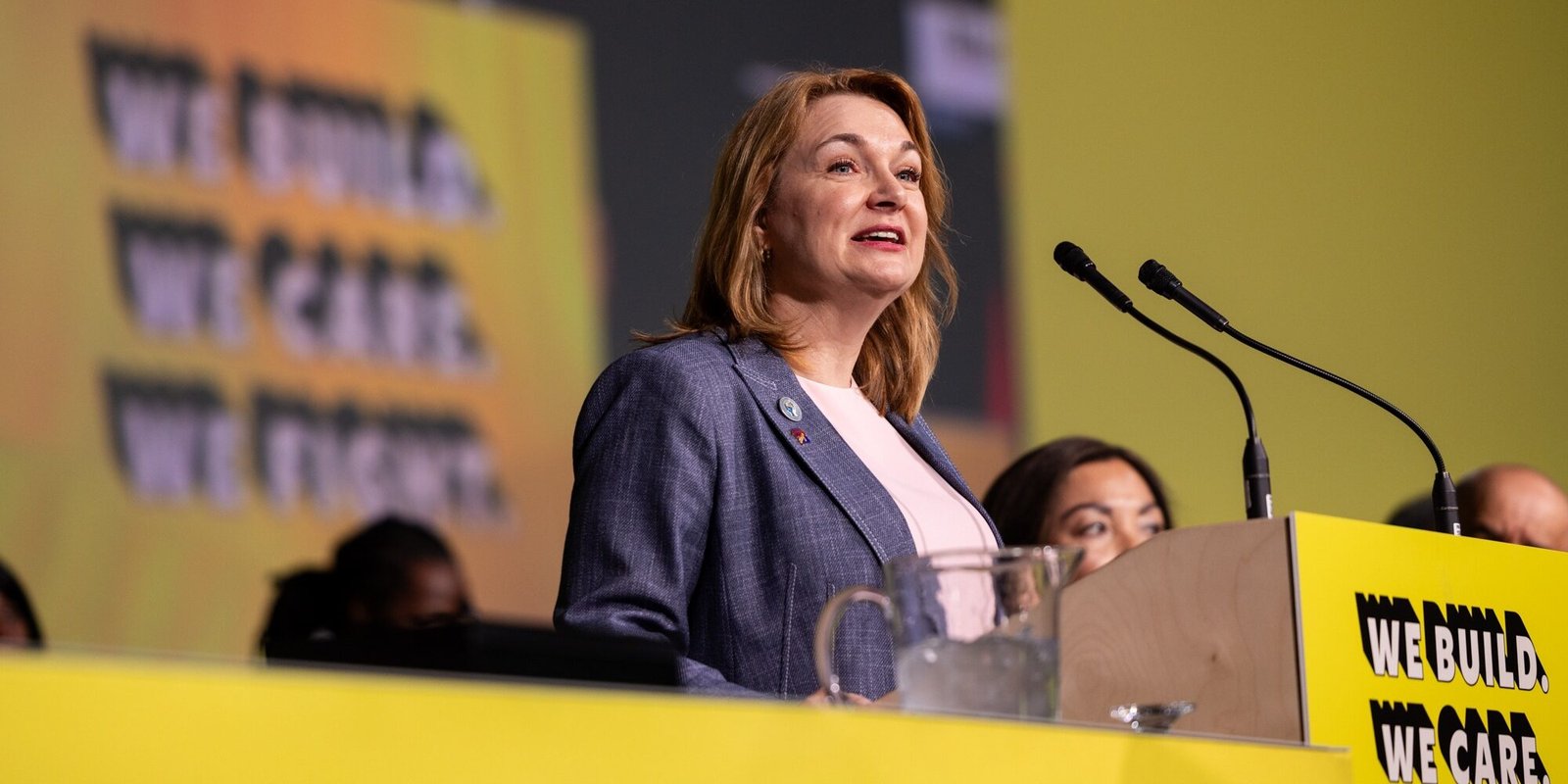
More than 2,000 delegates at the Canadian Labour Congress (CLC) convention marched in Winnipeg to protect Canadian workers and jobs. The protest comes as part of the programming for the CLC’s 31st constitutional convention. Since Monday, May 11 workers have been debating and pushing forward action plans to advance workers’ rights in a turbulent time.
In her opening address to the convention, CLC president Bea Bruske said that workers are facing numerous challenges right now. Unemployment has been stuck between 6.5 and seven per cent since January, and workers in industries affected by tariffs are feeling the sting even more. At the same time, CEOs make almost 250 times what an average worker makes.
The national president of the United Food and Commercial Workers (UFCW), Barry Sawyer, highlighted that whole communities suffer when jobs are outsourced, made more precarious or just cut all together.
“We are asking for fairness,” Sawyer said to convention delegates as they prepared to march.
“We need governments at every level to invest in Canadian workers, Canadian agriculture, Canadian manufacturing and Canadian food production. We need stronger labor laws that stop the race to the bottom and hold employers accountable when they exploit workers or abandon communities. And let’s be clear, protecting jobs also means protecting the workers who do them. This means fair wages, safe workplaces, benefits, pensions, respect on the job, and pathways to permanent residency for migrant workers who help feed this country,” he added.
Bruske attributed today’s challenges to anti-worker policies. Whether those are coming from south of the border where tariffs and trade policies are weakening key industries or are here in Canada where jobs are being cut and the right to unionize and strike is under threat.
“This is no time to rest, my friends. We need to do more, and we need to do it with greater solidarity than ever before,” Bruske said in her opening address. “I believe in our collective ability to meet this moment with strong solidarity. Because what unites us in this room is the belief and the knowledge that we are all connected, that an injury to one is an injury to all.”
Workers at the CLC convention have already passed multiple action plans aimed at propelling the workers movement forward amid the current challenges. The organization’s nation building plan aims to push for nation-building investments in public infrastructure, transportation, energy systems, skills training, apprenticeships, and workforce development. To support workers in sectors like steel and forestry – which have seen major job losses after Donald Trump implemented tariffs on Canadian goods – the CLC has adopted a plan to push for public procurement and the strengthening of domestic supply chains.
Scott Lunny, is the director of Western Canada for the United Steelworkers highlighted that the jobs affected by tariffs and reliance on U.S. markets are the jobs that build Canada.
“Those jobs are under attack,” Lunny said to CLC delegates. “They’re under attack from governments. They’re under attack from corporations, from tech bros. They’re under attack from the billionaire class and Donald Trump. And we are pushing back.”
“Canada cannot build a resilient economy by outsourcing jobs, relying on fragile supply chains, or leaving workers behind,” Bruske said. “This plan is about building the infrastructure, industries, and skilled workforce Canada needs, and making sure workers share in the prosperity they create.”
Delegates have also adopted a plan that aims to tackle the cost of living crisis that is affecting workers in Canada and all over the world. Given the rising cost of rent and the eroding social safety net caused by cuts to public services, the CLC’s action plan for this aims to push the government to prioritize housing needs over corporate profit, reinvest in public services and increase regulations on corporate behaviour.
