
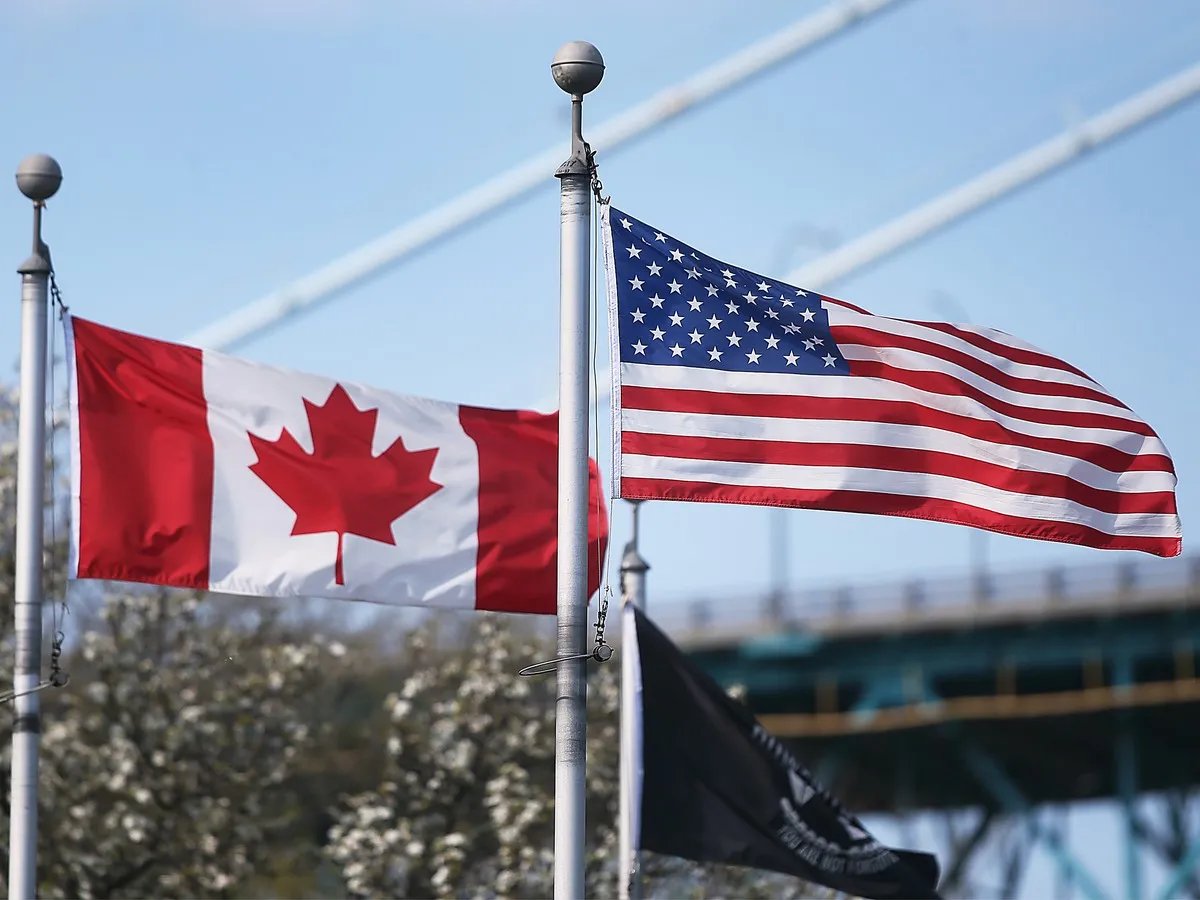
Canadians spent $3.3 billion less on travel to the United States in 2025 compared to 2024, according to figures released by Statistics Canada.
The decline resulted in a total spend of $18.1 billion on visits to the U.S. last year, with the decrease driven by lower spending on leisure-related visits, which fell by $2.2 billion to $12.1 billion.
The data , which comes from StatCan’s quarterly National Travel Survey (NTS), reveals that Canadians made 7.4 million fewer trips across the border in 2025 compared to the year prior. When it came to leisure travel to the U.S., visits from Canadians dropped by 3.2 million, a reduction of 21.5 per cent.
This decrease was almost entirely offset by an increase in both domestic (+5 million) and overseas (+1.3 million) visits. And spending on leisure-related visits overseas (other than the U.S.) grew by $3.6 billion in 2025 to reach $22.8 billion, accounting for just under half of overall expenditures abroad.
Domestic travel also saw a boost, with expenditures rising by 8.7 per cent in 2025 to $81.3 billion, driven by an 8.1 per cent increase in spending on leisure-related travel.
StatCan notes that the dramatic decline in cross-border travel occurred “following the change in the U.S. administration in early 2025 and the implementation of America First policies,” adding that “Canadians’ travel plans shifted abruptly” during this time.
In fact, Canadian travel to the U.S. began to decline in December 2024 — one month after Trump won the U.S. presidential election and first raised the idea of Canada becoming a “51st state” — and continued to drop for 15 consecutive months.
This is consistent with a widely held assumption that the decline in U.S. travel by Canadians is a response to the Trump administration’s trade war against Canada .
Along with cross-border travel, many Canadians decided to boycott U.S. goods last year, with a survey by Nanos for CTV News published in May revealing eight out of 10 still believe that avoiding American goods and travel to the U.S. helps strengthen Canada’s bargaining position.
However, StatCan observed the first uptick in travel to the U.S. in April this year, suggesting the travel boycott may be coming to an end. The increase in trips to the U.S. was driven by a 5.8 per cent year-over-year increase in return trips via automobile, but return trips by air continued to decrease — down 8.1 per cent in April 2026 compared to last year.
A similar trend was observed in May, with return trips to the U.S. by automobile up 15.1 per cent compared to last year, but down 5.5 per cent for travel by air. This resulted in an overall year-over-year increase in cross-border travel of 9.5 per cent.
In June, trips by automobile saw an increase of 5.2 per cent, while return trips by air had decreased 3.8 per cent.
The latest StatCan figures come after Trump announced plans to impose a new 50 per cent tariff on Canadian goods in response to what the U.S. administration views as discriminatory trade practices by Canada. And on Thursday, 60 countries, including Canada, were hit with new tariffs between 10 and 12.5 per cent following an investigation into forced labour.
The new tariffs mark the latest escalation in an 18-month-long trade war between Canada and the U.S., but it remains to be seen whether the announcements will have further impact on Canadians’ travel habits.
Our website is the place for the latest breaking news, exclusive scoops, longreads and provocative commentary. Please bookmark nationalpost.com and sign up for our daily newsletter, Posted, here.
