
Prime Minister Mark Carney offered to ship three to four million additional barrels of oil to the U.S. during trade talks last fall at the White House as part of a “preliminary” deal, the U.S. ambassador to Canada said Monday.
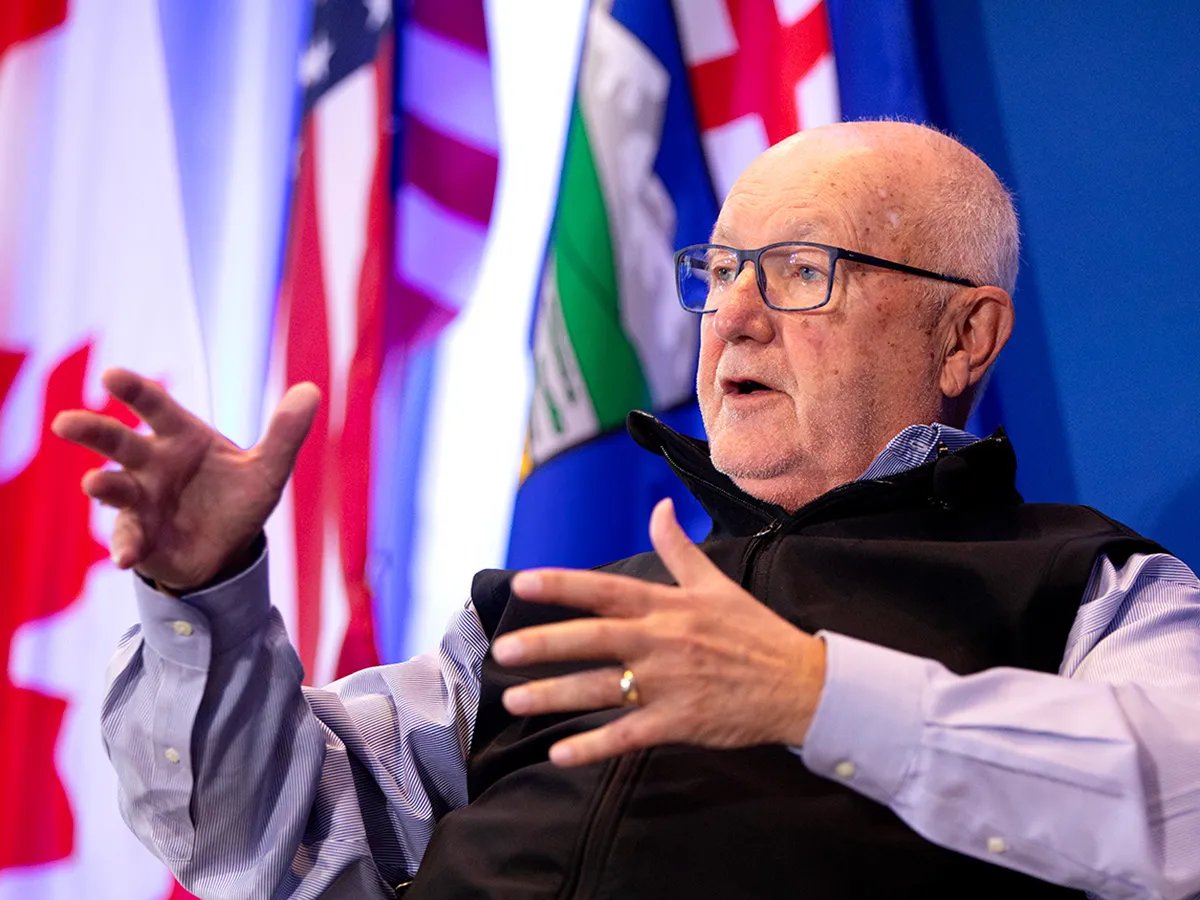
“(Interior Secretary) Doug Burgum and (Energy) Secretary (Chris) Wright had to be restrained by the president because they were so eager for getting more oil and getting it from Canada,” said Pete Hoekstra, speaking at the Pacific Northwest Economic Region’s annual summit in Edmonton. “The president had to advise them that crawling across the table and shaking Carney’s hand… was not necessarily the best negotiating strategy.”
Hoekstra was referring to the meeting that took place between Carney and U.S. President Donald Trump on Oct. 7, where the leaders discussed tariffs and trade issues. Carney’s offer was part of a “preliminary trade agreement” according to the ambassador.
Trump terminated trade talks soon after, saying he was offended by an Ontario government advertisement featuring former U.S. President Ronald Reagan criticizing tariffs that aired on American networks. Trade talks resumed in the spring, with Canada-U.S. Trade Minister Dominic LeBlanc and United States Trade Representative Jamieson Greer leading the discussions.
Hoekstra said his country would look to western provinces to secure more oil.
“We need oil, and we have found over the last couple of decades that one of the best places in the world to get oil from is Canada,” he said. “We’d like to get another three or four million barrels of oil over the next decade from somewhere, and probably the region that can make the most compelling case for supplying more oil to the United States would be Saskatchewan and Alberta.”
Canada exports 4.5-million barrels of oil a day and accounts for 65 per cent of all U.S. oil imports, according to the Canadian Association of Petroleum Producers.
Speaking at the same summit on Monday, Alberta Premier Danielle Smith said the highly integrated energy industry between Canada and the U.S. will only become more important in the years ahead.
“I think these times do make one lesson perfectly clear: having resources is an advantage, but they only create prosperity if they can reach market sufficiently, and that’s why trade corridors are so important,” she told the Edmonton audience.
Currently, Calgary-based pipeline company South Bow has partnered with U.S.-based Bridger Pipeline to revive a version of TransCanada’s proposed Keystone XL pipeline, which was shelved after then president Joe Biden revoked its permit in 2021. While not on the same route as the cancelled project, the Bridger plan proposes a 550,000-barrel-a-day pipeline from Alberta to Wyoming, which will increase oil exports to the U.S. by 12 per cent. A decision on whether to proceed with the project is expected in mid-2027.
Hoekstra said the president has already signed off on expedited permitting for Bridger.
National Post
jgowling@postmedia.com
Our website is the place for the latest breaking news, exclusive scoops, longreads and provocative commentary. Please bookmark nationalpost.com and sign up for our newsletters here.
