
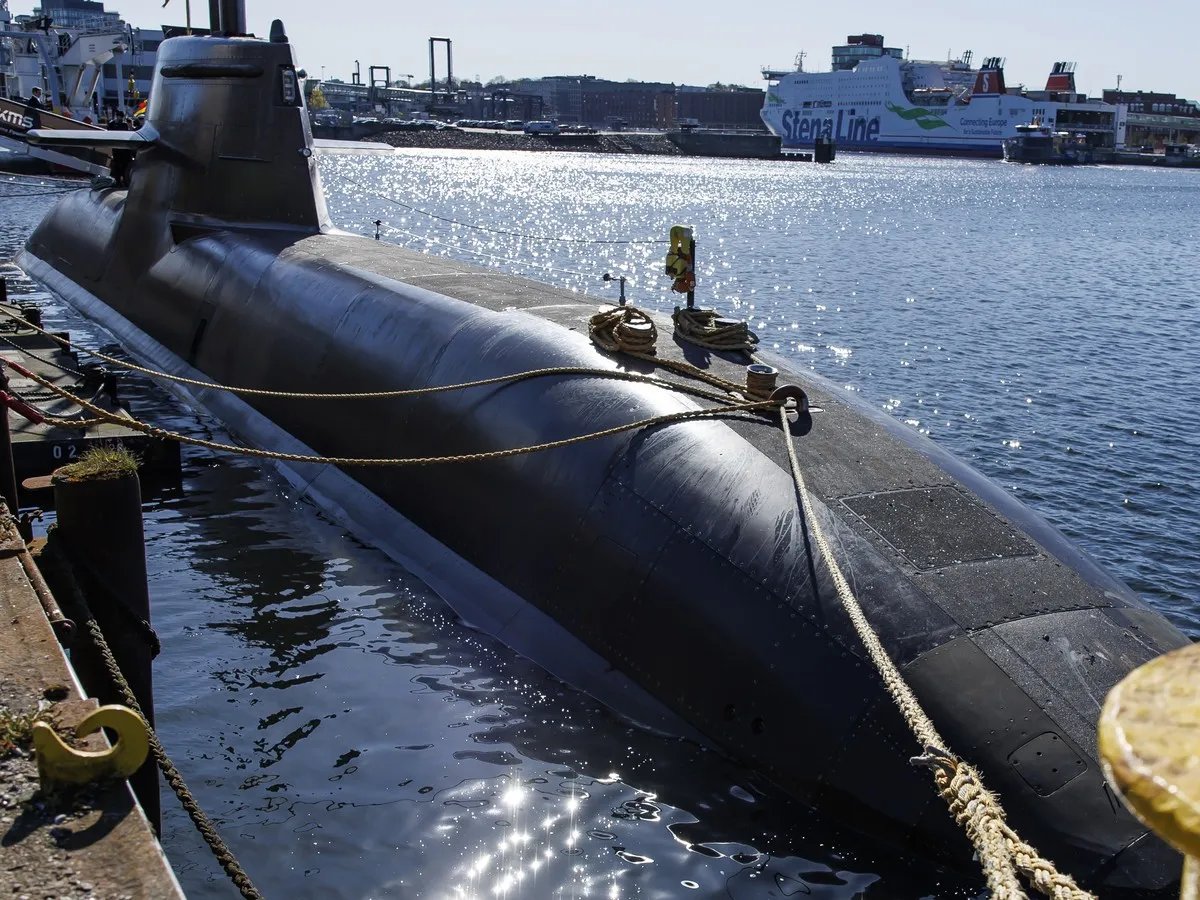
“This was a difficult, close decision between two highly qualified suppliers,” Carney said, adding that both TKMS and Hanwha met the capabilities of the Royal Canadian Navy.
“I would like to thank both bidders for the extraordinarily thoughtful, comprehensive, and cooperative proposals they and their governments submitted.”
The prime minister pointed to TKMS as being the “best choice” for Canadian workers and having the “greatest economic impact.” He said it will create and sustain over 100,000 “well-paying jobs” across the country.
German Defence Minister Boris Pistorius said in May that his country’s bid would add $86 billion to Canada’s GDP.
On its website, TKMS touts itself as having delivered more than 70 per cent of NATO allies’ submarine capabilities and the only provider offering a “low-risk” and “conventional” submarine solution.
Carney echoed those remarks, saying that the TKMS submarine is “proven and capable” and fully NATO interoperable.
Perry said this procurement will allow three ships to be operational at any given time, which will make a huge difference in terms of the Royal Canadian Navy’s combat abilities.
“If you have three consistently available, you’d have options to have one patrolling the Arctic, Pacific, Atlantic Oceans at the same time,” he said. “It’s enhanced ability to understand what’s happening around the waters of this country and North America, and be able to deter people from doing things we don’t want them to do.”
Carney insisted on the necessity of protecting Canada’s Arctic waters, adding it is becoming “integral” to the security of North America and NATO’s western flank.
“These new submarines, combined with the world’s second-largest fleet of icebreakers, new aircraft, new radar, more missiles and drones, better cyber defences, and new ports and airbases, are allowing Canada to assert its full sovereignty in the Arctic,” he said.
Carney did not proactively disclose the price tag for the purchase of TKMS submarines, which has been estimated to be worth $80 billion, but said it has been taken into account in Canada’s fiscal framework.
“This process is commercially sensitive, and always, we will not negotiate in public so as maintain the strongest possible position for Canada,” he said.
“I can confirm that this procurement will be the largest in Canadian history.”
National Post
clevesque@postmedia.com
jgowling@postmedia.com
