
“The great thing about the cinema is that it remains the cinema, yet it constantly reinvents itself”
– The representatives of the leading German cinema and distribution associations talk about the development of the theatrical market in Germany, as well as the latest trends and innovations
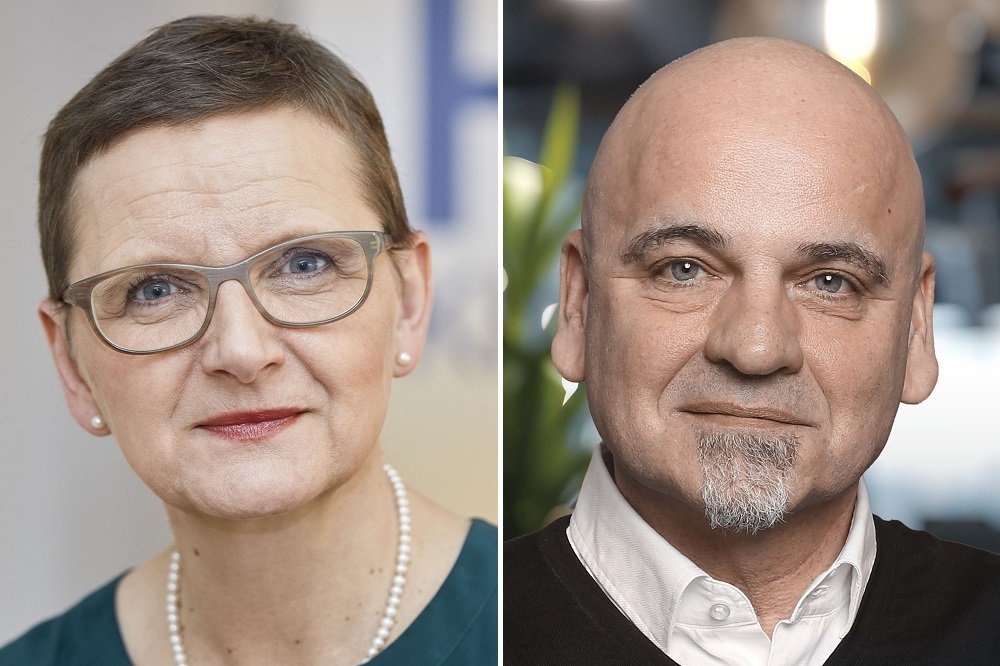
Christine Berg (© HDF KINO) and Peter Schauerte (© AllScreens)
For the first time, the AllScreens Association for Film Distribution and Audiovisual Media and the German Cinema Association HDF KINO have joined forces to create the new industry event CineHamburg, which presents the entire value chain of film distribution — ranging from distribution to technology and services to movie theatres. CineHamburg will feature panels, presentations, workshops, trade shows and upcoming film releases. Over 1,000 participants are expected to attend the new industry event in Hamburg, which will take place from 7 to 10 July. HDF Kino chairwoman Christine Berg and AllScreens managing director Peter Schauerte talk to us about the event, the development of the theatrical market in Germany, and the latest trends and innovations.

Cineuropa: CineHamburg marks the first time that cinemas and distributors have joined forces. How did this come together?
Peter Schauerte: We need to work more closely together and, for the good of the industry, create something holistic that brings together everyone involved in the cinema industry. CineHamburg marks a strategic fresh start for our industry, as we’re bringing together everything that’s relevant to the sector. This new joint industry gathering focuses on programming, but also on strategic issues, innovation and technology.
What expectations are associated with the move to Hamburg?
Christine Berg: The industry’s expectations are understandably high when two major players join forces. We want to signal that we’re tackling mutual issues, that we want to learn from one another so we can work together more effectively and successfully. After all, we all want the same thing: to thrill the audience. We all want cinema to be more firmly rooted in people’s minds and to create an event with strong staying power.
How has the theatrical market in Germany developed compared to other European countries?
CB: As is well known, the theatrical market in all countries hasn’t really been on the upswing since the COVID-19-related closures. In our partner country, France, there was a sharp decline of 14% last year. Things are fluctuating a bit everywhere. Compared to other countries, Germany is holding its own in the very healthy upper-middle range. When we look at ticket sales or revenue, the picture looks even better, because German films have performed very strongly, both last year and so far this year. Last year, a German film took the number one spot, which sets us apart somewhat from other countries. We’ve set a goal of selling 100 million tickets this year. It’s important that we increase our reach, and that will be a major topic at CineHamburg.
PS: We can see that the market is moving forward. Box office revenue is nearly 30% higher than last year and 13% better than in 2019. We don’t want to rest on our laurels at 100 million, because there’s much greater potential. The FFA’s new audience study shows that reach is increasing while the frequency of visits is decreasing. Now we need to take a close look at exactly who is going to the cinema. We need to better reach and inform the strategically important target groups in the younger age brackets.
In the first quarter of this year, more people went to the cinema than before the COVID-19 pandemic. Is this a turnaround?
CB: I find it hard to talk about turnarounds in the middle of the year. After the pandemic, many people didn’t think it was possible that more than 80 million tickets would be sold, since people enjoy using streaming services. Now, for over two years, we’ve had more than 90 million cinema-goers and are heading towards 100 million. Distributors and exhibitors are working together to better promote the cinema experience and attract audiences with the Kinofest.
Is theatrical marketing still the driving force behind film distribution? Will the cinema retain its role in enhancing the product?
PS: The cinema remains the driving force in the traditional value chain. The theatrical release and distribution costs are covered by the distributor to market the product and anchor it in people’s minds. The cinema still generates the highest revenue per visitor across the entire value chain.
CB: Amazon is now launching an own distribution company in Germany. This shows that they believe in cinema, since they’re actually producing feature films. It is through feature films that German producers can achieve independence, because they can only really make money in the theatrical sector. With other types of productions, they act as contract producers, even if they get the rights back. Of course, this presupposes that you produce successful theatrical films.
Germany is a production hub, but we must ensure that the distribution side remains a priority. We can’t just produce – we also have to figure out how to captivate audiences. That’s why distribution – the link between production and theatres – is so important. Theatrical cinema has a unique selling point that neither streaming services nor TV networks possess. The Americans, too, are strongly committed to theatrical films because it pays off, and theatrical distribution enhances a film.
What levers do you see for further strengthening the theatrical market in the future?
CB: We need real feature films, because mediocrity won’t get us very far. We need big feature films that tell stories that can only be told in a cinema. But we also need cinemas that are innovative and equipped with the latest technology. We have to invest in our cinemas so that people enjoy spending time there and are happy to stay for a drink after the film.
PS: We need good films, good theatres, and favourable conditions so that theatres are able to invest. It has become clear that theatres that invested after the pandemic are performing significantly better because they attract people with their appealing venues. On the political front, the question arises as to how the investment program for theatres can be implemented again.
We need good films, but not too many films. We release 650 films in Germany every year. The potential investment obligation and the “Film Booster” – which increases the production fund by an additional 120 million – do not lead to fewer productions. But we need the right films. When, as in the first quarter of this year, supply meets the right demand, then it works. German cinema, in particular, was very strong. Film production funding is important, but distribution funding is limited and not part of the aforementioned support schemes. This may be too short-sighted. Distributors don’t just market films as curators; we also try to discover the right material or help develop it ourselves when we participate in projects as co-producers or as partners through the purchase of minimum guarantees. This ensures that production budgets can be secured. In addition, distributors are investing enormous financial resources in the marketing of these films. We have a risk profile that has increased significantly due to changes in the market over the past few years. In my opinion, this is not being properly addressed in film policy. Under the current funding system, we are still focusing too much on production alone and not paying enough attention to how we can expand our reach and better connect with our audience.
Has the unique selling point of the cinema been fully realised through technical innovations in picture and sound quality, or can we expect further innovations?
CB: We’re right in the middle of implementing new, innovative features. Some cinemas are breaking new ground with premium cinema concepts, which include specific technical innovations such as 4K laser projection, immersive 3D sound and D-BOX motion seats. Others are focusing on Dolby Vision. IMAX cinemas are also getting bigger and bigger. In addition to technology, there are other innovations designed to improve seating comfort, such as “boutique” cinemas with comfortable, wide armchairs – like those in first class – and even a glove compartment. Some rural cinemas offer beanbag chairs and beds in addition to standard seating. Besides technology and comfort in the auditorium, there are also innovations designed to enhance the experience in the lobby. These include, for example, offering various types of wine and chilled beer at the cinema bar. That’s the great thing about the cinema: it remains the cinema, yet it constantly reinvents itself.
