
“We hope our films will travel the world and have a very laid-back and impactful experience at the festival”
– The artistic heads reflect on the gathering’s growing international profile, its expanding cultural footprint across the city and its commitment to championing new German cinema
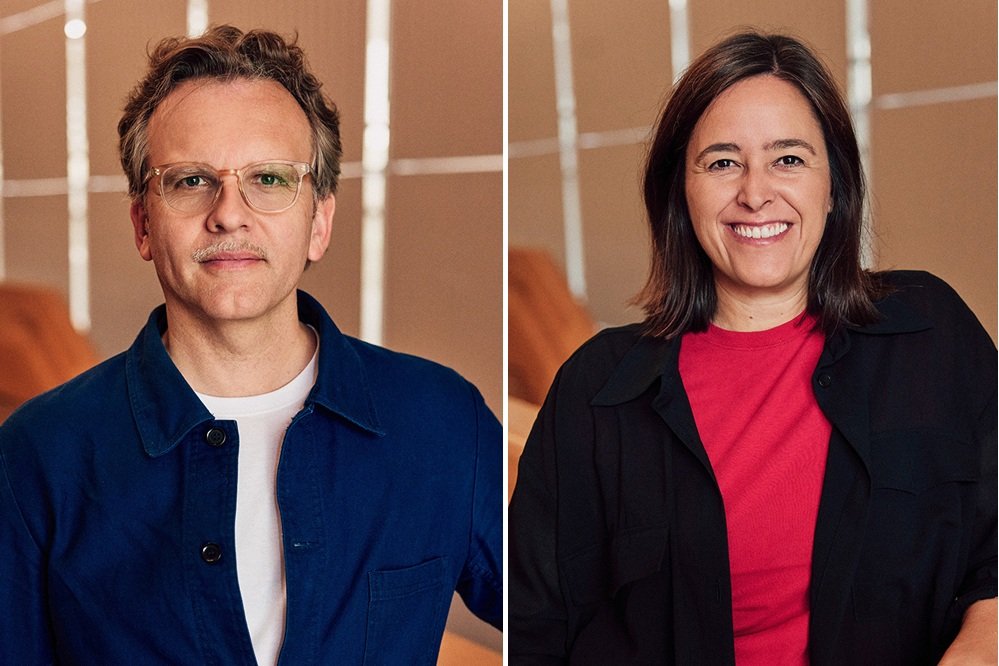
As the 43rd Munich International Film Festival (26 June-5 July) continues to expand its profile as a key launchpad for German and international cinema, its artistic leadership reflects on the event’s growing role in championing world premieres, fostering cross-disciplinary collaborations and supporting emerging talent. Festival director and artistic co-director Christoph Gröner and artistic co-director Julia Weigl discuss this year’s focus on identity and belonging, the evolving significance of the German Cinema New Talent Award and their ambitions for Munich’s future on the international festival circuit.
Cineuropa: What makes Munich an attractive place for filmmakers to debut their work today?
Christoph Gröner: As a platform, we have always stood for a genuine commitment to the films we select. For filmmakers, that translates into real encounters with audiences, press and industry from day one. We actively encourage productions to think beyond the premiere, or think about multiple launchpads with shared premieres, which is already the case for Bearhunting and The Miserable Mother this year. For both films, we shared the premiere with Shanghai. The aim is to give films the biggest exposure as fast as possible by sharing and creating awareness together.
Julia Weigl: All New German Cinema films have English subtitles precisely because we see our festival as a launchpad for an international run. And it works both ways: many of our international competition winners have gone on to find German distribution after premiering here. Munich offers a home base with a global outlook.
This year’s festival expands beyond cinemas through partnerships with museums, theatres and immersive-art spaces. How important is this city-wide approach to your vision?
JW: It is becoming increasingly central, and it is precisely this dialogue between art forms that the festival stands for: broadening perspectives and doing so across many creative venues together with our cultural partners in the city. Carlos Casas‘ Krakatoa, for example, will be accompanied by a video installation at Haus der Kunst, where visitors can experience the 1883 volcanic eruption in images, sounds and vibrations.
CG: Equally, our long-standing collaboration with Museum Brandhorst brings Želimir Žilnik‘s early Munich films back into focus, with Can Sungu of Sinema Transtopia curating the programme about this artist, who created a body of work that needs to be seen more as a reflection of hidden aspects of Munich and hasn’t been shown as part of this combination before. In the end, these partnerships push the festival deeper into new territory, opening up the cinematic space and discourse, and we think that is becoming ever more important.
With 16 world premieres in New German Cinema, what themes or trends do you see emerging in the new generation of German filmmakers?
JW: There is a strong thread running through this year’s selection around questions of identity and belonging. Who do I want to be? Where do I fit in on a societal and personal level? These are the questions many of the films are wrestling with, whether in the form of biting satires, quiet dramas or something more formally experimental. What strikes us is how varied the answers are.
CG: Randa Chahoud‘s Identitti [see the news] takes on representation and the legacy of colonialism; Susanne Heinrich returns with The Miserable Mother, a kind of pop-art musical that dismantles motherhood as a social construct; Nicolas Ehret‘s debut, Echo of Tomorrow’s War, imagines a Europe that has failed politically. These are very different films in tone and approach, yet they share an urgency that feels very much of this moment.
JW: What also stands out is how many debut voices there are this year, and how many of those are women. More than half the section has been directed by female filmmakers, which says something real about where German cinema is heading. And alongside the newcomers, there are also more established voices returning with more mature work. That combination is what the section is built for.
The German Cinema New Talent Award remains one of the country’s most prestigious prizes for emerging talents. How do you see its role evolving in today’s challenging production landscape?
CG: It has always been more than just a prize. It functions as a signal to the industry that new voices are ready to be taken seriously. In the current landscape, where distribution pathways have become more complex and funding more competitive, that early recognition matters enormously. We also notice how talent is moving fluidly between cinema and television or streaming. Milena Aboyan is a good example this year: she has two works in both the New German Cinema and New German Television sections of our programme. The New Talent Award always aims to reflect that kind of versatility and ambition, not just to reward a single breakthrough.
This year’s CineMerit recipients are Toni Servillo and David Duchovny, while Jutta Brückner is also being honoured. What do these artists represent for the festival, and why was it important to celebrate them this year?
CG: Toni Servillo is, honestly, a dream come true. When Gomorrah screened here and Matteo Garrone won the festival’s biggest award, that was one of those moments you don’t forget. Servillo has been at the heart of so much defining European cinema since then: twice a European Film Award winner, with The New York Times listing him among the greatest actors of the century. We reached out, and he said yes within five minutes. This one has been a long time coming. For our second CineMerit, David Duchovny is someone who has never stopped reinventing himself, across film, television, acting, directing, novels, music and podcasting. He is coming to Munich with See You When I See You, Jay Duplass‘s film about loss and family, which closes the festival as an international premiere.
JW: With Jutta Brückner, the timing felt genuinely unrepeatable. She is turning 85, and the film we are world-premiering is the final part of a trilogy dedicated to motherhood, a body of work that stretches back to the 1970s and is now reaching its conclusion. The fact that she herself proposed a conversation with Margarethe von Trotta, reflecting on what has and hasn’t changed for women in German cinema over five decades, made the decision easy. There is also a wider thread running through the programme, from In My Mother’s Mirror to What a Laugh, which places womanhood at the centre, and Brückner’s retrospective sits right at the heart of it.
Looking at the festival’s growth over the past few years, what would you like the Munich International Film Festival to be known for internationally in the future?
CG: As a festival of discoveries and the number-one platform for German filmmaking, we celebrate film and cinema as a collective, live and in-person experience. Here in Munich, international industry delegates and the entire German film industry get to discover amazing talent who will shape tomorrow’s cinema. We hope our films will travel the world and have a very laid-back and impactful experience at the festival.
JW: The combination of national and international voices in cinema is extremely important and fruitful, as is the sense of cooperation and co-production that this world needs so much right now. The role of festivals is shifting. With more content available, curation matters more than ever, and that includes creating unique encounters that feed into artistic development.
