
Dressed in a hospital gown, Brendan Hynes lies flat on his back inside an MRI machine in the basement research lab of Toronto’s Centre for Addiction and Mental Health. A technician reminds him to stay perfectly still and lets him know the hour-long scan is about to get started.
“That means you’re going to start hearing those loud noises, OK?”
Hynes’s muffled “OK” comes back from inside the hollow chamber.
Then the noise starts — a thunderous womp, womp, womp on repeat. It’s the sound of radio waves meeting a powerful magnetic field, letting scientists see inside the Canadian military veteran’s brain, damaged from 27 years of exposure to bomb blasts, saddling Hynes with severe symptoms that ended his career — and almost his life.
After coping with panic attacks, thoughts of suicide and waves of barely controllable anger and depression, Hynes suspects he has chronic traumatic encephalopathy (CTE). This incurable brain disease has been identified in hundreds of professional athletes. The Canadian army even listed it on Hynes’s release paperwork, but until he dies, no one can actually prove it. There’s simply no scientific way to confirm CTE until someone is already dead.
But what if that changed?
A team of Canadian scientists is trying to diagnose CTE in living people through a massive, years-long research project. Hynes is just one puzzle piece out of thousands of participants, all offering up their battered brains so researchers can figure out the hallmarks of this disease and find a way to identify it before it’s too late.
“Our goal is to be the first lab in the world to image CTE and be able to diagnose it in life so that we can stop the disease and reverse it,” said researcher Neil Vasdev, director of the Brain Health Imaging Centre at the Centre for Addiction and Mental Health (CAMH).
Speaking to CBC News before his scans at CAMH, Hynes said he hoped the research gives medical teams a chance to help others. But it’s personal, too: He wants to know what’s happening in his own brain, even if the answer ends up being CTE.
“To me, it’s even scarier than other forms of dementia or Alzheimer’s,” Hynes said. “Lashing out? Violence? I don’t want that to be me. I don’t want to affect my family like that.”
Disease identified in hundreds of athletes
CTE can develop years after repeated head trauma, whether that’s concussions from contact sports or shock waves from a bomb blast. It’s an incurable, degenerative brain disease. Some patients fare better than others, but in a worst-case scenario, the condition progresses to a point where a person becomes a shell of their former self.
The list of possible symptoms is both harrowing and long: memory loss, confusion, behavioural changes, depression, anxiety, balance issues, tremors, suicidal thoughts and ongoing cognitive decline that can mimic various forms of dementia.
CTE gained worldwide attention in the early 2000s after Nigerian American neuropathologist Dr. Bennet Omalu identified it in U.S. football player Mike Webster. Since then, hundreds of cases among professional athletes have been confirmed posthumously, including at least 18 former National Hockey League players and more than 340 former players from the National Football League.
Their headline-making stories often follow a predictable pattern. A former professional athlete falls off the map. Their life derails into drug abuse or gambling, maybe violence or bankruptcy. They die, usually far too young, potentially through suicide. Then a postmortem brain scan confirms what loved ones long suspected: They’d been living with undiagnosed CTE.

Claude Lemieux’s brain is being donated to Boston University’s CTE Center to research the long-term effects of repetitive brain injuries, after authorities say the four-time Stanley Cup champion and former Montreal Canadien died by suicide at age 60 earlier this week. Dr. Charles Tator, the director of the Canadian Concussion Centre and a neurosurgery professor at the University of Toronto, describes what CTE, or chronic traumatic encephalopathy, is and why it frequently affects athletes.
The sudden death of hockey legend Claude Lemieux in May put a renewed spotlight on the disease after his family donated his brain to a CTE research centre in Boston. The former Montreal Canadiens player died by suicide at 60, just days after carrying a ceremonial torch for his former team during the Eastern Conference finals. (Researchers haven’t yet confirmed whether Lemieux had CTE prior to his death.)
There’s growing acceptance that professional contact sports pose a risk. Yet scientists suspect those suffering extend far beyond football stars and hockey heroes.
Researchers have identified postmortem CTE cases among amateur athletes, homeless individuals and victims of domestic violence — all groups who, for various reasons, may end up experiencing repeated head trauma. It also seems to strike members of the military.
One 2022 study found evidence of CTE in four per cent of samples from a brain bank featuring deceased U.S. service members, with a higher level of risk among individuals who’d also played contact sports.
Another research team explained that CTE may sometimes develop in members of the military due to the rapid transmission of bomb sound waves through brain tissue, rather than any physical hit to the head. That’s on top of the accompanying winds, which can produce forces similar to multiple severe concussion-like impacts in a period of microseconds.
You can think of it like a bobblehead wiggling on a car dash: someone’s brain is rattling dangerously inside their skull, stretching and damaging the body’s most complex organ.

‘Devastasting’ neurological effects
None of that was on Brendan Hynes’s mind when he chose a career in the army.
He was bored in school and craved adventure, so at the age of 17, while mulling over a career in policing, he joined the reserves.
That decision led to nearly three decades in the Canadian Forces. Hynes was deployed to two dozen countries, including Afghanistan, Bosnia and Iraq, and spent time as a bomb disposal operator and member of the military’s special operations force.
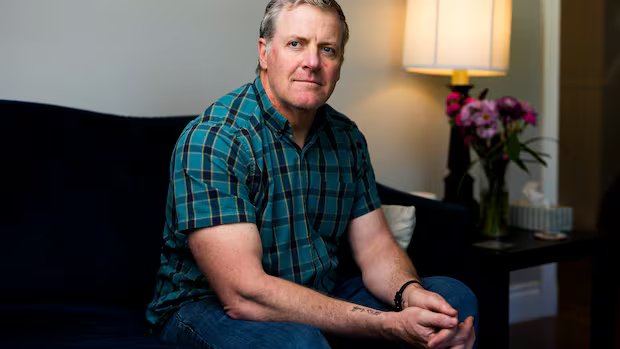
Speaking to CBC News earlier this year, Hynes said he loved the thrills and challenges of military life. Now 53, he’s silver-haired and sturdy, with a boyish charm that belies the toll his army days took on his health. “Most days I’m like 11,” he joked. “But some days I’m like 78.”
Sitting in his living room in Ashton, Ont., a rural community outside Ottawa, Hynes estimated he experienced at least a couple thousand bomb blasts. Each time a bomb goes off, he said, the pressure hits from multiple directions, across every inch of your skull and brain.
“The neurological effects, they can be devastating,” Hynes said. “And I was pretty much living proof of that.”

After years of head trauma, Hynes started having panic attacks, but kept them quiet out of fear it would end his career. Then other strange symptoms appeared. He felt angrier, but also depressed. Friends noticed he was mixing up words. His balance was off, too; he couldn’t even close his eyes and wash his hair in the shower without falling over. Looking back, he didn’t believe it could all be linked to a deep, life-altering medical issue.
“I probably should have realized it beforehand but, when you’ve got a broken brain, self-analysis is not your strong suit.”
In the winter of 2019, Hynes was overwhelmed by an inexplicable sense of panic and dread while Christmas shopping with his young daughters. On the drive home, while his girls sang carols in the backseat, his mind raced. He had a plan to end his own life. To leave directions with a 911 operator for a body recovery. To make sure his family wouldn’t make the grizzly discovery.
Hynes didn’t kill himself that night, but he came close. Something was deeply wrong with his brain, he realized. He just didn’t know what.

Postmortem analysis can takes weeks
When someone with suspected CTE dies, it takes scientists weeks or months to scour brain tissue for evidence.
The process is painstaking, time-consuming and so specialized that only neuropathologists — doctors who investigate the causes of fatal neurological illnesses — can make the final declaration.
Dr. Gabor Kovacs is one of them.
His office at the Krembil Brain Institute, part of Toronto’s University Health Network, is equipped with a microscope right at his desk. There, he analyzes glass slides, each featuring a sliver of tissue from a donated brain sealed in paraffin wax.
“It’s about one-hundredth of a millimetre, the thickness of a section,” Kovacs explained. “Since our brain is about 16 or 20 centimetres big, imagine the area I’m looking at in the microscope. It’s a very small area.”

Kovacs looks at an average of 100 slides for each case. It’s slow, methodical work that involves hunting for signs of, as he puts it, “misbehaving proteins.”
Scientists suspect CTE stems, in part, from the brain-wide buildup of abnormal, tangled tau, a protein also linked to other forms of dementia, such as Alzheimer’s disease.
Tau typically stabilizes brain cells, acting like ties along train tracks. But when those proteins are damaged, they fall apart, clump together and block the function of crucial nerve cells that relay information through the brain. As more nerve cells die off, entire regions of the brain start to malfunction, breaking down like a damaged computer.
Tau buildup can lead to different symptoms, depending on the condition. In the case of CTE, damaged, misfolded proteins clump up specifically around small blood vessels and in the deep folds on the surface of the brain. Severe cases can involve protein deposits throughout large regions that control nearly every crucial brain function, from someone’s mood to their memory.
Emerging research also suggests there may be links to different levels of post-injury inflammation and varying immune system responses, which raises the question of why only certain people develop the disease after repeated head trauma, while others remain symptom-free.
The unanswered questions around CTE — exactly how it develops, and who’s most at risk — are top of mind for Kovacs. “There are so few experts around the world. The amount of cases that we see is just nothing compared to the population that we are dealing with.”
His own research revealed an unusually high prevalence of CTE among people experiencing homelessness, suggesting that violence or aggression among some marginalized individuals could be a consequence of underlying brain damage. The postmortem analysis, published in 2025, found clear evidence of CTE in four out of 34 brain samples, and CTE-like changes in another two.
Kovacs was surprised by his own finding. He wondered how many people, beyond professional athletes, may be facing behavioural issues or other life-altering symptoms after brain trauma — without any hope of a proper diagnosis or medical treatment.
Research uses special radioactive tracer
Given his unusual medical documentation from the army, Hynes was specifically recruited to participate in Canadian research efforts to try and diagnose CTE. The project, led by CAMH, also involves scientists from the Krembil Brain Institute and outside support from advocacy group the Concussion Legacy Foundation. It’s a massive team effort, and requires thousands more participants.
But on a frigid day in January, it’s just Hynes.
Over a two-day span, deep in the underbelly of CAMH’s research facility, he undergoes a series of cognitive tests and brain scans. Magnetic resonance imaging (MRI) gives the researchers detailed imaging of his brain, while positron emission tomography (a PET scan) relies on the injection of a radioactive tracer to highlight signs of disease.
Tracers are tailored to bind with specific proteins or cells and emit radiation. This acts like a beacon to highlight a range of medical issues — from cancer to heart failure — that a PET scanner detects from outside the body. When that data is overlaid with a detailed MRI map of the brain, scientists can see precisely where the tracer is accumulating.

Radioactive tracers are already used to identify and monitor neurological conditions, including Alzheimer’s disease. Vasdev, an expert in the fields of nuclear medicine and medical imaging who’s leading the research at CAMH, spent the last decade applying the same principles to CTE.
His team’s custom radioactive tracer is meant to highlight CTE-specific tau deposits in living brains — the same protein neuropathologists currently spend weeks searching for in tiny slices of deceased brain tissue.
The technology was only adapted for in-human use a year ago, Vasdev explained from the lab where his team produces the radioactive building blocks for the CTE-based tracer. By early 2026, his team had studied it on 25 subjects, but he expects the number of participants to shoot up, as CAMH is now sharing the tracer with other facilities around the world.
“If it really takes off,” he said, “we’ll be in the tens of thousands of patients over the next couple of years.”

Vasdev and fellow researcher Isabelle Boileau, the associate director of CAMH’s Brain Health Imaging Centre, are already seeing signs their approach is working.
Sitting at a computer screen filled with brain scan imagery during our January visit, Boileau pointed out highlighted areas signalling signs of disease in one study participant with possible CTE. “What we’re seeing is where the tracer accumulates above the normal average,” she said.
On May 31, Vasdev and Boileau showcased their early results during a presentation at the Society of Nuclear Medicine and Molecular Imaging conference in Los Angeles, where they told a crowd of scientists their research appeared to detect signs of CTE in living patients.
The small sample involved seven healthy controls and three retired athletes with suspected CTE who all underwent the same process as Hynes: brain scans following an injection of the team’s tracer, which is officially called 18F-OXD-2314.
Measurements of how much of the tracer bound to its target of diseased tau deposits revealed higher levels in all three individuals with suspected CTE.
The CAMH team said their new approach to imaging the disease could be available to patients as early as the next two years, if further studies back up the results.
These first findings mark a promising step toward diagnosing the disease, Vasdev stressed, which could also provide a pathway for future research, similar to recent advances in treating Alzheimer’s. Though it’s still incurable, there are now a range of medications available to stabilize or potentially even slow that disease.
“If we can use brain imaging sciences to image the living human brain, we can then start to figure out what type of drug treatments can be used, we can test new drugs, we can select patients for clinical trials,” Vasdev said.

Public only hears a ‘fraction’ of CTE’s impacts
In the meantime, people are suffering — though not in silence anymore.
In recent years, professional sports leagues have faced a flurry of lawsuits from families of deceased athletes later found to have CTE. Some are implementing sweeping changes, such as the NFL’s moves to reduce dangerous tackles after kickoffs and allow players to wear extra protective caps.
The conversation is also having a ripple effect on amateur athletics, such as the strict “remove-from-sport” protocols that are part of Ontario’s 2018 concussion prevention legislation, dubbed Rowan’s Law in memory of Rowan Stringer, an Ottawa high school rugby player who died after suffering multiple concussions.

Bobby Hull, the Hall of Fame hockey player and two-time NHL MVP had chronic traumatic encephalopathy (CTE) when he died in 2023 at age 84, according to researchers at Boston University’s CTE Center. Hull had donated his brain to science to advance research on the disease.
“What the public knows and the public hears is actually only a fraction of what’s actually happening out there,” said Tim Fleiszer, a former Canadian Football League player who is now the head of Concussion Legacy Foundation Canada.
Fleiszer is participating in CAMH’s research as a healthy control subject in hopes of helping the project get off the ground. Though he’s symptom-free himself, he knows many individuals coping with suspected CTE through both his advocacy work and his 10 seasons playing professional football.
“When you have somebody who’s struggling with brain injury, that can lead to others in the family being exposed to violence. It can lead to substance abuse,” he said, his voice cracking with emotion. “It’s really challenging.”

Researchers also started identifying cases of CTE among deceased victims of domestic violence in recent years.
One of those women was María Pánfila Garay. Her daughter, María Garay-Serratos, founded a domestic violence organization following the four decades of abuse her mother suffered at the hands of Serratos’s father. His episodes of violence would last for hours, Garay-Serratos recalled, as he repeatedly hit and strangled his wife.
Even in her youth, the La Crescenta, Calif., resident sensed the violence was battering her mother’s brain. She started having debilitating migraines, became sensitive to light and noise and was sleeping in a dark bedroom for hours each day. Eventually, her mother began experiencing memory loss and was diagnosed with Alzheimer’s. Garay-Serratos felt it didn’t tell the whole story.
“I just knew my mom had CTE,” she told CBC News. “I just knew it.”
Postmortem brain scans confirmed it after her mother’s death in 2015. While professional athletes continue to be the focus of most advocacy work around CTE, Garay-Serratos said others deserve the same attention. She can’t help but wonder whether a proper diagnosis and meaningful support could’ve changed her mother’s path.
“I do believe it would have made a difference.”

Living with suspected CTE
When talking about the military’s role in preventing brain injuries among its members, Hynes doesn’t mince words.
Speaking to a meeting of the veterans affairs committee in the House of Commons in October, Hynes called the suicide rate among veterans a crisis.
He stressed that he wasn’t offered a single brain scan from any veterans’ service provider, despite being released from the military due to a traumatic brain injury. And he questioned whether the high number of members being treated for post-traumatic stress disorder — the second most-common disability among all veterans, after tinnitus — are also being investigated for underlying brain injuries.
“Your military and veterans face a degree of abandonment that causes more loss of life and more mental health issues than any trauma they ever faced overseas,” he told the committee.

In a statement to CBC News, the Canadian Armed Forces (CAF) acknowledged the occupational risk posed by blast exposure and said training plans for at-risk personnel have “recently been reviewed and updated to minimize exposure during exercises,” alongside efforts to improve education and support research into the health effects of military service.
“While the current evidence does not demonstrate that military service alone is a major independent risk factor for CTE, the CAF remains committed to understanding and mitigating the potential long-term consequences of brain injury, including CTE and other neurodegenerative conditions,” the statement said.
Veterans Affairs Canada, the federal department that handles benefits and services for former members of the military, also noted that veterans coping with brain injuries can access individualized medical rehabilitation support along with a range of services, such as mental health care.

To Hynes, it’s not enough. In remarks to the veterans affairs committee, he slammed what he called a “lack of assistance in recovery… and a cohesive plan for treatment.”
Hynes has built his own treatment plan of sorts, cobbling together bits of scientific research and years of experience learning what helps and hurts his struggling brain. He maintains a healthy diet and tries to limit stress. But long after leaving the army, his memory and cognition still feel fuzzy. He gets tired quickly, so he sleeps as needed during the day and takes long walks to help maintain his fitness and balance.
Hynes credits his wife and daughters for helping him survive the darkest days since his unofficial diagnosis. Now he’s bracing for the real thing.
At his home in Ashton, Hynes said the CAMH team promised to share his results as early as this month.
“If I’m the first person diagnosed while living with CTE,” he said, “well then, I’ll also be the first person to beat it.”
The Current15:19On the frontlines of CTE
CBC’s Health reporter Lauren Pelley brings you the story of groundbreaking research into CTE, chronic traumatic encephalopathy — and hope for the future, and saving lives.
