
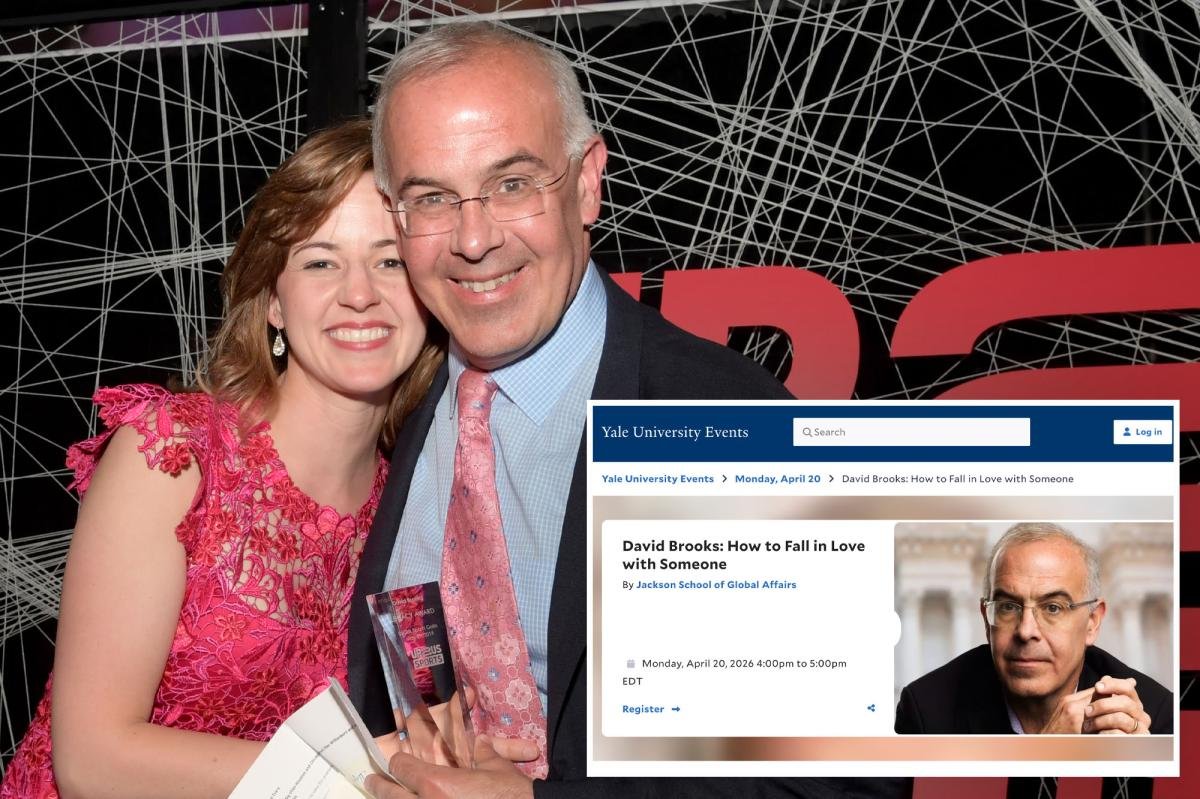
David Brooks found himself at the center of online criticism this week after news broke that Yale University has scheduled the Atlantic columnist to give a talk about love. The timing has struck many as particularly tone-deaf, given that Brooks recently left his wife to marry a much younger assistant.
The New York Post reported the story on Monday, highlighting what many see as a glaring disconnect between Brooks’s personal choices and his upcoming lecture topic. Brooks, who has built a career as a political commentator and social observer, apparently didn’t consider how his recent marital history might affect public perception of his expertise on matters of the heart.
Social media users wasted no time pointing out the irony. The Post’s tweet about the story quickly gained traction, racking up nearly 1,000 likes and over 100 retweets as people shared their thoughts on the situation. Many expressed disbelief that Yale would invite someone with Brooks’s recent track record to speak about love and relationships.
Brooks has been a prominent voice at The Atlantic for years, writing about politics, culture, and social issues. His columns often touch on moral and ethical questions, which makes his personal situation all the more scrutinized. The fact that he left his marriage for someone significantly younger than himself has raised questions about his judgment and moral authority.
The controversy highlights a broader issue about public figures and their credibility when their personal lives contradict their professional personas. Brooks has written extensively about family values, social cohesion, and moral behavior throughout his career. His decision to end his marriage for a younger woman doesn’t align with the traditional values he’s often championed in his writing.
Yale University hasn’t commented publicly on whether they plan to reconsider Brooks’s speaking engagement. The prestigious institution typically hosts high-profile speakers for various events throughout the academic year, but this particular invitation has drawn more attention than most. Students and faculty at Yale may find themselves questioning whether Brooks is the right person to deliver insights about love and relationships.
The assistant Brooks married worked closely with him before their relationship became romantic. While workplace relationships aren’t uncommon, the power dynamic and age difference in this case have added layers of complexity to the public’s perception of the situation. Critics argue that someone who makes such questionable personal decisions shouldn’t be positioned as an authority on love and relationships.
Brooks’s reputation as a thoughtful commentator on social issues has taken a hit since news of his personal situation became public. His readers and followers have had to reconcile their respect for his professional work with disappointment in his personal choices. This Yale speaking engagement threatens to bring even more negative attention to an already awkward situation.
The incident serves as a reminder that public figures can’t easily separate their personal lives from their professional reputations. Brooks’s expertise as a writer and commentator doesn’t shield him from criticism when his actions contradict the values he promotes in his work.
As the date for Brooks’s Yale talk approaches, it remains to be seen whether the university will address the controversy or proceed as planned. The situation has certainly provided plenty of material for Brooks’s critics, who see his upcoming love lecture as the height of hypocrisy. Whether Brooks himself recognizes the irony of the situation is unclear, but the public certainly hasn’t missed it.
