
Coakee William Wildcat of the Oklahoma Seminole Nation, founder and executive director of the nonprofit Mother Tree Food and Forest, works in agroecology restoration around the U.S.–Mexico borderlands, combining progressive ecosystem restoration methodology and ancestral traditions. Among the issues that concern him the most are those of the Mennonites in Mexico.
“We have Mennonites buying up all the Indigenous land on the Mexican side (of the Mexico-U.S. border) and displacing all the Indigenous peoples,” he said. “And they are doing the most destructive agriculture imaginable.”
The Mennonites’ origins
Following the teachings of the 16th-century Dutch priest Menno Simons, the most conservative Mennonites live in the countryside based on an ancestral understanding that living far away from the center of society means evil can be better controlled.
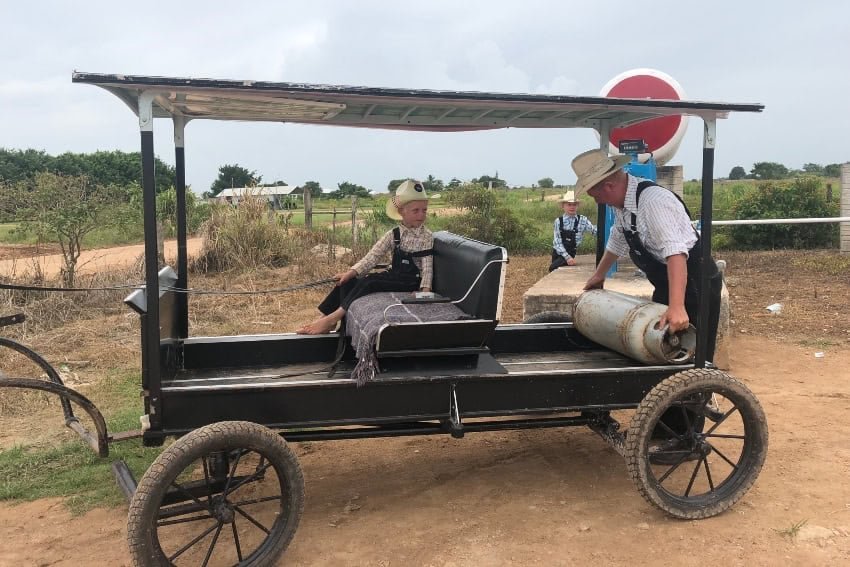
While cars and mobile phones are used by some Mennonite communities, most conservative communes’ way of life is far from the typical understanding of modernity: horse‑drawn transport, wooden houses and no electricity.
This doesn’t exactly suggest environmental destruction. But the reality of Mennonite agriculture in Mexico is more complicated and includes bulldozers, rule‑breaking, burning and extreme deforestation, all bound up in the realities of Indigenous ethnic persecution.
The Mennonites are an Anabaptist religious group that formed in the 16th century during the Protestant Reformation in Central Europe. Yet today, two‑thirds of Anabaptists live in Africa, Asia and Latin America.
Persecution toward Anabaptists came in multiple forms, often a result of tensions between Catholic and Protestant officials and Anabaptist practices, including a refusal to baptize until adulthood or to involve themselves physically or financially in violence and wars. This caused the Mennonites to flee to North America in the 1700s.

Mennonite roots in Latin America
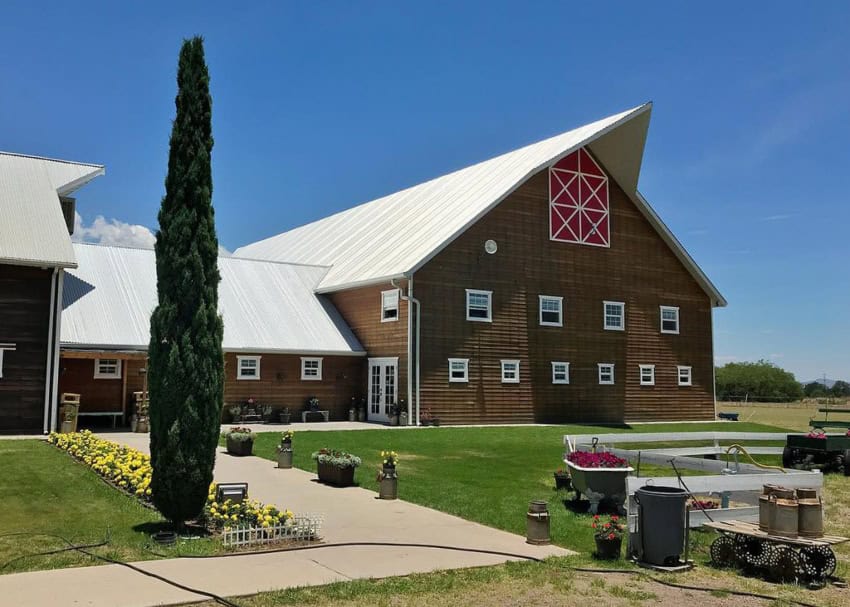
The Mennonites reached Mexico in 1922, a popular destination as President Álvaro Obregón allowed the Mennonites to buy land and promised no obligation to military service, as well as total autonomy to practice religion and religious education without interference.
Obregón stated that “it is the most ardent desire of this government to provide favorable conditions to colonists such as Mennonites who love order, lead moral lives and are industrious.”
The settling of the Mennonites in the 1920s and 1930s clashed with the formalization of the ejido system during this period — part of the post-Revolutionary agrarian reforms that promised property to landless people, namely Indigenous groups and those with historical ties to the land.
Mennonites and Mexico’s ejido system
Much of the land claimed by the Mennonites was taken away from agraristas — local agrarian activists — thus undermining the spatial and political rights of that were fought over during the Mexican Revolution.
The Mennonites’ purchase of what is now the Nuevo Ideal Colony resulted in the closing and reopening of Mennonite schools as the government navigated rightful land claims, often favoring what it saw as the economic benefits of the Mennonites over its ideological stance in support of ejidos.
Rapid industrialization and urbanization during the 1940s and the growth of their colonies saw increasing land given to Mennonite communities, with many locals forced off their property. Rural Mexicans organized protests, as well as a government‑aligned national union and the independent Central Campesina Independiente (CCI).
While Indigenous claims sometimes resulted in Mennonite land being redistributed into ejidos, the overarching pattern was capitalist expansion of Mennonite colonies, a form of colonization that pushed rural communities off their land. Later, legislation in 1992 helped facilitate the development and sale of previously protected forest land.
Mennonite assimilation and cultural preservation
Census data has recorded 74,122 Mennonites living in Mexico.
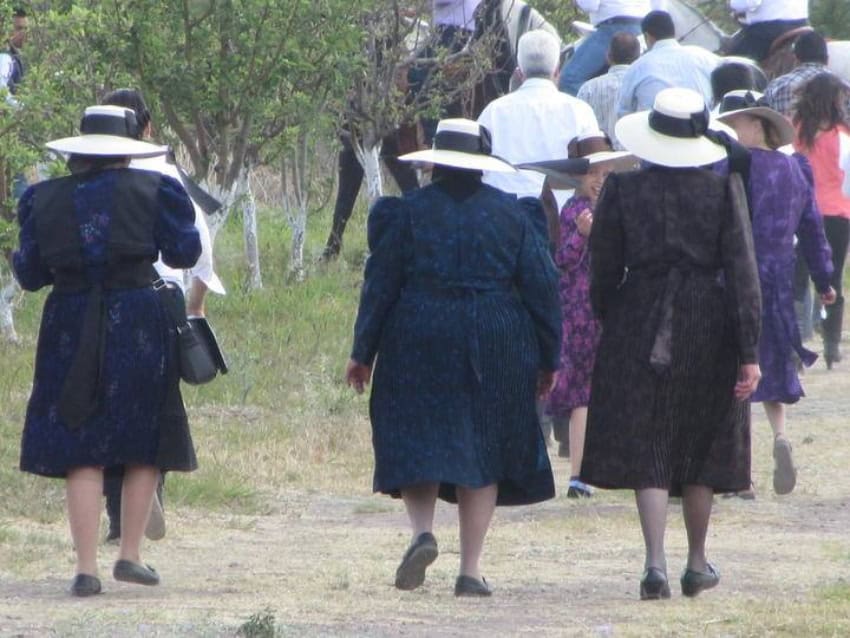
Younger generations within more liberal factions are increasingly integrated within their sociocultural surroundings: They learn Spanish and marry interculturally. But through religious worship, language, labor, gastronomic practices, clothing, family and gendered organization and the sharing of oral lore, the Mennonites continue to preserve their identity.
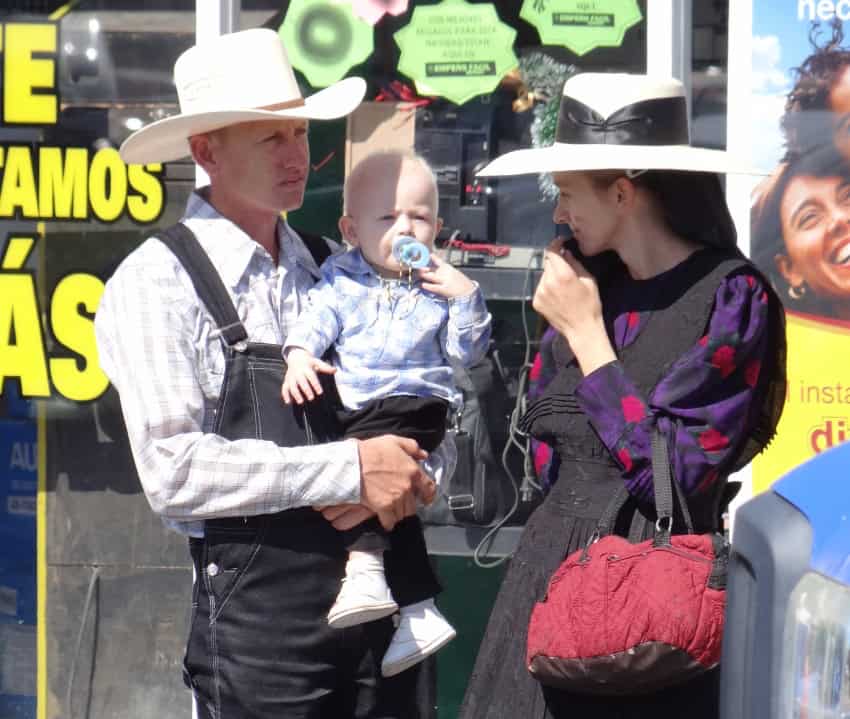
In a bid to preserve a traditional lifestyle, some Cuauhtémoc Mennonites banned women and children from learning Spanish and integrating with local Indigenous and Mexican communities.
God’s will is that humans control nature
The Mennonites are part of a wider systemic issue in Mexico of cultural erosion through trade liberalization, land reforms and the capitalization and mechanization of agriculture. Their arrival coincided with the rise of Latin American developmentalism, where the transformation of “virgin” lands for productive means was favored by governments across the region. This suited the Mennonites’ understanding that it is God’s will for humans to control and utilize nature.
Last year, the Federal Attorney for Environmental Protection (Profepa) began filing criminal complaints against Mennonite communities and shut down seven properties in response to the illegal razing of more than 2,600 hectares of forest in the Mexican states of Campeche, Yucatán and Quintana Roo. The agency seized timber, three tractors and a variety of agricultural equipment.
In the Piedras Negras ejido in José María Morelos, native rainforest was reported to be illegally removed, with the natural vegetation in San Diego Buenavista in Tekax being felled, burned and replaced by leveled ground.
The Maya Forest is a critical carbon sink and home to up to 400 bird species, 100 mammal species and endangered jaguars. Global Forest Watch has warned that each year a Dallas‑sized chunk of the forest is disappearing, threatening biodiversity, groundwater stores and ecosystem health. While a handful of Mennonite communities agreed to halt deforestation in response to government requests, not all agreed.
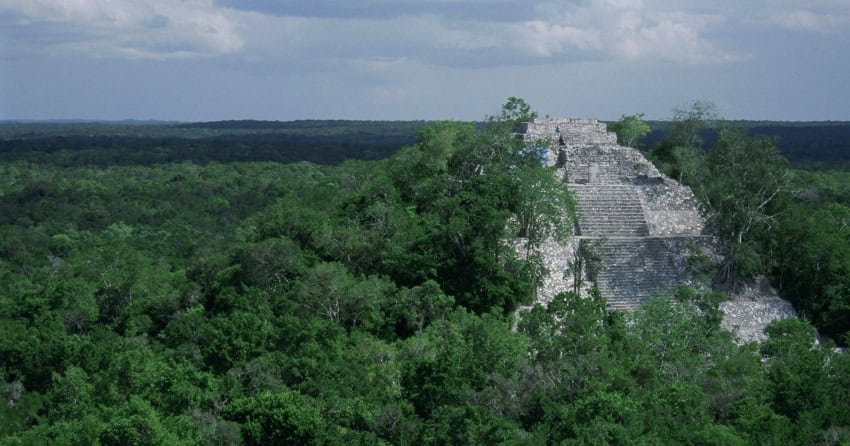
Upwards of 1.5 million hectares of tree cover were lost in the states of the Maya Forest (Quintana Roo, Campeche and Yucatán) between 2001 and 2018, causing a shortening of the rainy season and affecting planting schedules.
The forest is losing 80,000 hectares of tree cover every year due to agricultural expansion, and modern development projects are also a secondary culprit.
Illegal logging in Bacalar
In Bacalar, Mennonite deforestation has resulted in the El Bajío ejido changing from primarily rainforest to expanses of agricultural lands, due to the influx of Mennonites and their mechanized agricultural practices since 2000. Illegal logging, monoculture practices and deforestation threaten local ejidatarios’ livelihoods and block access to their travel by horseback.
In March 2017, the Federal Attorney’s Office for Environmental Protection and the Mexican Navy reported unauthorized logging on 1,445 hectares of forested land. Despite Mennonites and the ejido authorities of Paraíso and El Bajío being penalized with a fine of 10,266,640 Mexican pesos (around US $500,000), harmful deforestation continues to take place.
Global Forest Watch’s satellite data has exhibited the increasing expansion of large‑scale agriculture and forest clearing in Bacalar in 2022 and 2023, such as in the Blanca Flor, San Fernando, Paraíso, El Bajío and Salamanca ejidos. A Mennonite representative claimed the new colony was a necessary response due to a shortage of space for Bolivian settlers and that they were granted permission by the Program for the Certification of Ejido Rights and Land Titling to establish their own ejido.
Since its establishment in 2005 by the Mennonites, the Salamanca ejido experienced a loss of 4,600 of its 5,000 hectares of rainforest by 2012, and three additional Mennonite settlements have since been established nearby.
Cultural erosion of Indigenous peoples
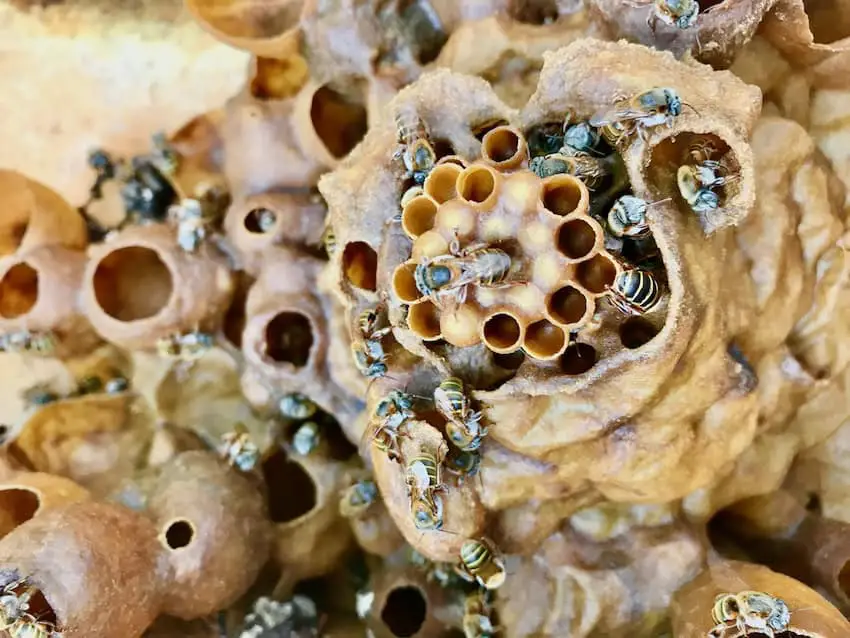
By settling in Bacalar, Mennonites threaten the Blanca Flor Maya community’s beekeeping practices. Campeche Mennonites’ use of genetically modified soy crops and the weed killer glyphosate also threatens Maya bee colonies and milpas more widely.
Medicinal plants and Indigenous farming practices involving crop rotation are widely jeopardized, as are their non-hybrid native crops when contaminated by Mennonite agrochemicals used for hybrid crops, such as those provided by the pharmaceutical company Bayer.
Critically, the Mennonites have reportedly used Indigenous labor to bolster their commercial means and agricultural expansion. Additionally, many Mennonites have been imposing their value systems onto Indigenous peoples in Mexico through agriculture, education, language and labor, reflecting claims to cultural and ethnic superiority through missions to “civilize” Indigenous peoples.
What’s next?
There are, of course, conflicting points of view, and while seeking to comprehend the marginalization of Indigenous peoples, it is also important not to overlook either their agency and self‑determination or ongoing and future opportunities for peaceful collaboration with Mennonite colonies.
The situation in Mexico’s borderlands and southern states reflects a broader, unresolved tension between land rights, cultural survival and agricultural expansion that has defined the region for centuries. For Indigenous communities — Maya beekeepers, milpa farmers and ejidatarios alike — the stakes are not abstract: they are measured in disappearing forests, contaminated crops and eroded traditions. At the same time, the Mennonites themselves remain a people shaped by their own history of persecution and displacement, a complexity that resists simple vilification.
What is clear, however, is that meaningful resolution will require enforceable environmental protections, genuine recognition of Indigenous land rights and a willingness from all parties — including the Mexican government, which has long favored economic development over ecological and cultural preservation — to reckon honestly with who bears the cost of agricultural progress and who has always been asked to bear it most.
Millie Deere is a freelance journalist.
