
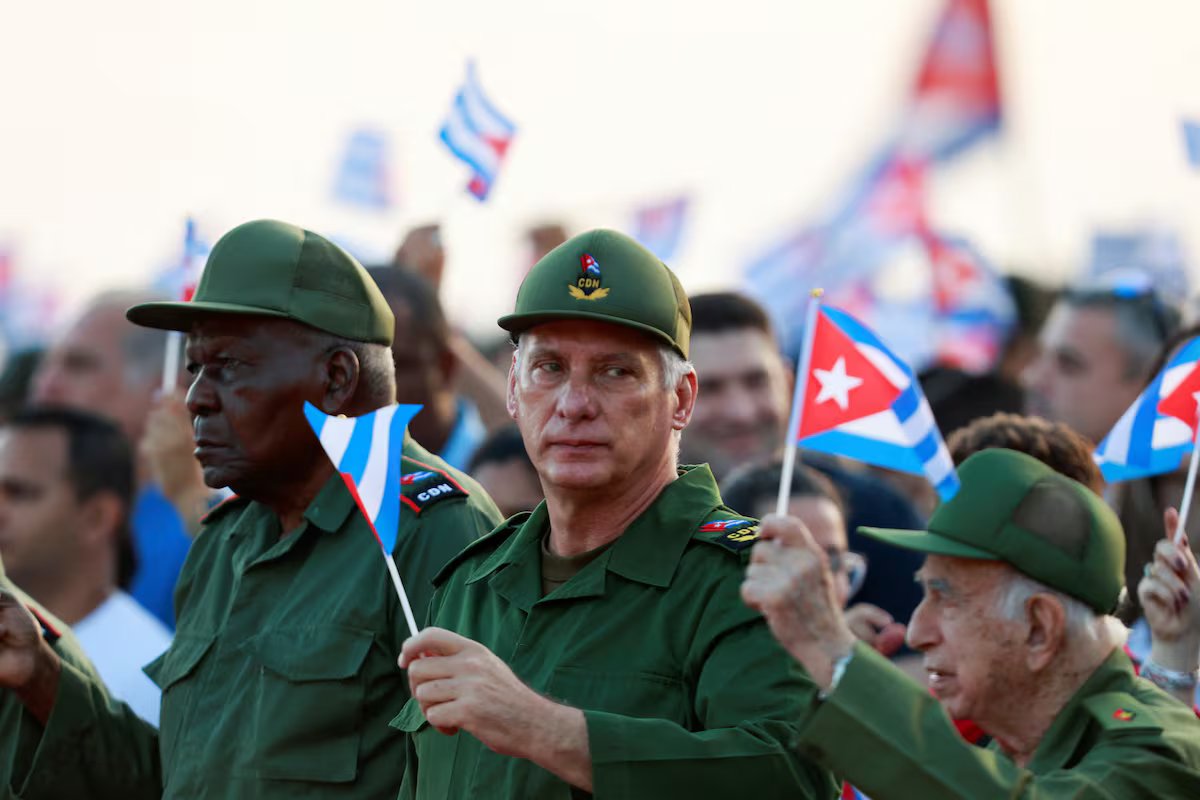
New winds of reform are sweeping through Havana. The Cuban regime on Friday announced a package of structural changes under the so-called Economic and Social Program for 2026 to confront one of the most severe crises in its recent history.
The measures, announced by President Miguel Díaz-Canel, include an unprecedented decentralization of the heavy state apparatus, allowing state companies to participate in the foreign exchange market, authorizing investments by Cubans abroad, ending subsidies for certain products and a severe reduction of bureaucracy. “These are times when changes must be made,” the president said, under pressure from chronic shortages, an energy collapse and the lingering threat of social unrest and U.S. pressure.
At the core of the reform is an effort to revive an economy paralyzed by centralism. The plan foresees granting municipalities the authority to manage their own foreign-currency revenues, authorizing projects with Cubans living abroad and even conducting foreign trade operations without state intermediation. From now on, according to the Cuban leader, municipalities will have “full autonomy to decide which enterprises they will have, which economic actors will be involved, how these economic actors will interact, how local production systems will be designed and built, and how to leverage their endogenous strengths.”
This measure represents a radical shift from the rigid centralism that has characterized the Cuban economy since the start of the revolution in 1959.
Likewise, the Empresa Estatal Socialista — the historic, bureaucratic engine of the revolution — will theoretically operate “without hands interfering in its management.” The president promised these entities would be able to design their own wage systems without regulatory ceilings and “participate directly in the foreign exchange market.” The goal is to equalize their conditions with those of the emerging private sector (micro, small and medium enterprises), whose final approval will also be delegated to local governments to speed up paperwork.
Reduced bureaucracy
The package covers other critical sectors and includes a drastic reduction of ministries and bureaucratic posts to cut public spending and finance a future wage reform in the budgeted sector, a gradual shift toward subsidizing vulnerable people rather than products, an opening of the real estate sector after the withdrawal of major international hotel chains due to U.S. sanctions, and a relaxation of rules for allocating idle land and giving producers access to real foreign-currency bank accounts.
Díaz-Canel justified the pragmatic shift as a resilience response to the U.S. embargo. The measures, however, appear to be an implicit admission of the shackles that have smothered the island’s productivity. “The United States cannot forgive that, at this point, despite all the maximum pressure they have exerted, the Revolution still exists and the country continues to function. And not even they themselves believe that thing they so often say and repeat about a failed state,” Díaz-Canel said to the official press, seeking to politically shield the announcement.
Sign up for our weekly newsletter to get more English-language news coverage from EL PAÍS USA Edition
