
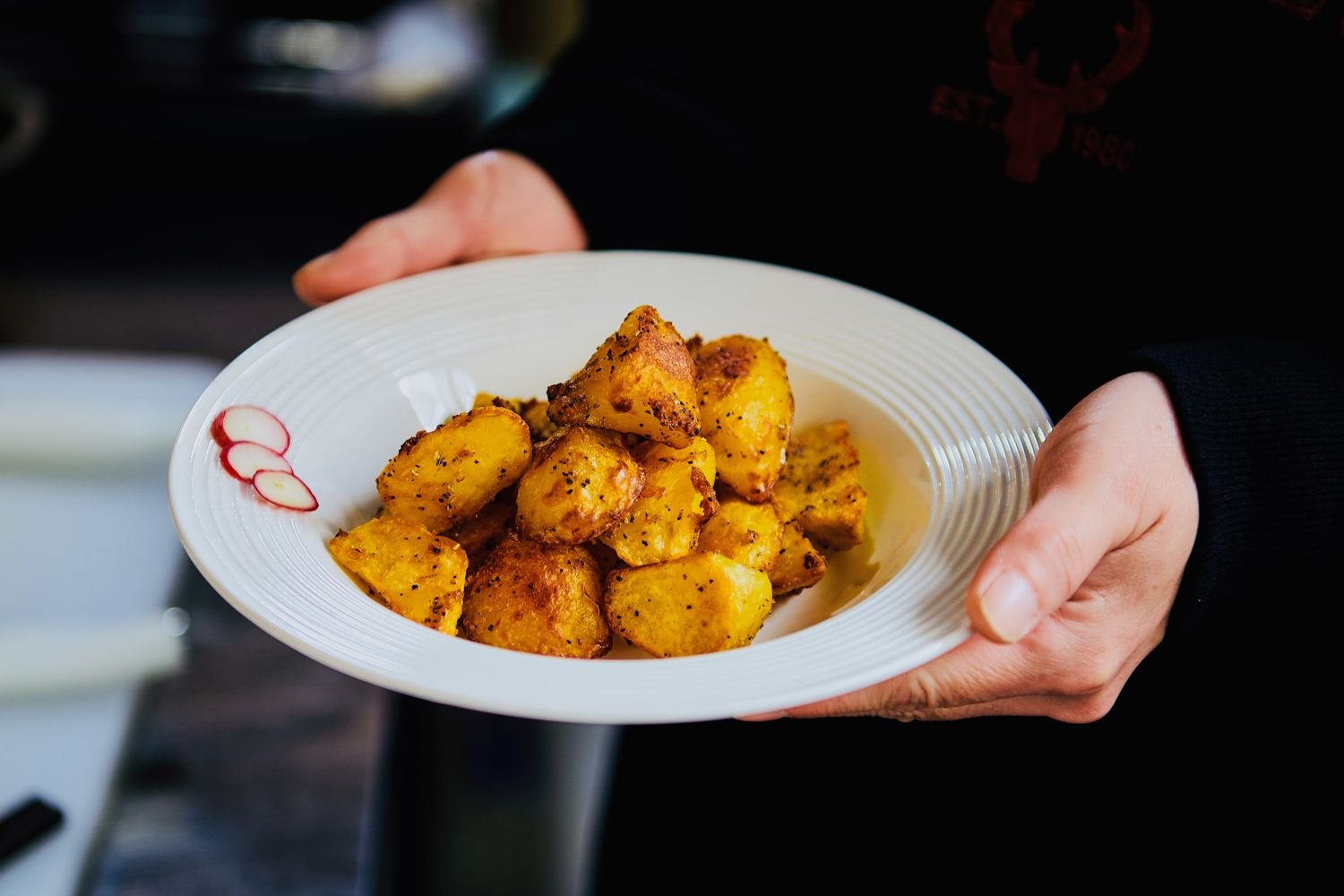
You bought a bag of potatoes and are debating whether they go in the pantry or the refrigerator. Or you just baked a potato for dinner and are not sure how to store the leftover half. The answer is different depending on whether the potato is raw or cooked, and for raw potatoes, the refrigerator is the wrong choice for a reason most people do not know.
Do potatoes need to be refrigerated?
The short answer: Whole raw potatoes should not be refrigerated. Cold temperatures convert the starch in potatoes to sugar, which changes the flavor and causes problems during cooking, particularly for frying and roasting. A cool dark pantry between 45 and 55 degrees Fahrenheit is the right place. Cooked potatoes must be refrigerated and used within 3 to 5 days. Foil-wrapped baked potatoes need the foil removed before going in the fridge.
For storage times and spoilage signs, see our companion post Do Potatoes Go Bad? or browse the full Food Storage Guide.
Key Takeaways
- Whole raw potatoes: cool dark pantry, not the refrigerator
- Refrigerating raw potatoes converts starch to sugar, ruining frying and roasting quality
- Exception: if you only boil or mash, refrigeration is safe and extends shelf life
- Cooked potatoes: must be refrigerated within 2 hours, use within 3 to 5 days
- Foil-wrapped baked potatoes: remove the foil before refrigerating
- Cut raw potatoes: refrigerate submerged in cold water, use within 24 hours
- Raw potatoes do not freeze well; cooked potatoes freeze for up to 12 months
Why Whole Raw Potatoes Should Not Go in the Fridge
Refrigerating whole raw potatoes feels like the safe, sensible choice. It is the wrong one for most situations, and for a specific chemical reason.
When potatoes are stored below 42 degrees Fahrenheit (6 degrees Celsius), which includes the temperature range of most home refrigerators, a process called cold sweetening occurs. The cold triggers enzymes in the potato to convert stored starch into reducing sugars, primarily glucose and fructose. This makes the potato taste sweeter than expected, which sounds harmless. The problem shows up during cooking.
When a potato with elevated sugar content is exposed to high heat, the sugars react with amino acids in a process called the Maillard reaction, which causes the potato to brown excessively and unevenly before it is cooked through. Refrigerated potatoes that are fried or roasted turn dark brown or even black on the outside while remaining undercooked inside. Commercial fry and chip producers carefully control storage temperatures specifically to limit cold sweetening, which is why refrigerating raw potatoes at home causes this browning problem for high-heat applications.
For boiling and mashing, cold sweetening does not matter. The extra sweetness is largely undetectable in mashed potatoes and the browning reaction does not occur in boiling water. If you only ever boil or mash your potatoes, refrigerating whole raw potatoes is safe and does extend shelf life meaningfully.
Where Whole Raw Potatoes Should Be Stored
The ideal storage environment for whole raw potatoes is cool (45 to 55 degrees Fahrenheit), dark, and well-ventilated. A pantry, cupboard, basement, or cellar that stays in this temperature range is the right choice. A paper bag, wire basket, or cardboard box provides the airflow they need. Do not use plastic bags, which trap moisture and accelerate mold growth and sprouting.
The darkness matters as much as the temperature. Light exposure triggers the production of chlorophyll and solanine, the natural toxin that gives green-skinned potatoes their safety concern. A bag of potatoes left on a bright counter or near a kitchen window can begin greening within days.
Do not wash potatoes before storing them. Moisture on the skin speeds up decay and sprouting. Wash only when you are ready to cook.
Cooked Potatoes Must Be Refrigerated
Once a potato is cooked, the refrigerator becomes mandatory. Cooking introduces moisture and heat that make the potato a potentially hazardous food, per Michigan State University Extension. The two-hour rule applies: cooked potatoes left at room temperature for more than two hours should be refrigerated immediately or discarded.
Store cooked potatoes in an airtight container in the refrigerator and use within 3 to 4 days per the USDA FoodKeeper app. This applies to all forms: baked, boiled, mashed, roasted, or scalloped. Cooked potatoes should be cooled as quickly as possible before refrigerating. For large quantities of mashed or roasted potatoes, spread them in a shallow container to speed cooling.
The Foil-Wrapped Baked Potato Warning
This is the most important food safety point in this post and the one most people miss. A baked potato wrapped in aluminum foil and left to cool creates a warm, moist, low-oxygen environment after the oven is turned off. These are the conditions that allow Clostridium botulinum spores to germinate and produce botulinum toxin. Foil-wrapped baked potatoes have been associated with botulism outbreaks and are flagged specifically by the USDA and Michigan State University Extension as a food safety risk.
The fix is simple: remove the foil before putting the potato in the refrigerator. Store the potato in an airtight container or wrap it loosely in plastic wrap instead. Refrigerate within two hours of cooking. Do not leave a foil-wrapped baked potato on the counter overnight, even if you plan to refrigerate it in the morning.
Never Leave These at Room Temperature
- Cooked potatoes in any form: 2-hour limit. Refrigerate or discard.
- Foil-wrapped baked potatoes: Remove foil before refrigerating. Do not leave wrapped overnight.
- Cut raw potatoes out of water: They oxidize and degrade quickly. Submerge in cold water and refrigerate immediately.
- Potato salad or potato-based dishes with mayonnaise or dairy: 2-hour limit applies to the whole dish.
Quick Storage Reference
- Whole raw potato: Cool dark pantry or cupboard, paper bag or basket, 3 to 5 weeks. Not the fridge (unless only boiling or mashing).
- Cut raw potato: Submerged in cold water, airtight container, refrigerator. Use within 24 hours.
- Baked potato: Remove foil, airtight container or loose plastic wrap, refrigerator within 2 hours. Use within 3 to 4 days.
- Mashed potato: Airtight container, refrigerator within 2 hours. Use within 3 to 4 days. Freeze up to 12 months.
- Roasted or boiled potato: Airtight container, refrigerator within 2 hours. Use within 3 to 4 days.
Why the Pantry Works for Whole Potatoes
Potatoes are underground tubers that evolved to be stored in cool, dark, stable conditions through the winter. Their skin is a natural barrier against moisture loss and light exposure. The ideal home storage temperature (45 to 55 degrees Fahrenheit) is colder than most kitchens but warmer than most refrigerators, which is why a basement, cellar, or interior pantry away from heat sources is the best option most home cooks have. Proper curing after harvest (drying and toughening the skin) is why farm-fresh or farmers market potatoes often last longer than supermarket ones, which may have been stored in commercial cold storage and partially sweetened before reaching your kitchen.
Further Reading
Do Potatoes Need to Be Refrigerated FAQ
I already refrigerated my raw potatoes. Are they ruined?
For frying or roasting, yes, the quality has been affected. The cold sweetening process begins quickly at refrigerator temperatures, and the resulting elevated sugar content will cause the potatoes to brown unevenly and excessively at high heat. For boiling or mashing, they are still fine. The sweetness from cold sweetening is largely undetectable in mashed potatoes. If you need to fry or roast them, bring them to room temperature for 30 minutes before cooking and be prepared for some extra browning.
Can I leave a baked potato out overnight?
No. A baked potato left at room temperature for more than two hours should be discarded. If it was wrapped in foil, the risk is higher because the foil creates a low-oxygen environment after cooking that can support Clostridium botulinum growth. Remove the foil, refrigerate within two hours of cooking, and the potato is safe for 3 to 4 days in the fridge.
Why did my fried potatoes turn black?
Almost certainly because the potatoes were refrigerated before frying. Cold sweetening converts potato starch to glucose and fructose. When those sugars hit the high heat of frying oil, they caramelize and burn through the Maillard reaction before the potato is cooked through, producing dark brown or black coloring on the outside. The potatoes are not spoiled, but the quality is compromised. Next time, store raw potatoes in a cool pantry and bring them to room temperature before frying.
How long can cut potatoes sit in water in the fridge?
Up to 24 hours. Submerging cut raw potatoes in cold water and refrigerating them prevents the enzymatic browning that occurs when the cut surface is exposed to air. After 24 hours, the potato begins losing starch and flavor into the water and the texture starts to degrade. For best results, cut and water-store potatoes the night before you plan to cook them and use them within that window. Change the water once if storing for the full 24 hours.
Better Living may earn commissions through affiliate links and may occasionally feature sponsored or partner content. If you make a purchase through our links, we may receive a small commission at no cost to you.
