
Key Takeaways
- Lewensztain founded That’s it. in 2012, bringing the bootstrapped brand to farmers markets.
- An early Whole Foods national rollout secured additional partnerships and ongoing growth.
- The business takes a strategic, intentional approach to innovation that centers its initial mission.
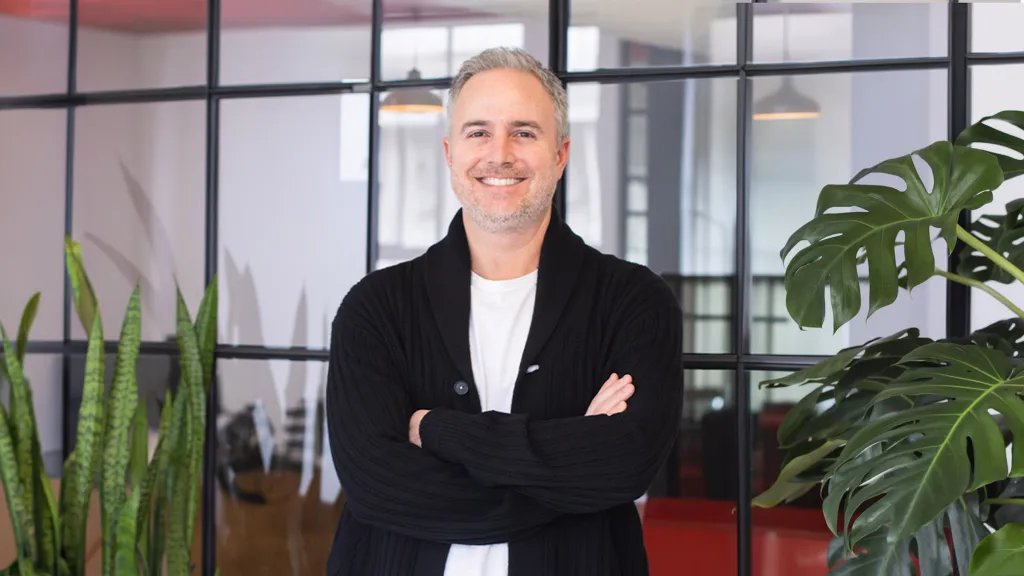
During medical school in 2005, Dr. Lior Lewensztain stumbled upon a sobering statistic: only about one third of Americans hit their recommended daily servings of fruit. Lewensztain wanted to change that. So he started to learn more about the products available on supermarket shelves.
Lewensztain’s research found that although a lot of CPG products incorporated purees, concentrates and “fruit leather type” formulations, the market lacked snacks with real fruit, minimal ingredients and no added sugar.
The prospect of becoming an entrepreneur “came out of left field.” But Lewensztain was determined to build a fruit-first CPG brand of his own. After graduating from medical school, he joined an accelerated MBA program.
Leveraging an MD and MBA to start a business: That’s it.
“I got a business degree with the intent of utilizing both backgrounds to practice medicine on a grander scale and in a more of a preventative way,” Lewensztain says, “especially trying to get kids to develop better habits — to let them know that they can actually eat things that taste good and are good for you.”
Lewensztain founded his fruit-focused snack brand in 2012. He named the business That’s it. to encapsulate its simple, few ingredients. A bar with just two (one fruit and a second fruit) became its first and core product.
First, Lewensztain took his bootstrapped brand to farmers markets to see if it had legs. Steady interest was there, and within a few months, That’s it. submitted for a Whole Foods national rollout program — and became one of four businesses selected to participate.
Navigating major retail distribution and expansion
The learning curve was steep, demanding astute navigation of manufacturing and supply chain, Lewensztain admits, but the Whole Foods partnership generated significant awareness and landed additional accounts. Soon, That’s it. hit other major retailers, including Target and Starbucks.
The business continued on its growth trajectory, with a notable inflection during the pandemic when people started paying closer attention to what they were consuming, Lewensztain adds.
Now, in addition to those early retailer partnerships, That’s it. is available in numerous other stores, including Costco, Sam’s Club, Walmart, and on American Airlines flights. The brand also sells online through its official website and on Amazon. That’s it. currently sees more than $100 million in annual revenue.
Balancing the business’s scale with sustainable growth
Balancing scale with sustainable growth has always been one of the business’s biggest challenges, Lewensztain notes.
About nine years ago, the business took a small undisclosed amount of capital, but That’s it. “very consciously” avoided the venture capital route, determined to retain full control over the business and its infrastructure.
“Because we’re not venture-backed, we have to even more so really mind every cent and reinvest into the right places to help fuel that growth,” the founder says.
Investing in innovation that aligns with brand goals
Naturally, innovation is a key investment area in the ever-evolving, crowded CPG space. But it’s not as straightforward as churning out a series of trendy products for the sake of it.
That’s it.’s challenge — and opportunity — lies in staying true to the heart of its brand when it comes to any product development.
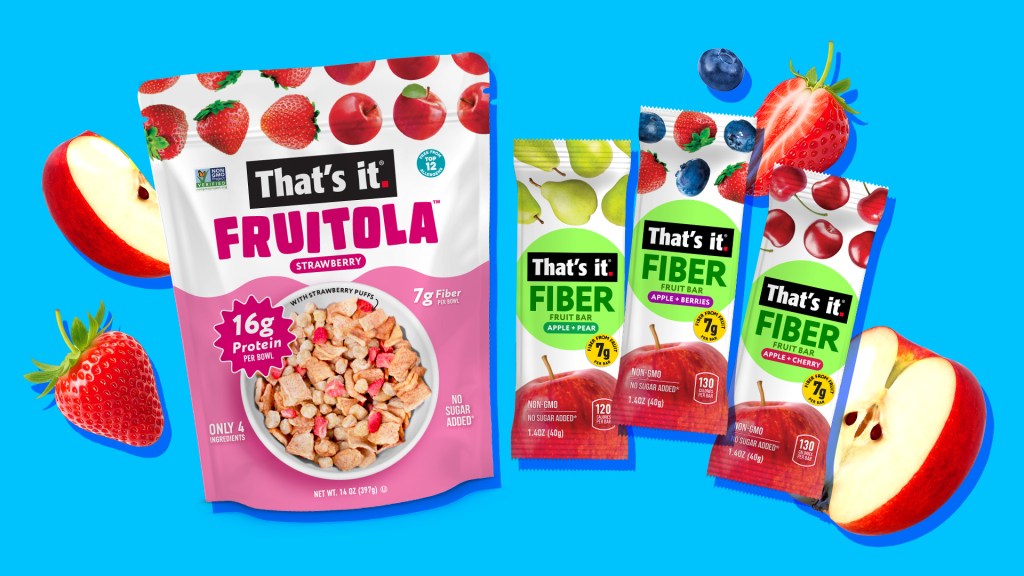
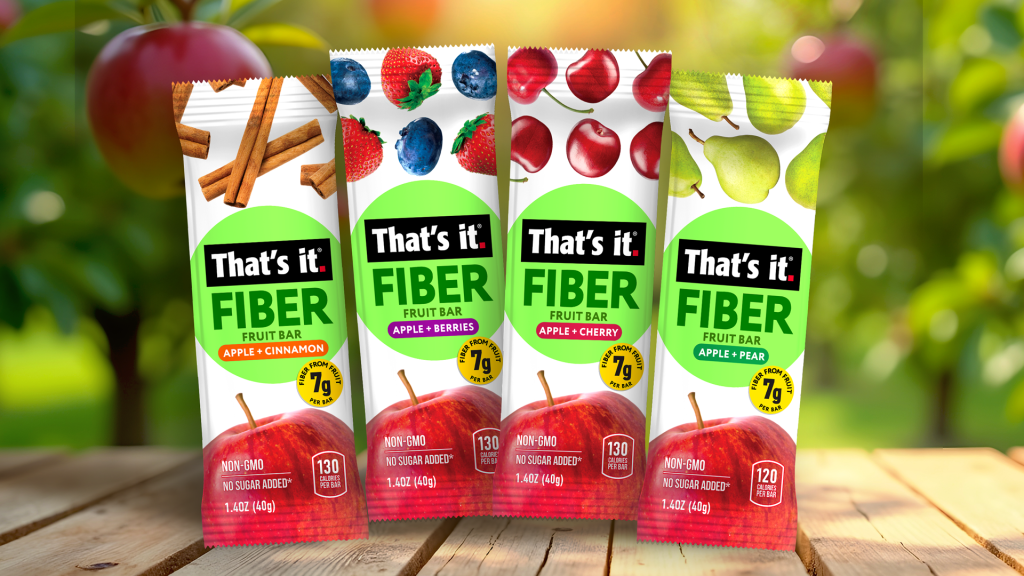
That’s it.’s new fiber bar, which introduces added nutritional benefits but keeps fruit center stage, serves as a recent example.
Over the years, amid an increased American interest in protein intake, Lewensztain’s received a lot of requests for a protein-packed bar.
However, even feedback that seems well-informed and on the nose isn’t worth taking if it misses the mark on brand intention. That’s it.’s guiding mission was always fruit, going back to Lewensztain’s medical school days and his initial business inspiration.
Adding protein to the brand’s flagship fruit bars just didn’t align with that goal. “There are a lot of protein bars,” Lewensztain says. “There wasn’t a need for another one to enter the category.”
A focus on fiber that doesn’t miss the mark
Instead, That’s it. turned its attention to a bar with a focus on fiber (an ingredient enjoying popularity amid fibermaxxing, a trending term encouraging people to increase their fiber intake), which naturally occurs in fruit.
“We’ve elevated the amount of fiber, all from fruits, which is a very big distinction compared to fiber ingredients that are extracted and then added back,” Lewensztain explains. “It’s much easier on the body and comes with a lot better benefits in terms of health and wellness.”
Another recent addition to the product line-up is Fruitola, a snack blend featuring fiber from fruit and protein from plants. “We don’t like to copycat,” Lewensztain says. “We like to bring newness to the market.”
To that end, fruit-forward simplicity in snacks remains the brand’s overarching goal.
“We served 250 million servings of fruit last year,” Lewensztain notes. “Our target is over 350 million this year, and we’re even tacking on a billion grams of fiber as well.”
Staying true to the original mission and meeting demand
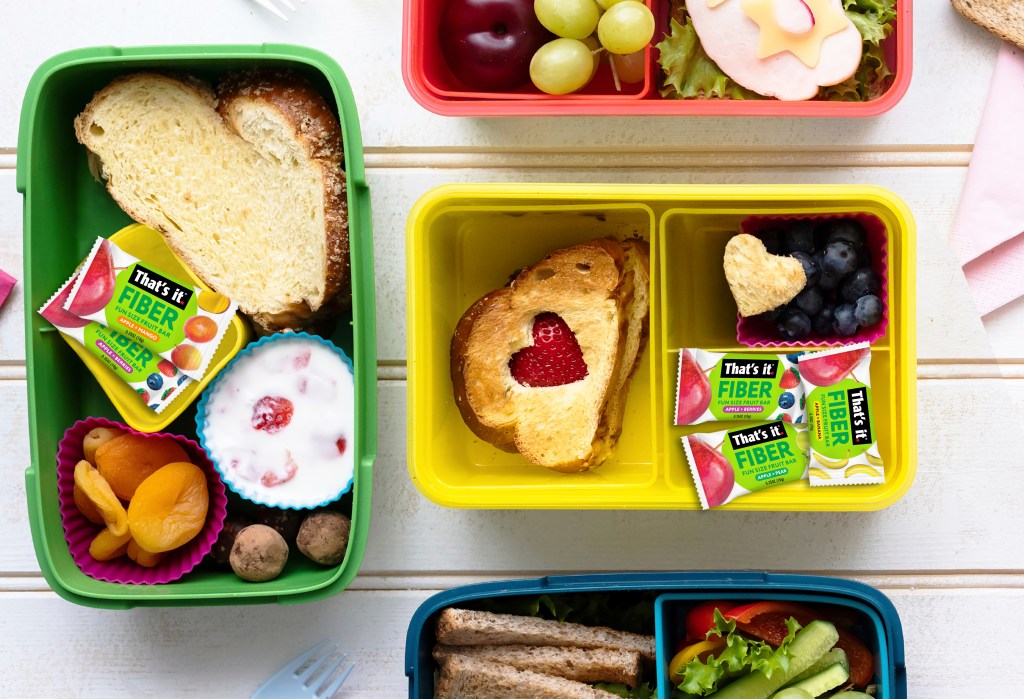
Even with its expanded line today, That’s it.’s products still have anywhere from one to five ingredients, which is fairly unusual across CPG brands, Lewensztain adds.
The founder is proud the business hasn’t strayed from its original mission and sees even more potential ahead, as more consumers, especially among younger generations, seek transparent products with minimal ingredients.
“ They want cleaner, healthier, better for you,” Lewensztain says. “We’ve always been that. We never had to change; we never had to remove anything. That’s kind of that medical background kicking in, but that was really the idea all along for us.”
Key Takeaways
- Lewensztain founded That’s it. in 2012, bringing the bootstrapped brand to farmers markets.
- An early Whole Foods national rollout secured additional partnerships and ongoing growth.
- The business takes a strategic, intentional approach to innovation that centers its initial mission.
During medical school in 2005, Dr. Lior Lewensztain stumbled upon a sobering statistic: only about one third of Americans hit their recommended daily servings of fruit. Lewensztain wanted to change that. So he started to learn more about the products available on supermarket shelves.
Lewensztain’s research found that although a lot of CPG products incorporated purees, concentrates and “fruit leather type” formulations, the market lacked snacks with real fruit, minimal ingredients and no added sugar.
The prospect of becoming an entrepreneur “came out of left field.” But Lewensztain was determined to build a fruit-first CPG brand of his own. After graduating from medical school, he joined an accelerated MBA program.
