
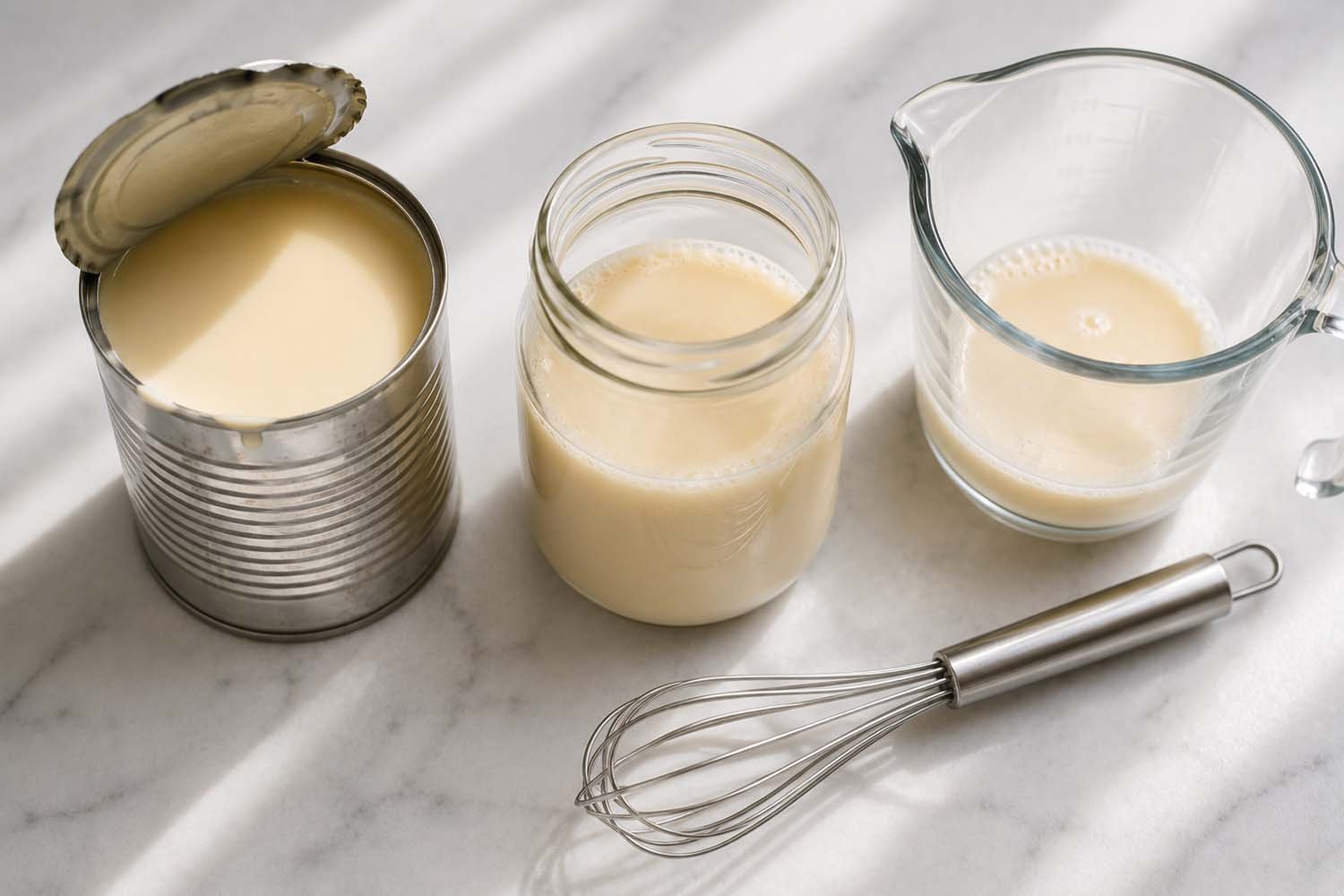
You open the pantry and find a can of evaporated milk with a best-by date from 18 months ago, or you cracked open a can for a recipe and are not sure how long the rest will last. Does evaporated milk go bad?
The short answer: Yes, evaporated milk goes bad. Unopened, it is a shelf-stable canned product with a best-by date of about 12 months per Carnation, but it often remains usable for several months to a year past that date if the can is undamaged and properly stored. Once opened, it is a perishable dairy product that must be refrigerated and used within 3 to 5 days. Carnation recommends 5 days for best quality, while PET Milk recommends 2 to 3 days. The smell, color, and texture tests are reliable guides to whether an open or old can is still good.
For a full overview of how dairy and pantry products compare on shelf life, visit our Complete Food Storage Guide.
📋 Evaporated Milk: At a Glance
- Unopened: best quality through the printed date (typically 12 months per Carnation). Safe for several months to a year past date if can is undamaged.
- Opened: 3 to 5 days refrigerated. Transfer immediately to an airtight container: do not store in the original tin.
- Room temperature after opening: 2 hours maximum per USDA guidelines. After that, discard.
- Do not freeze unopened cans. Carnation warns that freezing can compromise the can seam and lead to spoilage.
- Opened evaporated milk can be frozen in an airtight container for up to 3 months, with some texture change.
- Damaged cans are a botulism risk. Discard any can that is bulging, leaking, severely dented, or rusted without opening.
Key Takeaways
- Evaporated milk is heat-sterilized, which gives it a much longer shelf life than fresh milk. The sterilization process also produces the slightly caramelized flavor and golden color that distinguish it from regular milk.
- Once opened, treat it like fresh dairy. The canning environment is gone. Bacteria can now reach the milk and it will spoil within days.
- Transfer to an airtight container immediately after opening. Storing in the original tin can affect flavor over time as the metal interacts with the milk.
- The best-by date applies to quality, not safety, for undamaged cans. Per USDA and FDA guidance, date labels on canned goods refer to peak quality, not a safety cutoff.
- Evaporated milk is not the same as condensed milk. Evaporated milk has no added sugar. Condensed milk is sweetened. They cannot be substituted directly in recipes.
- Milk skin that forms after 2 days in the fridge is normal per Carnation. It is not a spoilage sign and is safe to stir back in or remove.
How Long Does Evaporated Milk Last?
Evaporated milk is whole or nonfat milk that has had approximately 60% of its water removed through heating, then sterilized at high temperature in a sealed can. The sterilization kills bacteria and the sealed environment prevents recontamination, giving it a shelf life far beyond regular milk. The best-by date reflects when the manufacturer guarantees peak quality, not when it becomes unsafe.
| Status | Shelf Life | Storage |
|---|---|---|
| Unopened, pantry | About 12 months (Carnation); often several months to a year past best-by if undamaged | Cool, dry pantry; 50 to 70°F ideal |
| Opened, refrigerated in airtight container | 3 to 5 days (Carnation: 5 days; PET: 2 to 3 days) | Refrigerator at 40°F or below |
| Opened, left at room temperature | 2 hours maximum per USDA guidelines | Discard after 2 hours at room temperature |
| Opened, frozen in airtight container | Up to 3 months (texture change expected) | Airtight freezer-safe container; not in original can |
Shelf life guidance per Carnation (Nestlé) brand guidance and PET Milk brand guidance. USDA and FDA confirm that best-by dates on canned goods refer to quality, not safety. Undamaged cans in good condition are often safe past the printed date; always check for spoilage signs before use. The 2-hour room temperature rule is per USDA food safety guidelines for opened dairy products.
What Makes Evaporated Milk Shelf-Stable and When That Ends
The Canning Process and Its Limits
Evaporated milk achieves its long shelf life through two mechanisms working together: water removal and heat sterilization. Removing 60% of the water reduces the available moisture that bacteria need to survive and multiply. The high-temperature sterilization step then kills any remaining microorganisms and seals them out permanently as long as the can is intact.
This is also why the color and flavor of evaporated milk differ from fresh milk. The high heat causes the Maillard reaction between milk proteins and lactose, producing the slightly golden color and mildly caramelized sweetness that characterize evaporated milk. This is a normal product of the processing, not a spoilage sign.
The shelf stability ends completely the moment the can is opened. Once the seal is broken, the sterilized environment is gone. Air, bacteria from the surrounding environment, and anything that touches the milk can now contaminate it. From that point, evaporated milk is a perishable dairy product that behaves similarly to pasteurized fresh cream and must be treated accordingly.
A second stability concern applies to the can itself. Damaged, dented, rusted, bulging, or leaking cans are a potential botulism risk regardless of the best-by date. Clostridium botulinum is an anaerobic bacterium that can grow and produce toxin inside damaged canned goods. The USDA and FDA are clear: discard any canned good with those damage signs without opening or tasting.
How to Tell If Evaporated Milk Has Gone Bad
Signs of Spoilage
Check the can first (unopened): Before opening any can of evaporated milk, inspect it. Bulging ends indicate gas production from bacterial activity inside, a serious spoilage sign. Rust, leaks, severe dents, or any damage to the seam are discard triggers. Do not open damaged cans to smell or taste the contents. Discard intact.
Smell after opening: Fresh evaporated milk has a clean, slightly sweet, mildly caramelized dairy aroma. Spoiled evaporated milk smells sour, rancid, or distinctly off. The sourness is the most common indicator and is similar to the smell of curdled or sour cream. If something smells wrong immediately on opening, discard without tasting.
Color check: Fresh evaporated milk is creamy off-white to light golden from the heat processing. Significant darkening beyond the expected golden color, gray discoloration, or pink tinges indicate bacterial contamination or significant oxidation. Discard any evaporated milk with unusual discoloration.
Texture check: Fresh evaporated milk is thick and smooth. Curdling, chunky separation, or a grainy texture that cannot be stirred smooth indicates spoilage. Some very minor separation can occur in canned milk that has been sitting undisturbed, but it should reconstitute smoothly when stirred or shaken. Chunks that do not dissolve mean discard.
Milk skin (normal, not spoilage): Per Carnation, a layer of milk skin or film forms on top of refrigerated opened evaporated milk after about 2 days when it is not tightly sealed and exposed to air. This skin is the same protein film that forms on heated fresh milk. It is not harmful and is edible. Stir it back in or remove it. Its presence alone is not a spoilage sign.
Time-based discard: Regardless of appearance, discard opened evaporated milk after 5 days in the refrigerator. Per Carnation’s guidance and USDA dairy handling standards, even milk that appears normal should not be consumed past this window.
How to Store Evaporated Milk
Storage Best Practices
Unopened cans: cool, dry pantry. Store between 50 and 70°F away from heat sources, direct sunlight, and moisture. Do not store cans directly on concrete floors in damp basements as this can accelerate rusting. A pantry shelf or kitchen cabinet away from the stove is ideal.
After opening: transfer immediately to an airtight container. Do not leave evaporated milk in the opened tin. Metal cans begin to interact with the milk content once the protective vacuum seal is broken, which can affect flavor. Pour the remaining milk into a glass jar, plastic airtight container, or resealable container. Refrigerate at 40°F or below. Use within 3 to 5 days.
Do not freeze unopened cans. Carnation explicitly warns against freezing unopened cans: the freezing process can compromise the can seam and lead to spoilage. If you want to extend the life of unused evaporated milk, open the can, transfer to a freezer-safe airtight container, and freeze that.
Freezing opened evaporated milk: Pour into an airtight freezer-safe container or into an ice cube tray, freeze until solid, then transfer cubes to a freezer bag. Label with the date. Use within 3 months. Expect some texture change on thawing: the milk may separate and appear grainy. Whisk or blend vigorously after thawing. It works fine in cooked applications like soups, mac and cheese, and baked goods but may be less appealing for drinking or coffee due to the texture change.
Rotate your stock. Evaporated milk is a pantry staple that many households buy and forget. Use older cans first (check the date on the bottom), and add new cans to the back of the shelf.
Evaporated Milk vs. Condensed Milk: Key Differences
Evaporated milk and sweetened condensed milk are often confused because both come in similar cans and both are concentrated dairy products. The critical difference is sugar.
Evaporated milk has no added sugar. It is used in savory and sweet recipes where you want dairy richness without sweetness. It can be diluted with equal parts water to substitute for regular milk in cooking and baking.
Sweetened condensed milk contains a large amount of added sugar, typically around 40 to 45% sugar by weight per Eagle Brand and USDA FoodData Central nutritional data. The sugar acts as a preservative and gives it its distinctive thick, sweet character. It is used in desserts, dulce de leche, and as a coffee sweetener. See our companion post Does Caramel Sauce Go Bad? for related shelf life information.
They cannot be substituted for each other without significantly changing the recipe.
How to Use Leftover Evaporated Milk
If you opened a can for a recipe and have some left, the 3 to 5-day window gives you enough time to use it in several ways. Add it to coffee or tea in place of cream. Use it in mac and cheese for extra richness. Stir it into soups or chowders. Add it to mashed potatoes instead of regular milk. Use it in pancake or waffle batter. Make a quick fudge or candy. Add it to scrambled eggs before cooking for a creamier texture.
Recipes That Use Evaporated Milk
Frequently Asked Questions
How long does evaporated milk last after opening?
Opened evaporated milk lasts 3 to 5 days refrigerated in a sealed airtight container. Carnation recommends up to 5 days for best quality. PET Milk recommends 2 to 3 days. Transfer from the original tin to an airtight container immediately after opening. Do not leave at room temperature for more than 2 hours per USDA guidelines. Discard after 5 days regardless of appearance.
Can you use evaporated milk past its best-by date?
Yes, for unopened cans, if the can is undamaged. Per USDA and FDA guidance, best-by dates on canned goods refer to quality, not safety. An undamaged can of evaporated milk is often still good for several months to a year past the printed date. Inspect the can for bulging, rust, leaks, or dents before opening. Once opened, check for off smell, unusual color, or curdling. If it passes all checks, it is likely still good.
What does bad evaporated milk look and smell like?
Spoiled evaporated milk smells sour, rancid, or distinctly off compared to its normal mild, slightly sweet dairy aroma. It may appear darker than the expected light golden color, show gray or pink discoloration, or have a chunky, grainy texture that does not smooth out when stirred. Any of these signs means discard. Unopened cans that are bulging, leaking, or severely dented should be discarded without opening.
Can you freeze evaporated milk?
You can freeze opened evaporated milk in an airtight container for up to 3 months. Do not freeze it in the original tin. Expect some separation and texture change on thawing: whisk or blend after thawing to restore a smoother consistency. Frozen and thawed evaporated milk works well in cooked applications like soups, chowders, and baked goods but may be less appealing for drinking or adding to coffee due to texture changes. Do not freeze unopened cans: Carnation warns this can compromise the seam.
Is evaporated milk the same as condensed milk?
No. Both are concentrated canned dairy products but they differ in sugar content. Evaporated milk has no added sugar and is used in both savory and sweet recipes. Sweetened condensed milk contains large amounts of added sugar and is used primarily in desserts. They cannot be directly substituted for each other in recipes. Evaporated milk can be diluted with equal parts water to approximate regular milk. Condensed milk cannot be used this way without dramatically altering the sweetness of the recipe.
Can evaporated milk substitute for regular milk?
Yes. Dilute evaporated milk with an equal amount of water (1:1 ratio) to produce a substitute for regular whole milk in most cooking and baking applications. The result will be slightly richer than regular milk due to the concentrated proteins and sugars, but it works in most recipes. Undiluted evaporated milk can also substitute for heavy cream in some recipes where a slightly less rich result is acceptable.
Why does evaporated milk look golden and taste slightly sweet?
The golden color and mild sweetness come from the Maillard reaction, a chemical reaction between milk proteins and lactose (milk sugar) that occurs during the high-temperature sterilization process. This is the same reaction that browns bread and caramelizes onions. It is a normal product of the manufacturing process, not a spoilage sign. Evaporated milk that looks golden and smells slightly sweet and caramelized is perfectly fresh.
There is a film on top of my refrigerated evaporated milk. Is it still good?
Yes, in most cases. Per Carnation, a layer of milk skin or film forms on top of refrigerated evaporated milk after about 2 days when it is not tightly sealed and exposed to air. This is the same protein film that forms on the surface of heated fresh milk. It is not a spoilage sign and is edible. Stir it back in or remove it. Check the overall smell and texture to confirm the milk is otherwise still good before using.
Should you refrigerate evaporated milk before opening?
No. Unopened canned evaporated milk is shelf-stable and does not benefit from refrigeration before opening. Store in a cool, dry pantry away from heat and direct light. Refrigerating an unopened can does not meaningfully extend its shelf life and takes up refrigerator space unnecessarily. Refrigerate only after opening.
What is evaporated milk used for?
Evaporated milk is used in recipes that benefit from concentrated dairy richness without added water. Common uses include pumpkin pie filling, mac and cheese, soups and chowders, fudge, candy, ice cream, alfredo sauce, mashed potatoes, and coffee or tea as a cream substitute. It can be diluted with equal parts water to substitute for regular milk. In savory cooking it adds richness without the weight of heavy cream. Its neutral, slightly sweet flavor makes it versatile across both sweet and savory applications.
Can you make evaporated milk at home?
Yes. To make homemade evaporated milk, pour 2 1/4 cups of whole or 2% milk into a saucepan and simmer over low heat, stirring frequently, until it reduces to 1 cup. This removes approximately 55 to 60% of the water, which is roughly the same reduction used in commercial evaporated milk. The result will have a slightly cooked flavor similar to commercial evaporated milk. Use immediately or refrigerate in an airtight container for up to 3 to 5 days. Homemade evaporated milk is not sterilized the way canned versions are, so it should be refrigerated and used promptly.
Can you drink evaporated milk straight?
Yes. Evaporated milk is safe to drink straight from the can or poured into a glass. It has a richer, slightly sweeter, and more concentrated flavor than regular milk due to the water reduction and Maillard reaction during processing. Many people use it as a coffee creamer directly from the can. It is nutritionally similar to whole milk but with roughly double the concentration of nutrients and calories per volume. If the flavor is too intense, dilute with equal parts water to approximate regular whole milk.
Further Reading
Better Living may earn commissions through affiliate links and may occasionally feature sponsored or partner content. If you make a purchase through our links, we may receive a small commission at no cost to you.
