
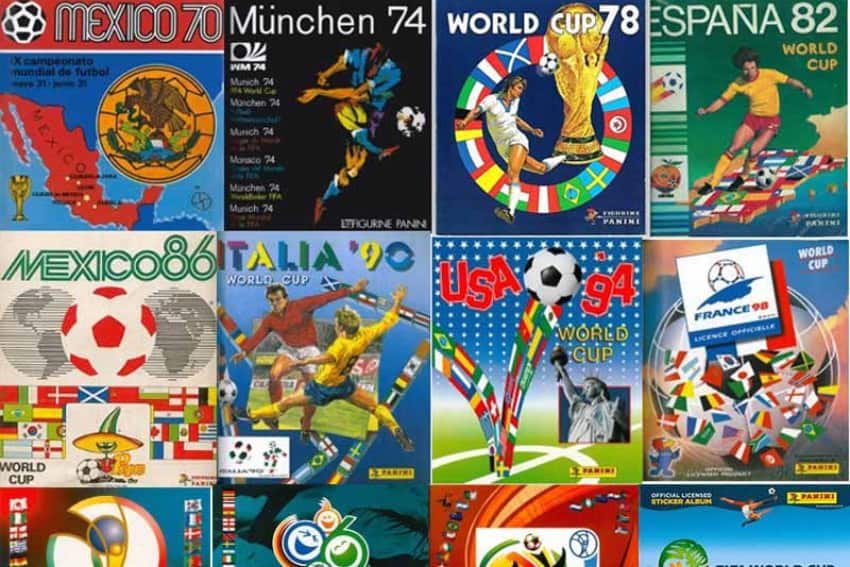
Modena is a small Italian city of 184,739 inhabitants. It is known for its car industry with Ferrari, Lamborghini and Maserati all having connections to the city, for a university dating to 1175 and for its excellent balsamic vinegar. It is also home to Panini, the makers of the World Cup stickers and trading cards that millions of football fans will be collecting when the tournament kicks off in North America in a few weeks.
These items have a very special link to Mexico, for it was in the 1970 tournament — hosted by Mexico — that they went “international” for the first time.
A future in cards
The story starts 60 years ago, when the Panini family operated one of the small kiosks that once thrived in Italy, a place to buy newspapers, magazines, postcards and cigarettes. Olga Panini managed the kiosk with help from two of her sons, Benito and Giuseppe.
The boys were entrepreneurs, and they formed a small business of their own that distributed newspapers around the town. The man who took them into cards was Giuseppe. He had the idea of selling pictures of local flowers and plants. There wasn’t much interest, but he sensed that the idea was good; it was only the subject matter that had let him down.
When offered a large number of leftover cards showing Italian soccer players, he bought them all. Poorly printed with faded colors on cheap cards, Giuseppe bundled them up into packets and sold them locally.
This was the early 1960s. The Northern Italian economy was slowly improving, but few people could afford the luxuries we enjoy today. Children longed for toys, and the cards (called figurines in Italy) were cheap enough to build up a large collection. It was not just a case of collecting the stickers; there was the excitement of swapping, completing a team from one club, and showing cards of your favorite player to envious schoolmates.
The cards sold well, and Giuseppe and Benito founded a company to expand the idea. The new firm was called Panini, and the brothers struck a deal with the Italian Football Association and went nationwide with their football cards.

The technology for producing the cards was still primitive. For example, it was vital to mix up the cards so that the young buyers didn’t feel cheated by getting two identical cards in the same pack, and the first way of doing this was to throw thousands of cards into a butter churn and whirl them around. That 1961–1962 collection, with its own special album, sold millions of packets, and the family has never looked back.
The 1970 World Cup in Mexico
By 1970, Panini was ready to move into the global market. Forming a partnership with FIFA, they published their first World Cup sticker album for the 1970 World Cup here in Mexico. It was a gamble. The 1966 tournament had been a dull and often bad-tempered event, saved in part by a dramatic final. There was no reason to presume Mexico would be any better.
Going international also brought considerable new challenges, from multilingual captions to world distribution. Marketing in 1970 was not international in today’s sense, and sales were limited to a few big European countries — West Germany, France, Spain and the U.K. Indeed, the stickers were not even on sale in Mexico!
The designs were of a reasonable quality, and a few of the special cards, such as those showing the national flags, introduced a new idea, a back that peeled away to reveal a sticky surface. There was a 48-page album consisting of 270 players, which meant only 11-14 players were featured per team. Mexico, as the host nation, was given three pages, while the “lesser teams,” such as El Salvador, were squeezed onto just two pages.
Panini leaps onto the world stage
Fourteen Mexican players, plus coach Raúl Cárdenas, appeared in the set, but of these, only seven were included in the World Cup squad when it was named. All the photos appear to have been taken at a training ground, and it seems likely that many players were absent when the photoshoot took place. Of the Mexican players featured in that collection, Ignacio Calderón, Gustavo Peña and Enrique Borja would rank amongst the nation’s all-time greats.
The 1970 World Cup in Mexico City proved the perfect occasion for Panini’s leap onto the world stage. Improved technology allowed the games to be beamed around the world, and more fans than ever watched the action on color television sets. The players joined in the excitement, with Peru and Brazil putting on a great show from the beginning. By the end, even the dull Italians were hitting four goals past Germany. The event captured the world’s imagination, and Panini rode the wave to become a billion-dollar business.
‘A network of soccer spies’
Since then, collecting and trading cards has become part of the World Cup experience. Noted collectors include Italy’s veteran goalkeeper Buffon and musician Ed Sheeran. The players themselves take it very seriously. Several have complained about unflattering pictures, and one team wrote to the designers informing them that the one of their squad was notably ugly, and could they do something about this on his card?
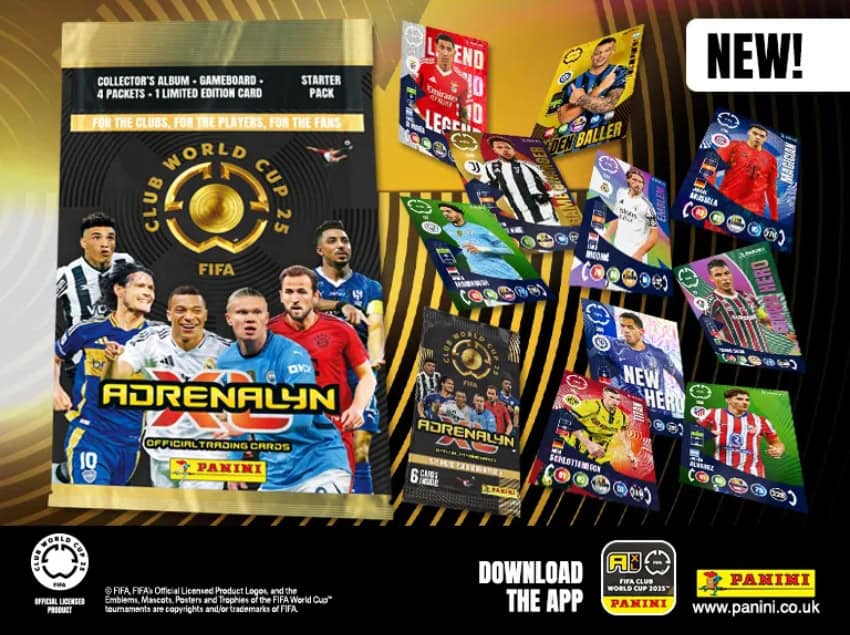
Work starts on the next World Cup the day after the previous final, and Panini has to start printing their millions of cards a few months before the squads are officially announced. This means surprise call-ups might not find a place in the album. However, Panini have been remarkably accurate in their selections. Most famously, they left German striker Mario Gómez out of the 2014 collection, which was considered a mistake until the squad was named without him. This led to a conspiracy theory that Panini had a secret network of soccer spies.
When this year’s album came out in April, it sparked considerable debate in Mexico by including several players who were unlikely to be in the squad either through injury or falling out of favor with coach Javier Aguirre. Most notable was the inclusion of injured goalkeeper, Luis Ángel Malagón.
An expensive hobby
The cards are fun, but are they a good investment? In 2017, a 1970 World Cup Panini sticker album signed by Pelé sold for a record 240,000 pesos. The value of individual cards depends on a combination of condition, rarity and fame. For example, cards from the 1970 collection featuring Alan Ball and Geoff Hurst — men with a World Cup medal from the previous tournament — fetch about 1,500 pesos per card.
Collecting has become more expensive. In 1970, you completed your collection by a combination of buying packets in the shop and swapping doubles on the school playground. Depending on how lucky you were, you could complete the album for around 180 pesos. (About 1,400 pesos today) This year, with 48 teams, the album stretches to 112 pages, and a conservative estimate is that it will cost around 7,600 pesos to complete a collection.
Price is unlikely to put people off, because, as we have said, collecting Panini cards is part of the World Cup experience!
Bob Pateman lived in Mexico for six years. He is a librarian and teacher with a Master’s Degree in History.
