
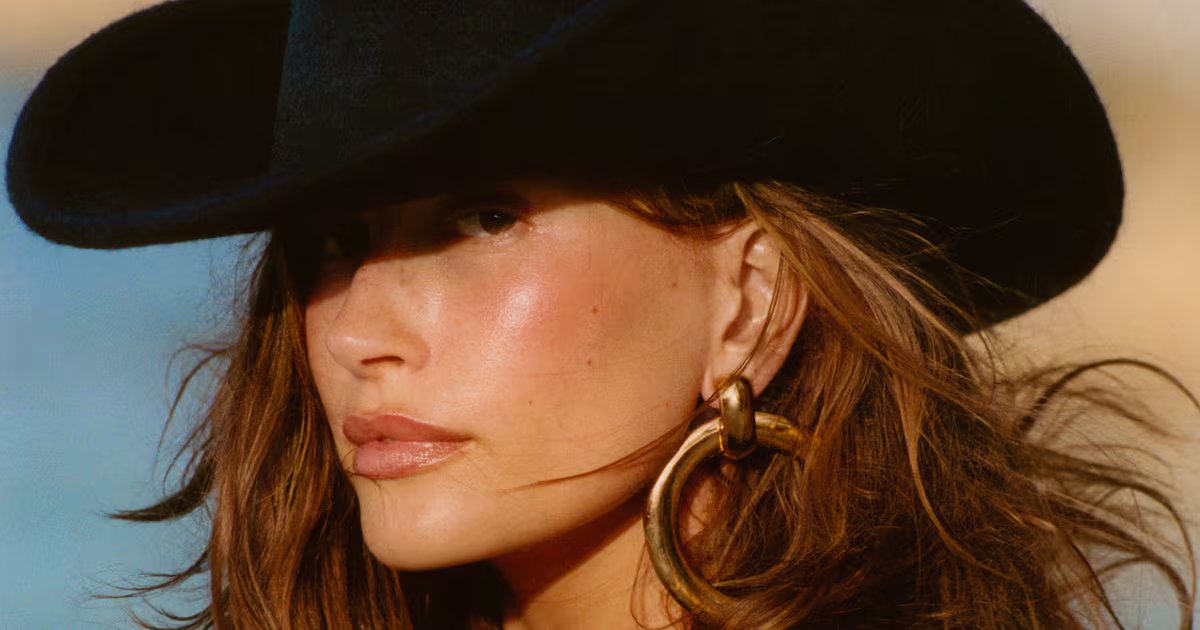
Hailey Bieber has put E.l.f. Beauty on the “Rhode” to more success.
In its earnings report on Wednesday, its first since acquiring the celebrity-founded skincare line, E.l.f. Beauty reported a 12 percent sales uptick in the first half of the year to $697 million. The past three months, which included the finalisation of Rhode’s acquisition, achieved 14 percent growth, as demand for its peptide-infused lip glosses and skincare basics proved robust.
The company, which makes the mass line E.l.f. Cosmetics and owns premium skincare maker Naturium, is projecting a net sales increase of 18 to 20 percent for the full year, up to $1.57 billion in sales.
Rhode’s Sephora launch on Sept. 4 “was by far the biggest launch Sephora North America has ever seen,” more than doubling the initial sales of the previous record holder, E.l.f. Beauty chief executive Tarang Amin told The Business of Beauty. According to a research note by TD Cowen, the brand took $15 million in sales in its first two days at Sephora.
Prior to its Sephora debut, Securities and Exchange Commission filings showed Rhode had garnered $40 million in quarterly sales through June 30, marking a slowdown for the brand.
The company is forecasting that Rhode will grow 40 percent to $300 million for the brand’s calendar year and $200 million for E.l.f. Beauty’s fiscal year. Its product launch rollout will continue to embrace Bieber’s slow-and-steady approach, said Amin.
“There will be a tight assortment, but quite meaningful,” he said.
The company is pursuing further international expansion to achieve its faster growth, with a Sephora launch for Rhode in the UK next week and Sephora Middle East expansion for E.l.f. Beauty, which is already stocked at Sephora Mexico.
“We’re the only company I know of that could launch in Sephora and Dollar General in the same quarter and have it make sense,” said Amin.
Produced in Italy and South Korea, Rhode’s tariff exposure is lower than that of E.l.f Beauty, which manufactures much of its assortment in China. Tariff effects dented the company’s margins around 2 percent, even after imposing price increases across its brand portfolio in August, including a $1 hike per product on E.l.f. Cosmetics, the third the company has taken in 21 years.
“We’re very conscious of what the consumer is going through, so we don’t want to over-price,” said Amin.
The brand has diversified its supply chain, with 75 percent of products now manufactured in China, down from 100 percent five years ago. But Amin does not plan to do more onshoring.
“We have an incredible advantage in China,” he said.
E.l.f. Beauty Acquires Hailey Bieber’s Rhode Skin for $1 Billion
In an interview with The Business of Beauty, E.l.f. chairman and chief executive Tarang Amin said the two brands recognised the “power” of joining forces.
