
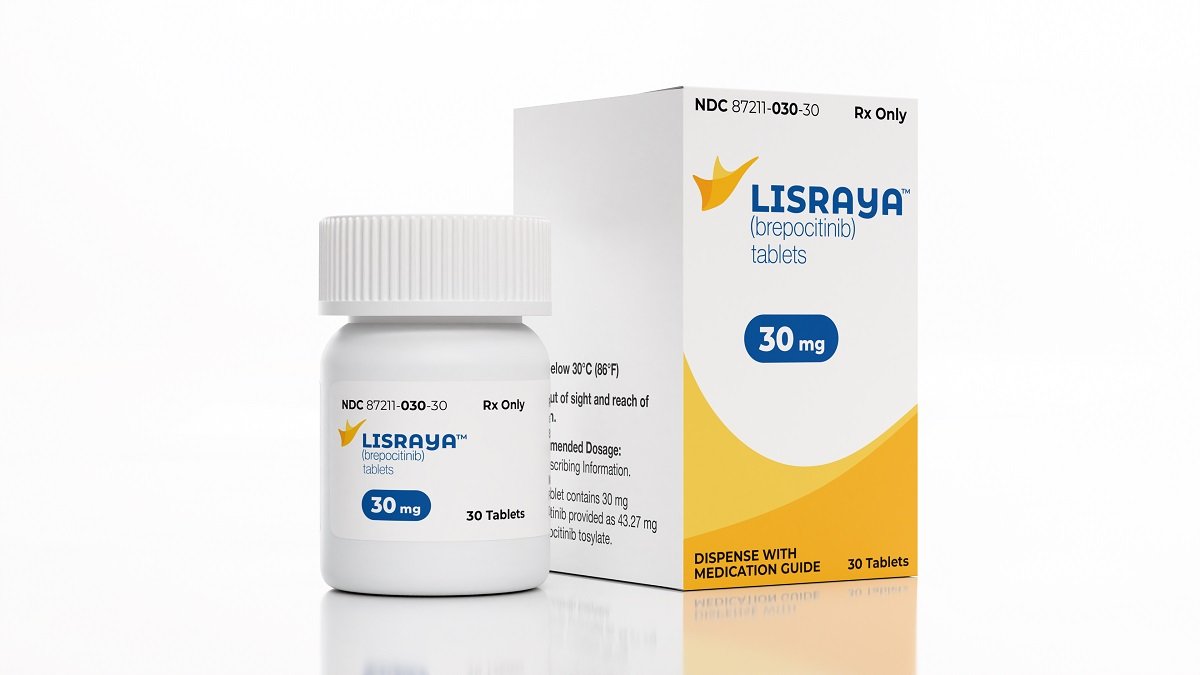
Treatment for dermatomyositis has not changed in decades, which makes a new FDA approval particularly meaningful for patients who have this rare immuinological disease affecting the skin and muscles. The available therapies aren’t specific to dermatomyositis and they come with a long list of limitations. Roivant Sciences’ new drug is the first developed to address an underlying driver of inflammation in this chronic condition.
The drug, brepocitinib, was developed by Roivant subsidiary Priovant Therapeutics. Following the late Thursday regulatory approval, the companies said this new once-daily pill is immediately available under the brand name Lisraya. The product’s launch follows many biopharmaceutical industry failures in the indication.
“Not for lack of trying, there have been a lot of attempts in history to bring some of the greatest drugs in immunology — Rituximab, Remicade, Enbrel, many others — across the finish line in dermatomyositis [DM], and none of those have been successful in DM-specific studies,” Roivant CEO Matt Gline said during a Friday morning conference call. “It’s just really exciting that we’ve been able to deliver this kind of opportunity and I think the DM patient and physician community have been waiting for a moment like this.”
While Lisraya’s approval is important for dermatomyositis patients, it’s also a win for Roivant’s strategy, which is executed in meeting rooms rather than in laboratories. Roivant finds assets that pharmaceutical companies no longer want and turns them into drugs that patients and investors value. Lisraya is not Roivant’s first FDA-approved drug, but it does carry expectations of becoming the biotech’s first blockbuster product.
Dermatomyositis develops as the immune system attacks the skin, sparking inflammation that presents as skin rashes. The attack on muscles leads to progressive muscle weakness. Roivant estimates that about 70,000 people in the U.S. have dermatomyositis. Standard treatment has been inflammation-reducing steroids and other drugs that broadly suppress the immune system, introducing complication risks along the way. Intravenous immunoglobulin (IVIG) may be used for severe cases. Made with antibodies sourced from the blood and plasma of healthy donors, IVIG is intended to calm the overactive immune response driving dermatomyositis. These options are not targeted therapies.
Lisraya is a small molecule designed to target and block JAK1 and TYK2, proteins that play key roles in inflammation. While JAK and TYK2 inhibitors have validation from FDA-approved medicines, none of these products address both targets together in a single drug. The FDA submission for Lisraya was based on a placebo-controlled Phase 3 study that included 241 adults with dermatomyositis. The main goal was measuring changes according to a rating index that assesses changes in skin and muscle — higher scores indicate better response and disease control.
Results at 52 weeks showed higher average scores in the Lisraya arm compared to the placebo group. Results also showed improvement in physical function and skin disease activity and a greater likelihood of reducing steroid use. Common adverse reactions reported in the study included upper respiratory tract infection, headache, fatigue, urinary tract infection, and nausea. Phase 3 data were published in March in the New England Journal of Medicine; additional skin-specific data were published Wednesday in JAMA Dermatology. Gline pointed out that Lisraya’s label is broad, permitting its use as a monotherapy or as an add-on to the non-targeted drugs used to treat dermatomyositis.
Lisraya was initially developed by Pfizer. Roivant’s business model is to form subsidiaries around in-licensed drugs, typically assets that pharmaceutical companies have deprioritized. In an interview earlier this year, Gline said Roivant looks for drugs that have some clinical validation and the potential to address an indication with unmet need, such as dermatomyositis. Pfizer had advanced Lisraya to Phase 3 testing in dermatomyositis and Phase 2 testing in lupus. But a short time ago, the future of JAK inhibitors was uncertain. A 2021 post-marketing study for the Pfizer JAK-blocking drug Xeljanz showed higher risks of cancer and cardiovascular problems. Subsequently, the FDA called for black box warning on all drugs in the JAK class.
“Everyone, for a period of time, had abandoned the [JAK inihibitor] category in a way that left open the swim lane of big orphan inflammatory disease, and that’s really where we’ve positioned brepocitinib,” Gline said in the interview.
Roivant formed Priovant to continue development of Lisraya, licensing rights to the drug after the FDA announced the new labeling requirement. Lisraya’s label carries a black box warning that’s consistent with other drugs in the JAK inhibitor class. Pfizer still kept skin in the game — a 25% equity stake in Priovant, which is developing the drug in several rare autoimmune indications offering blockbuster sales potential. However, lupus will not be one of them after the drug failed a mid-stage test in this indication in 2023.
Lisraya’s list price is $35,000 a month or $420,000 a year before any discounts or rebates. Dermatomyositis is a chronic condition, so patients could be on therapy for the rest of their lives. For some context, the list price of Pfizer’s Xeljanz is about $6,387 per month or more than $76,000 annually. But Xeljanz and other JAK inhibitors treat large indications, such as rheumatoid arthritis. Gline said the opportunity for Priovant’s JAK1/TYK2 inhibitor is rare immunological disorders. Lisraya’s price is higher than the $350,000 annual list price Leerink Partners expected. The bank had previously modeled the drug reaching $4.2 billion in revenue in fiscal 2032, an estimate that factors in potential approval in three more rare indications.
Priovant’s Phase 3 test of brepocitinib in the eye disease non-infectious uveitis is expected to yield preliminary data by the end of this year; data from a Phase 3 test in the skin disorder cutaneous sarcoidosis are expected in 2028. Priovant is also enrolling patients in a Phase 2b/3 study in lichen planopilaris, an inflammatory disorder that destroys hair follicles and causes hair loss. Each of these immunological disorders has few, if any, available treatments.
“For Lisraya, this is really just the beginning,” Gline said during the conference call. “This is the first brick in what we hope is going to be a large wall of patient benefit that we’re able to build across indications.”
