
Listen to this article
Estimated 4 minutes
The audio version of this article is generated by AI-based technology. Mispronunciations can occur. We are working with our partners to continually review and improve the results.
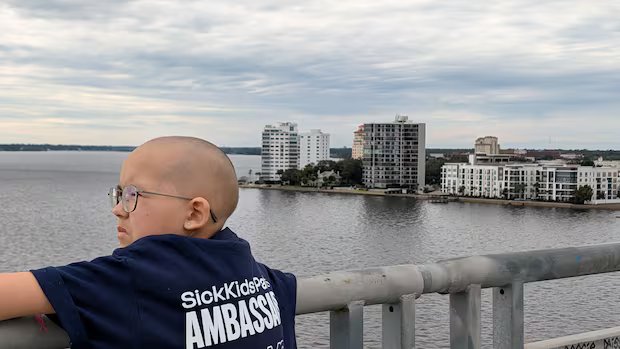
Fort Good Hope, N.W.T., resident Chloe Dixon, 12, was diagnosed last summer with rhabdomyosarcoma, a rare, aggressive cancer.
During the wave of discussions with her family about treatment options, doctors brought up a procedure that could give Chloe the chance to have children when she grows up.
Chloe said she was initially shocked when the doctors told her about the program.
“I thought it was definitely a good idea to do it,” Chloe said. “I’m 12, I don’t know much about that. But I thought it was the safer option.”
Many cancer treatments can damage a patient’s fertility.
As first reported by the Toronto Star, a fertility program between The Hospital for Sick Children (SickKids) and Mount Sinai Fertility Clinic in Ontario is giving pediatric patients options for their reproductive future.
Through ovarian tissue cryopreservation, doctors remove one ovary, which is then processed, frozen and stored. If the patient decides to become pregnant later in life, the tissue can be implanted again.
Since her diagnosis, Chloe has stayed in Toronto to undergo multiple surgeries and chemotherapy at SickKids.
A chance at reproductive autonomy
Dr. Kriti Kumar, a pediatric oncologist at SickKids, co-leads the collaborative fertility preservation program between Sinai and SickKids. She said offering a choice is important for a person’s reproductive autonomy.
“When we give therapy that we know can be harmful to fertility, it’s really important that we have these options available to patients,” she said.
While adult patients can freeze mature eggs, that option isn’t available for kids
Kumar said a person born with ovaries has a finite number of eggs at birth. That number naturally declines. Some cancer treatments like surgeries, radiation and chemotherapy can cause the eggs to decrease faster, leading to an early onset of menopause.
“These young girls can go through menopause in their teens, in their 20s and in their 30s and that can affect their actual fertile window,” she said.

Kumar said discussions about tissue preservation often happen soon after a cancer diagnosis.
“We really want to make sure that we’re giving patients and families as much time as we can to really think about this,” she said.
Fewer than 20 pediatric patients have undergone the procedure through the SickKids program so far. Because the program is relatively new, no patient has had their tissue reimplanted yet, Kumar said.
As pediatric cancer survival rates continue to rise, doctors are focusing more on long-term post-cancer quality of life, she said.
“We want to make sure that we’re not just curing them and then saying, ‘Go out in the world and fend for yourself,’” she said. “We want to really make sure that they’re thriving and really living full lives.”
‘A great option’
Paul Dixon, Chloe’s father, said the family was overwhelmed when doctors first presented the option to them. The discussions happened alongside a wave of other information about Chloe’s cancer diagnosis and treatment plan.
“After we sort of settled in on it and thought about the future and whatever else is going on, then it was a great option,” he said.

He added he was grateful hospital staff included Chloe in all of the medical information sessions alongside her parents. Chloe underwent the tissue preservation procedure in August 2025.
“I know that I have a bit more of an opportunity to have kids in the future. But yeah, I feel like it was a bit of a weird conversation,” Chloe said.
She is currently in the maintenance phase of chemotherapy and is looking forward to starting school.
“Ultimately, things are going well,” Dixon said. “Hopefully Chloe has the same type of future as any other child that hasn’t gone through cancer treatment.”
