
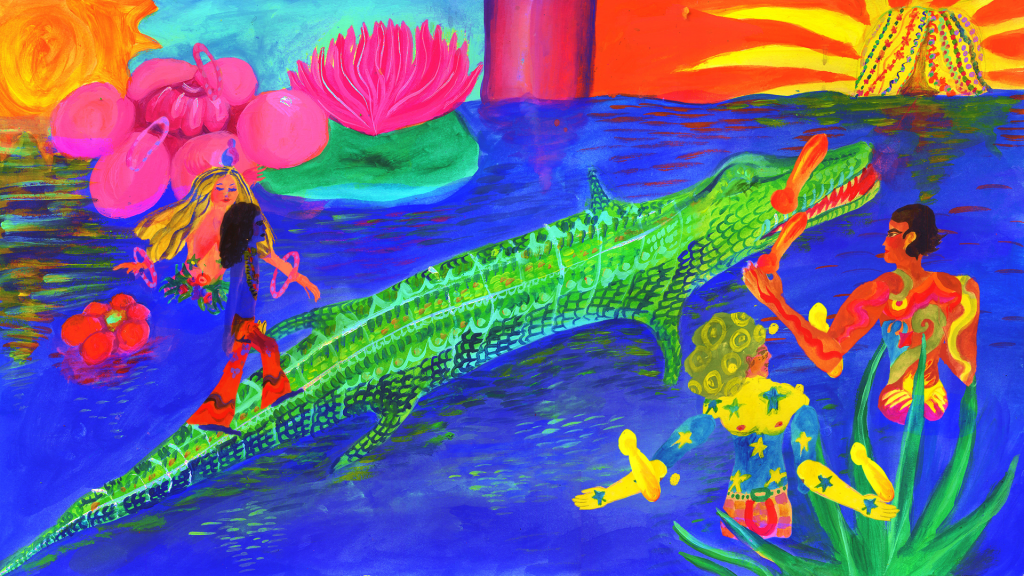
– Hungarian animator Lili Bárány invites viewers on a metaphysical adventure through kaleidoscopic realms
The words on screen are colourful and barely legible – we struggle to read even a title. Yet they also include a famous quote by Aldous Huxley about changing the world, while the background is filled with images of the human body; pulsating music, similar to a beating heart, starts playing. That’s how Lili Bárány, a Hungarian animator, opens her graduation film Play of a Cell, shown in the international competition at Fest Anča in Žilina.
Divided into three parts – “Roots”, steeped in earthy symbolism; the dripping and ever-flowing “Water”, and the spirited, animalistic “Light” – the film hypnotises from its very first second. Guided by flute melodies, it takes viewers on an almost mushroom-conjured journey through consciousness and transformation. Even after consuming unimaginable amounts of psychedelics, one wouldn’t be able to experience so many hues, see so many shifting forms, or hear so many sounds blending into muffled voices. The latter resembles the chants of a shaman hidden deep inside Plato’s cave.
Each hand-painted frame consists of multiple characters, shapes and colours, creating a cohesive visual language that is tricky to understand from a single viewing. Perhaps the point is not to understand what is happening at all – someone has just ejaculated, and not long after that a blue man rides an alligator toward a castle in the sky – but to feel it. And within only a ten-minute runtime, it is easy to do just that. Not by wondering whether the clown-like figures who have just met are gods in disguise, or whether petting a goat is some sacred cleansing ritual, but by simply surrendering to the experience.
The meticulously detailed frames, the dazzling scenery and the non-narrative structure of the journey toward the subconscious are what make this short so distinct. Rooted within symbolism, drowning in confusion and shining with complexity, Play of a Cell prompts viewers to dive into an adventure that may transform them just as Huxley suggested: “I wanted to change the world. But I have found that the only thing one can be sure of changing is oneself.”
