
Amigos, you’ve been reading about it everywhere: the homicide rate is significantly down in Mexico. The work that Security Secretary Omar García Harfuch has been doing is clearly bearing fruit. The security strategy has been steady and sustained. That said, critics have pointed out that some of the government’s numbers have been dressed up, and that those who don’t show up among the murdered may well be showing up among the disappeared. Whatever the case, one reality stands: President Sheinbaum’s government is working to contain the violence the cartels have unleashed — violence that we Mexicans have let grow for the past three decades.
Tuesday, June 16
Tuesday, June 16, is, so far, the day with the fewest homicides in Mexico this year, and for quite some time. The figures, according to the Security Cabinet’s preliminary report, are these: 27 homicides across the entire national territory, the lowest daily figure in over a decade. The President said as much in her morning press conference the following day from the National Palace: “I even applauded the security cabinet today, because 27 homicides in a single day is something Mexico hadn’t seen in at least 13, 14 years.”
The most telling data point isn’t the number itself — it’s the geography. Nineteen states closed the day without a single homicide. If we add those that reported only one, 22 of the 32 states ended the day with zero or one homicide. Aguascalientes, Baja California Sur, Campeche, Chihuahua, Coahuila, Durango, Hidalgo, Michoacán, Nayarit, Nuevo León, Puebla, Querétaro, Quintana Roo, San Luis Potosí, Sonora, Tamaulipas, Tlaxcala, Yucatán and Zacatecas reported no killings. That Chihuahua and Michoacán appear on this list is, frankly, remarkable.
The day’s hotspots were elsewhere: Colima led with four cases, followed by Oaxaca and Veracruz with three each. And here comes an important caveat we can’t gloss over: the June 16 dip is not an isolated event, but it’s also not a linear trend. As Milenio rightly points out, June 14 saw 49 homicides nationwide, so the new minimum has to be read as an exceptional day within a series that still has its peaks and valleys.
Where is this trend coming from?
The incidence of homicides dropped 46%, with the daily national average falling from 86.9 victims in September 2024 to 47.3 in May 2026. May 2026 had the fewest homicides for that month in the last 12 years. The strategy is producing measurable results. According to Harfuch himself, from Oct. 1, 2024, to May 31, 2026, 56,134 people were arrested for high-impact crimes, 419.3 tons of drugs were seized and 2,407 clandestine labs were dismantled across 22 states.
The counterweight that can’t be ignored
Amnesty International, in its annual report, documented that during 2025, forced disappearances and missing-persons cases in Mexico rose to 133,500, an increase of 10.5% over 2024. Red Lupa makes the contrast even more concrete: the number of disappeared persons at the start of the President’s term hovered around 115,000; by early 2026, the National Registry of Missing and Unlocated Persons counted 133,485. In just 15 months, the number grew by some 18,000 disappeared people.
México Evalúa pushes the methodological analysis further. Using an integrated metric that combines intentional homicide, manslaughter, femicide, disappearances and other crimes against life, it estimates that lethal violence dropped 8.6% between 2024 and 2025, but accumulated a 68.2% increase over the past decade. The think tank explains it clearly: disappearances can operate as a mechanism for evading the immediate registration of homicides and generating social uncertainty. The coexistence of intense disputes with increases in disappearances suggests that part of the lethal violence may be displacing toward less visible categories.

Ricardo Anaya (PAN) and other opposition figures have gone further: they argue that the federal government is dressing up its violence data by reclassifying murders as disappearances, manslaughters and other crimes. I have no way to prove that charge, and I’d rather stick to what the numbers do allow us to say: there is a real drop in homicides, and there is a real rise in disappearances. Both things are true at once.
The timing of the World Cup
Amigos, for the past 15 days, it seems the only thing Mexicans can talk about is soccer. Those of you who’ve been living here for several years will agree with me: no World Cup has ever looked quite like this one. Every day is a party. The national mood these days is more cordial, more hopeful and more celebratory than usual.
This is where it’s very tempting to fall into lazy reductions and declare that “idle hands are the devil’s workshop,” and that the drop in violence is linked to the World Cup. But the data doesn’t allow that reading. On June 7, four days before the tournament kicked off, Mexico had already registered 28 homicides; on May 15, almost a month earlier, it was 29. January 2026 had closed with a daily average of 47.3 homicides, the lowest level since daily records have existed in this country. The downward trend started in September 2024 and has been sustained. The World Cup coincides with it, but does not cause it.
But the World Cup is revealing what happens when Mexicans share a collective project that isn’t mediated by individual economics.
The lesson nobody is drawing
On opening day, I took my dog out for a walk around the neighborhood, both of us wearing our national team jerseys. People smiled at us. A car gave us the classic celebratory honk. It’s not magic. It’s what happens when there is a collective experience — shared, free and sustained — that occupies public space and reorganizes community time for an entire month.
During a World Cup, we call that a “party.” The rest of the time, in normal conditions, it would be called cultural, sports, community and recreation policies. The kind of policy Mexico has been dismantling for the last 30 years.
Let’s look at the numbers from the 2026 Federal Budget. Culture will receive 13.097 billion pesos, 16% less than in 2025. The National Commission of Physical Culture and Sport (Conade), according to its own director Rommel Pacheco, will receive 2.5 billion pesos, a 133-million-peso cut from 2025. The deputy research director for the Center of Economic and Budgetary Research (Ciep), Judith Senyasen Méndez, puts it bluntly: “The emphasis remains on scholarships, because those are the ones with the largest real-terms increases, while areas like culture, sports and upper-secondary and higher education face significant cuts.”
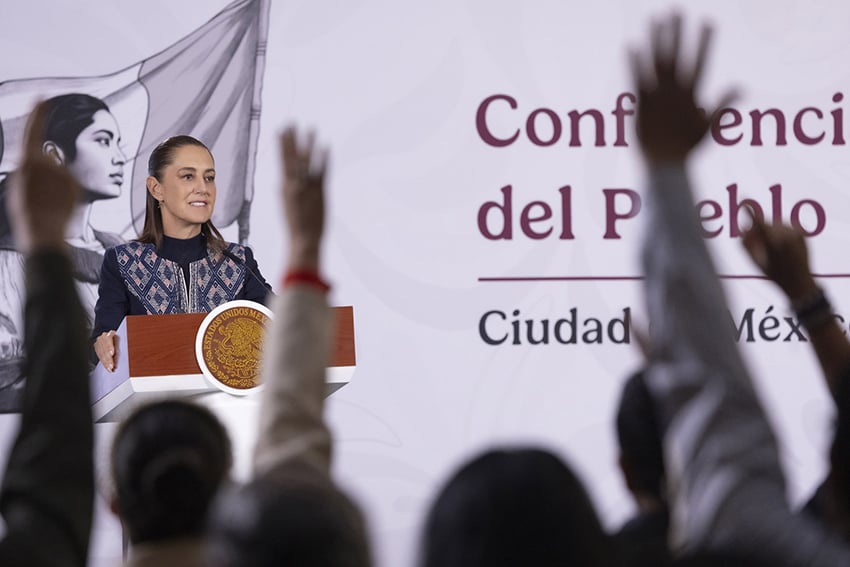
This isn’t a one-administration problem. It’s the culmination of a long process. Since the 1990s, Mexican public policy has been systematically eliminating the idea that the State has a responsibility to the community fabric: to municipal cultural centers, to neighborhood sports leagues, to free workshops, to community art schools, to local libraries, to the spaces where a teenager in Guerrero, in Zacatecas, in Chiapas or in Baja California, could find a sense of belonging different from what the cartels offer.
The World Cup is exposing what Mexico typically lacks
What replaced those policies was an exclusively economic logic: cash transfers, individual scholarships and direct subsidies. I’m not saying those programs are bad. I’m saying that a scholarship deposited into a bank account does not build a youth orchestra. A cash transfer does not teach a kid to train in soccer on Saturdays with his neighbors. A subsidy does not turn an empty lot into a lit-up sports court. And when the only thing the State offers a community is money — and nothing to build together — what prevails is the individual pursuit of economic improvement, not the shared quality of life of a neighborhood.
That’s why the World Cup is revealing. For one month, Mexicans are getting what we don’t have the rest of the year: a collective project not mediated by money, an excuse to occupy the street and a sense of belonging that doesn’t require individual achievement. And we behave differently. When a young person in Colima, in Guanajuato or in Veracruz weighs his life options, he doesn’t weigh them against an abstraction called “the rule of law.” He weighs them against what his community concretely offers him. If the only thing his colonia offers is absence — of sports courts, of workshops and of meaningful adults other than his exhausted mother or the cartel lookout on the corner — the calculation is very easy to make. And he makes it badly, but he makes it.
The General Law of Physical Culture and Sport, in its Article 2, establishes among its purposes the promotion of physical culture, recreation and sport in the general population as a means of crime prevention. The law says it. The budget denies it.
June 16 was good news
And we should celebrate it. Harfuch’s strategy is working; the arrests are piling up and the seizures too. But good days are not built solely on military intelligence. They are also built with orchestras, with sports courts, with reading clubs, with art teachers who come to the neighborhood twice a week and with boxing coaches who don’t charge a fee because the municipality pays their salary.
That is what Mexico dismantled in 30 years. And that is what no Harfuch, however good his work, will be able to rebuild from an intelligence room.
Community and culture programs are needed to sustain lower crime rates
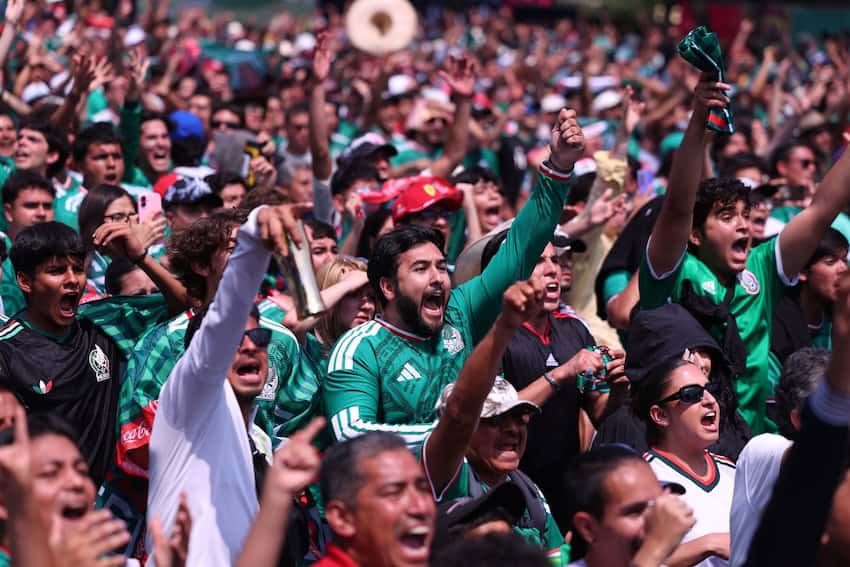
The World Cup will end on July 19. The streets will empty again. And the question, amigos, is whether we will be able to read what the tournament is showing us these weeks: that the Mexicans do know how to share a project, do know how to occupy the streets cordially and do know how to build community when someone gives us the pretext and the space. What we need is for that pretext to exist year-round. Not once every four years.
We did it once before, when the Mexican Revolution ended. The newly formed Mexican State, under the cultural leadership of José Vasconcelos, sent painters, writers and playwrights traveling across the country with a single idea: to build a sense of belonging to the Mexican nation. The murals you see in every public building today are what’s left of that bet — a bet that the State could be a builder of shared meaning, not just a distributor of resources.
If we want Tuesday, June 16, to be the first of many, we are going to have to stop thinking about security only as arrests and begin to think of it as what it also is: a cultural policy, a sports policy and a community policy. In other words, a policy of the public sphere.
Maria Meléndez writes for Mexico News Daily in Mexico City.
