
More than 571,000 current and retired federal employees owe $6.3 billion in taxes, a delinquency rate that has been increasing steadily despite threatening letters from the IRS.
The House Oversight and Government Reform Committee wants to know why the IRS and other federal agencies haven’t cracked down harder on tax scofflaws within their ranks or moved to seize their wages and pensions through an existing enforcement program.
In a letter sent Thursday to IRS Chief Executive Officer Frank J. Bisignano, the GOP-led panel asked the agency to turn over data showing the IRS’s efforts to recover unpaid taxes, whether they’ve used wage and pension garnishment, and if they were successful at bringing any of the money into the Treasury.
A recent report by the Treasury Inspector General for Tax Administration (TIGTA) paints a bleak picture of enforcement when it comes to federal workers.
It found the number of federal employees delinquent on their taxes had increased by a staggering 43% since 2021 and that 215,000 U.S. government workers — 6.9% of the total workforce — were delinquent on their federal taxes in 2024 alone.
The report also found 50,000 federal employees and retirees failed to file any tax returns at all, among them 14,000 repeat non-filers who earned federal salaries of $100,000 or more. At least 122 federal workers did not file a tax return for eight or more years, the inspector general found. A third of all non-filers were U.S. Postal Service workers.
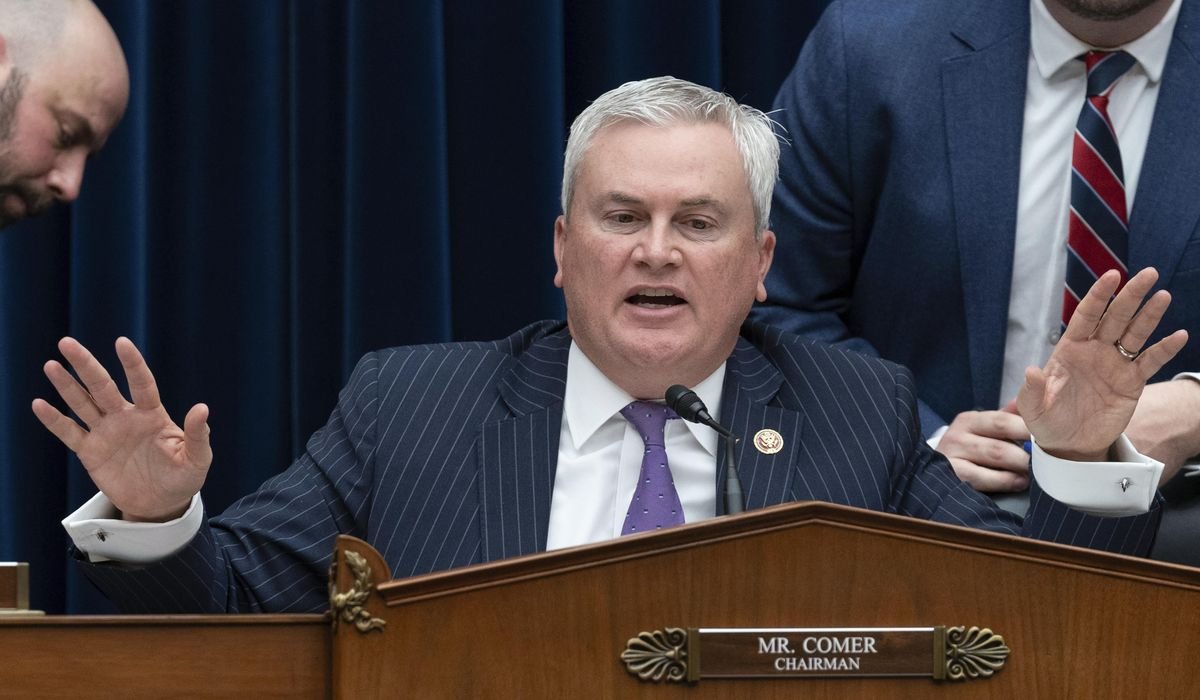
Oversight Committee Chairman James Comer, Kentucky Republican, plans to crack down on the federal government’s apparent lack of enforcement.
“With TIGTA’s report showing continuous increases in tax noncompliance among current and former federal employees, the Committee is concerned that this trend will continue unless IRS, the Executive Branch and Congress act now to proactively curb noncompliance with federal tax laws,” he wrote to Mr. Bisignano.
Failure to file a tax return is a federal crime, but the IRS’s efforts to enforce the law among federal workers have largely failed.
Last summer, the IRS mailed 427,000 delinquency notification letters to federal employees and retirees that, according to Mr. Comer, encouraged the scofflaws to voluntarily resolve their outstanding tax bills.
Within a month of the notifications, only 59,000 people who received the letters made a payment, and just 4,700 paid all of the taxes they owed.
In total, the IRS recovered only $58 million in delinquent tax payments from the federal workforce, which is less than 1% of the total owed by all federal workers and retirees.
“This data demonstrates that the majority of noncompliant federal employees ignored the IRS letters and failed to resolve their tax liabilities in a timely manner or at all,” Mr. Comer wrote.
The federal government has additional enforcement avenues for these scofflaws beyond sending friendly letters encouraging compliance.
The Federal Payment Levy Program authorizes the IRS to garnish up to 15% of federal employee salaries and retiree pensions to recover unpaid taxes.
Mr. Comer asked the IRS to turn over the number of non-filers referred to the Federal Payment Levy Program and the amount of tax money recovered, the number of wage garnishment requests for unpaid taxes made to the Bureau of Fiscal Service, the number of employees and pensioners “who had federal payments or salaries levied” and the amount of money recovered.
Mr. Comer asked the IRS to turn over the data by July 9 and to agree to a staff-level briefing on IRS enforcement of federal workers’ tax compliance.
Under the law, the Treasury Department can hold its own employees accountable for tax delinquencies. The audit said that was probably a factor in the department having a relatively low delinquency rate of just 2.4%.
The law, however, prohibits the IRS from sharing tax information outside the Treasury, so other departments struggle to crack down on workers who duck paying their federal taxes.
The loophole leads to weak enforcement, Mr. Comer said.
“It seems unlikely that employees who are already failing to pay or to file taxes for years in violation of federal laws would voluntarily identify themselves to their employing agencies,” Mr. Comer said.
• Stephen Dinan contributed to this report.
