
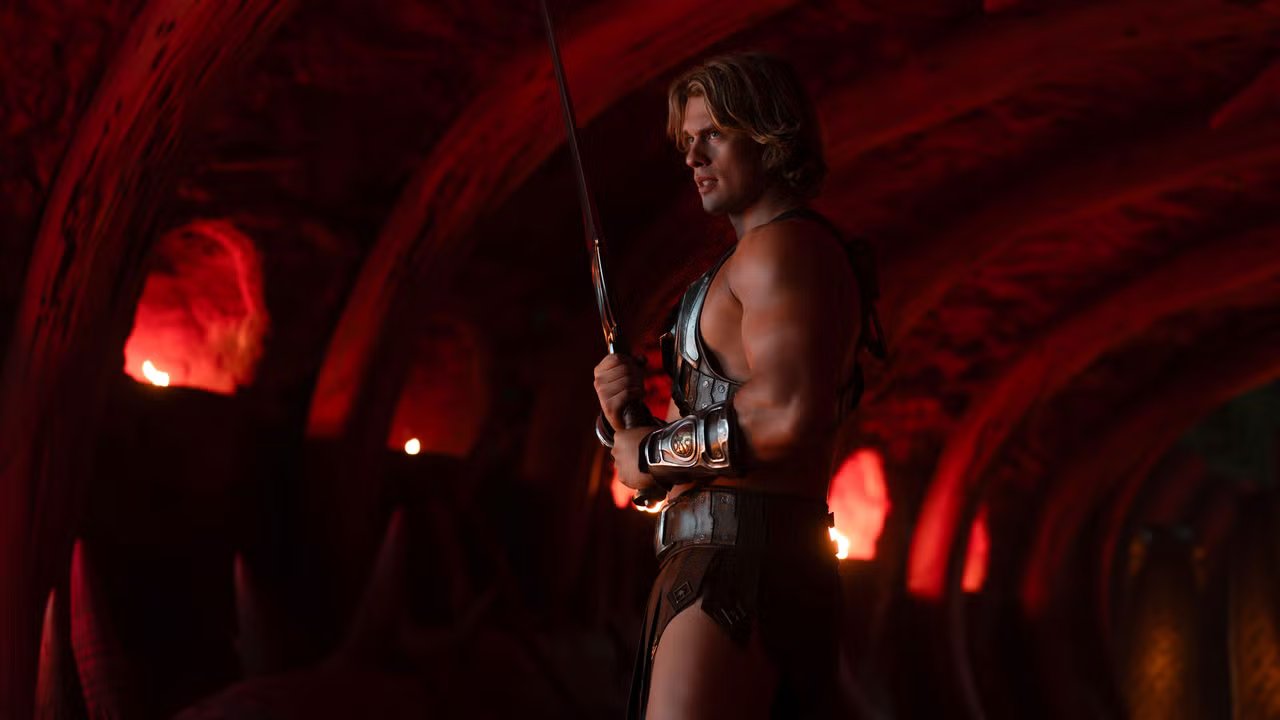
I can recall feeling a little betrayed when I learned the backstory of my favorite cartoon. He-Man and the Masters of the Universe didn’t get its start as the brainchild of a television writer or a comic book artist. No, the muscle-bound toy came first—which meant my preferred entertainment was essentially a 30-minute commercial for action figures. (Battle Cat sold separately.)
But even though He-Man’s origins seem crass and capitalistic, there’s real pop culture affection for him and his franchise; otherwise, there’d be no live-action Masters of the Universe in 2026.
Creating He-Man may have been motivated by nothing more than profit, but Mattel’s decisions garnered lifelong, generation-spanning attachment to the character. And businesses and entrepreneurs can learn from Mattel’s example.
Here’s what Mattel’s creation of He-Man toys, the Masters of the Universe cartoon, and the world of Eternia can teach us about marketing.
The history: Recovering from a missed opportunity
In 1976, Mattel famously turned down the opportunity to license Star Wars toys, which turned out to be the kind of mistake that keeps a CEO up at night for decades. In the wake of that disastrous decision, Mattel asked toy designer Roger Sweet to come up with a toy line that could compete.
The company conducted market research on what boys ages 5 to 10—its target market—were most interested in. That demographic wanted futuristic military technology (like in Star Wars), current military, and barbarian fantasy. So Sweet created a line of toys that included all three.
He-Man looks and dresses a lot like Conan the Barbarian (to the point where Conan Properties sued Mattel . . . and lost) and he lives in the magical world of Eternia that is full of skull-shaped castles, mystical swords, and shape-shifting sorceresses. But one of He-Man’s most trusted allies is Man-at-Arms, a soldier and weapons expert who wouldn’t look out of place next to G.I. Joe. He-Man’s mother is an astronaut from Earth who crash-landed on Eternia, and many of the battle scenes include the use of space-age technology, such as ray guns.
Which is to say, He-Man’s world-building is bonkers.
The lesson: Give your customers exactly what they want
Most companies would probably look at Mattel’s market research and decide to focus on one or two of the target demographic’s interests, especially considering “barbarian fantasy” doesn’t fit with the other two.
It may have been difficult to convince Mattel’s higher-ups that mashing these three concepts together was the right way to go—but they were simply following their customers’ preferences.
And it’s clear that Mattel was right to do so. Although the storytelling behind Masters of the Universe is not entirely logical, the kids who wanted to play barbarians and soldiers in space weren’t looking for logic in their playtime.
Companies often make decisions based on what makes sense to the executives, rather than listening to what their customers want. But finding out what your audience wants and giving it to them—without judgment or alteration—is how you create a multi-decade legacy.
The history: Taking advantage of changed FCC regulations
Before Ronald Reagan’s presidential inauguration on January 20, 1981, the Federal Communications Commission and the Federal Trade Commission both had guardrails in place to regulate advertising during children’s television programming. But Reagan promised a business-friendly federal government, which included deregulation of the FCC and reducing the FTC’s authority over advertising geared to kids.
This left the door open for Mattel to start producing He-Man and the Masters of the Universe. As of 1983, the cartoon aired five days a week, giving Mattel a daily half-hour commercial for the He-Man toy line, which had already been in production for several years.
And even though Reagan’s government had deregulated advertising for children’s television, it did leave some loose guidelines in place. Specifically, any programming made for kids needed to include at least 90 seconds of an educational component.
This is why He-Man (and G.I. Joe, Captain Planet, and all your other favorites from the ’80s) ended each episode by talking directly to the camera about what we all learned from the previous 28 minutes of the cartoon. With every episode, Mattel gave us a cheesy public service announcement based on the story we’d just watched—because otherwise the company risked losing the opportunity to sell us He-Man figurines.
The lesson: Prosocial storylines can inspire lifelong loyalty
Ask anyone who lived through the 1980s if they believe that “knowing is half the battle!” and it’s likely you’ll see a truly epic eye roll. That’s because the majority of the PSAs imparted to kids in the ’80s were silly, unnecessary, and corny.
But there was also something special about the lessons included in He-Man, in part because the show’s writers often created storylines that lent themselves to life lessons. While not every PSA related to the story that came before (He-Man sometimes just warns kids to be careful), many underlined the prosocial lesson of the show’s plot.
Little children watching their muscly hero and his friends defeat evildoers soaked up these messages. They wanted to see the good guys prevail—and to learn that He-Man’s physical strength was less important than his mind, that it was possible to regain confidence after a setback, that whoever raises you and cares for you is your parent, and that you can admit when you make a mistake.
Although Mattel included these PSAs to stay on the FCC’s good side, the company stumbled into a formula that made He-Man even more beloved. Customers typically want to feel like they’re on the side of the angels, and creating a prosocial storyline helps entrench that feeling.
Tesla offers a clear example of how a company can create loyalty using such a storyline—and how quickly loyalty can disintegrate when the prosocial storyline no longer fits.
The history: Avoiding a definitive origin story
He-Man’s story officially began in minicomics that were packaged with the original action figures. He then appeared in some DC Comics limited series before he finally landed his TV show. Over all of those various media, Mattel never bothered to give He-Man an official origin story, other than the monologue that started every episode of the cartoon.
In that introduction, He-Man tells us he is Adam, Prince of Eternia and defender of Castle Grayskull, and that he discovered fabulous secret powers on the day he held aloft his magic sword and said, “By the power of Grayskull! I have the power!”
Unlike Superman, Batman, and Spiderman, all of whom have specific and well-established origin stories, He-Man’s adventures start in medias res. Although the cartoon sometimes shows flashbacks to moments in the past, Prince Adam’s initial transformation to He-Man is not part of the original series.
Mattel probably avoided creating an origin story for pragmatic reasons. Unlike the comic book artists behind Superman et al., Mattel wasn’t primarily interested in telling a cohesive story; the idea was to sell as many toys as possible. So it didn’t make sense to spend time coming up with an origin story since it wouldn’t introduce additional action figures.
The lesson: Leave room for your customers to personalize your products
He-Man’s origins remained shrouded in mystery because Mattel didn’t need one to sell toys. But leaving that detail out was also savvy (if accidental) marketing, since it allowed every He-Man-loving kid across the globe to write their own version of Prince Adam’s first foray into Castle Grayskull defense.
This meant that even though He-Man toys were part of a franchise, they still allowed kids to engage in a form of open-ended play, which encourages creativity, problem-solving, language development, and social-emotional intelligence. The looseness of He-Man’s story meant that kids could play within that story framework while still engaging in the kind of creative and open play that is both beneficial to growing brains and more enjoyable than simply re-creating a well-known scene.
This also means that He-Man feels like he belongs to all the kids who grew up with his action figure—in a way he might not if his story had been more precise.
Similarly, your product can be more than just a purchase. If you leave room for personalization, as Mattel did, your product could be something your customer co-creates and takes ownership of.
For example, Apple can point to a number of reasons for its customers’ enduring loyalty, but personalization is certainly part of the appeal. Apple was the first computer manufacturer to offer personalization via the 13 brightly colored iMac G3 alternatives back in the late 1990s, and it continues to provide customers with myriad ways to co-create their Apple products.
By the power of marketing!
He-Man may have started his life on Eternia as Mattel’s desperate attempt to make up for lost Star Wars revenue, but he has become so much more than just a generically named cash grab. The fact that He-Man continues to delight and inspire so many years after his initial creation indicates that Mattel created something greater than just a toy.
It started with the fact that Mattel’s toy designer gave kids exactly what they wanted—fantasy barbarian soldiers with space technology—rather than deciding to produce something that made better logical sense. And customers loved it.
Then Mattel took advantage of the changing FCC regulations to produce He-Man and the Masters of the Universe cartoon, which was essentially a 30-minute commercial. But the company stuck to the guidelines that required educational content, which meant creating storylines that inspired long-term loyalty. The children in the audience appreciated feeling a connection to He-Man’s prosocial lessons.
Finally, Mattel avoided writing an origin for He-Man (likely for practical reasons, since it wouldn’t sell more toys). But by leaving his beginnings hazy, Mattel’s customers could co-create He-Man through open-ended play, which helped them feel much more loyal to the man in the furry battle shorts.
Clearly, businesses and entrepreneurs can learn a thing or two from He-Man—and Mattel.
