
Across the country, nurse leaders are rethinking how care is delivered and what it means to lead through transformation. The past few years have shown us that traditional nursing models — which were built for a different era — just can’t keep pace with the rising patient acuity, persistent workforce shortages, and mounting burnout of today’s care landscape. Layer on the growing integration and expectation of using AI to support care, and it’s even clearer that a change is needed in how we approach nursing, overall.
New care delivery models are available to address these pressures and we’re now at a point where we can begin to evaluate the impact of these models to determine efficacy or moving from pilot to practice. Leaders are proving that reimagining how care teams’ function isn’t just possible, but rather, it’s necessary for the sustainability of the nursing profession and the health of patients.
Why team-based and virtual nursing models are taking hold
For years, nurse leaders have been asked to address growing patient needs while making the most of limited resources — that dichotomy is acting as a forcing function for innovation in how care gets delivered. But the answer isn’t asking bedside nurses to shoulder additional tasks; it’s redesigning how teams, and the use of technology, come together to deliver the best possible outcomes.
The future of nursing is increasingly collaborative, connected, and technology enabled. Virtual nursing and team-based models are becoming practical solutions to longstanding industry challenges.
In organizations that have adopted them, we’re seeing tangible results: better retention, improved patient experience, and a more balanced distribution of work.
When you look across health systems that are trying out team-based and virtual nursing, these team members are often pulled into very practical parts of the day — admissions, discharge prep, documentation, and answering patient requests. In many cases, they’re triaging needs or coordinating follow-up, which gives bedside nurses more time to stay focused on direct patient care.
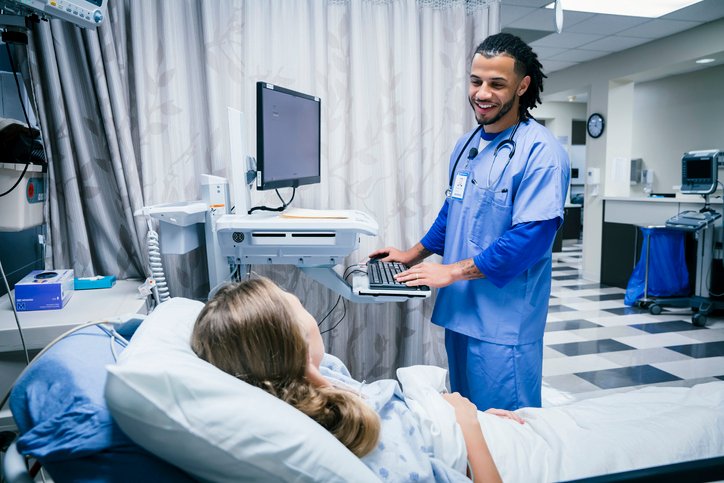
In hybrid staffing models, bedside registered nurses (RNs) work alongside nursing assistants, licensed practical nurses (LPNs), or licensed vocational nurse (LVNs), with virtual nurses brought in to join rounds, keep an eye on patients, and step in with clinical or educational support as situations unfold. These team-based and virtual approaches tend to appear first in acute care settings, where the pressure is constant and the need to improve care quality, ease workload strain, strengthen collaboration, and increase capacity feels immediate.
What comes up in conversations with nursing teams is how positively these models are received by early-career nurses. Shared responsibility makes a difference. And having real-time support available can go a long way in helping nurses build confidence as they grow into their roles.
These models work because nurses thrive when administrative burdens and cumbersome workflows are addressed so they can focus on what they’re trained to do: care for patients. The model itself becomes the support system when thoughtfully integrated into existing staff infrastructure. It creates space for nurses to work at the top of their license and to reconnect with the purpose that drew them to the profession in the first place.
Making innovation everyday practice
The move from pilot to practice takes intentional leadership. It’s one thing to test a new model; it’s another to sustain it across an organization. Based on lessons emerging from early adopters, three strategies can make the difference:
- Start with workforce data.
Look closely at where the pressure points are: high turnover units, frequent documentation delays, or inconsistent patient satisfaction scores. Data will show where change can make the greatest impact. - Design with your nurses, not for them.
Frontline engagement is non-negotiable. The nurses who are on the floor every day often have the best ideas for making it work in practice. - Measure outcomes that matter.
Track both clinical and workforce metrics — from fall rates and readmissions to engagement and burnout indicators. Celebrate early wins and build on them.
The power of the right skill mix
The most successful teams share a sense of ownership. Everyone knows how their role fits into the bigger picture of patient care. In this evolving model:
- RNs lead clinical assessment, care planning, and critical decision-making.
- LPNs manage stable patients, extending capacity where it’s needed most.
- Nursing assistants (NAs) deliver hands-on, consistent patient support that often defines the patient experience.
- Virtual nurses serve as real-time partners, providing guidance, backup support, documentation assistance, and patient education from a distance.
When each member of the care team is empowered to contribute fully, care becomes more coordinated and impactful. I often hear from nurses in these programs that they feel “valued again.” That sense of being valued and supported is a benefit, yes, but it’s also a strategic advantage. Retention, satisfaction, and patient outcomes all improve when care teams function as a group.
Redefining leadership for the future of care
What gives me optimism is seeing how quickly innovation spreads when nurses lead it. These models are proving that care delivery doesn’t have to be binary — in-person or virtual, old model or new. It can be adaptive, team-based, and deeply human.
The next generation of nursing leadership will be defined by the ability to build environments where flexibility, innovation and testing improvements is the culture which is essential to ensuring every nurse can thrive in their professional practice and every patient will be the beneficiary of these changes. That’s how we move from pilots to practice and go from working in survival mode to leading the future of healthcare.
Photo: FS Productions, Getty Images
Dr. Bethany Robertson is currently the Clinical Executive at Wolters Kluwer, where she focuses on workforce transformation through data-informed education, digital integration, and transition-to-practice models. She has led large-scale initiatives that strengthen the pipeline from education to practice, improve retention, and address rural and underserved workforce gaps. Her leadership has shaped national efforts, including the development of rural nurse practitioner residency programs, quality and safety integration in academic-practice partnerships, and interprofessional education focused on real-world team training. Her programs have been recognized by the American Association of Colleges of Nursing and supported by HRSA, Medline, and the Robert Wood Johnson Foundation.
Dr. Robertson holds the rank of Clinical Professor at a nationally ranked school of nursing, is a Distinguished Scholar Fellow of the National Academy of Practice, a member of the National Board of Medical Examiners and was accepted into the American Academy of Nursing’s 2025 Class of New Fellows.
This post appears through the MedCity Influencers program. Anyone can publish their perspective on business and innovation in healthcare on MedCity News through MedCity Influencers. Click here to find out how.
