
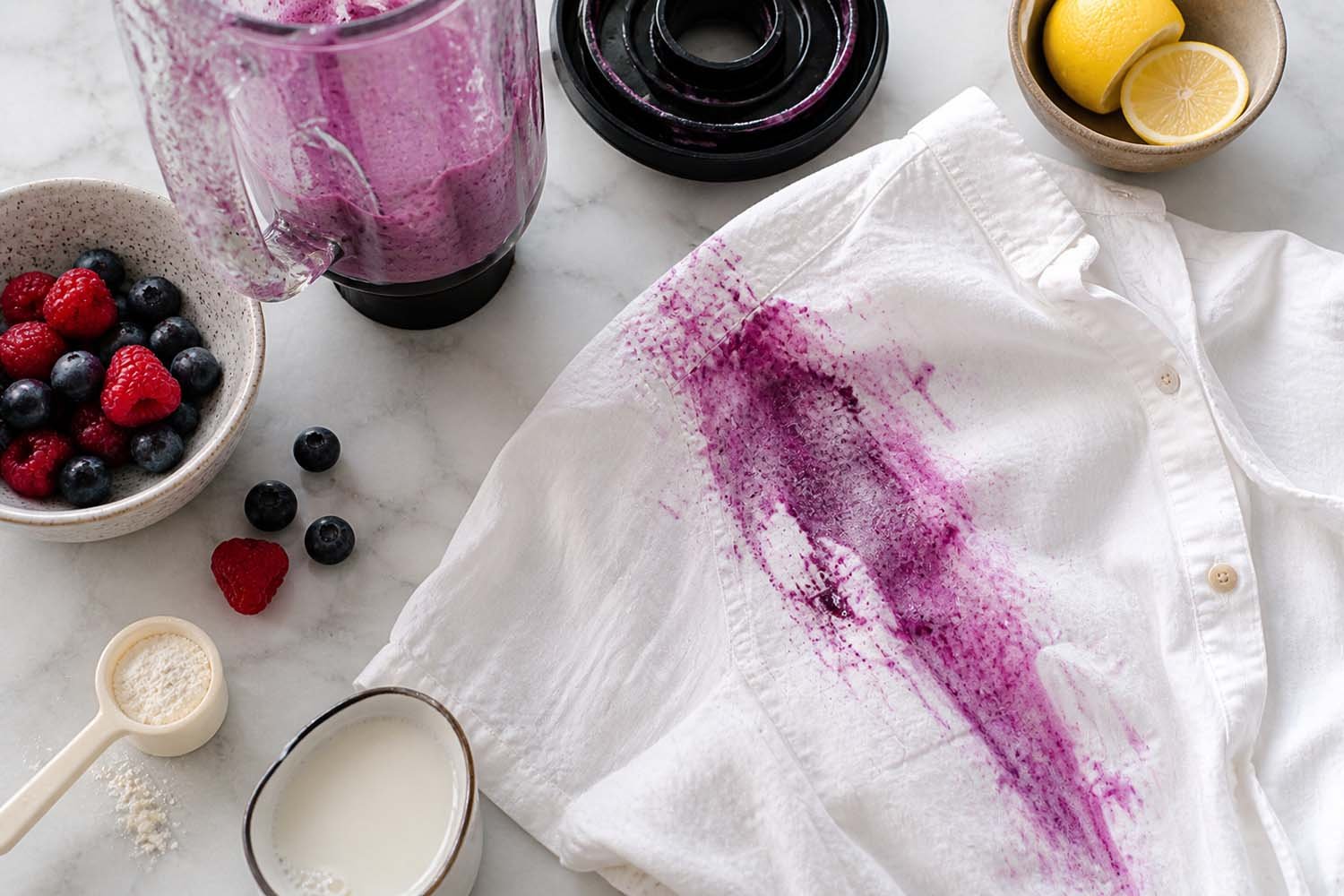
The smoothie incident was my fault entirely.
I make the same one most summer mornings: frozen blueberries, raspberries, a scoop of collagen, oat milk. I’ve made it probably three hundred times without incident. But on this particular morning I reached for the blender lid at the exact wrong moment, the kind of move you know is wrong even as you’re doing it, and a solid arc of dark purple hit my white linen shirt from chest to shoulder.
My instinct was to get to the sink immediately. I ran cold water over it, which made the stain spread sideways. Then I grabbed the dish soap and scrubbed, which made it worse. Then, because I’d read something once about acid breaking down stains, I squeezed half a lemon over the whole thing and let it sit while I figured out my next move.
I was wrong on every count. The cold water hadn’t removed anything, it had just relocated it. The scrubbing had pushed the pigment deeper into the linen. And the lemon juice, I would learn later, had done the one thing you should never do to an anthocyanin stain: it made the color more stable, not less.
The shirt looked worse after my intervention than it did thirty seconds after the spill.
What I didn’t know yet: berry stains belong to the same chemical family as red wine. They’re anthocyanin-based, which means they respond to heat the way red wine does: by bonding to fabric fibers and becoming significantly harder to remove. Every warm rinse I gave it was setting the stain more deeply. I had been working against myself from the first moment.
Here’s what I know now, and what I wish I’d known at that morning.
The Short Answer: How to Get Berry Stains Out of Clothes
The fastest way to remove a berry stain is cold water only (never warm or hot), blot immediately without rubbing, then apply a mixture of equal parts dish soap and white vinegar to the stain. Let it sit for 15-30 minutes and rinse cold. For whites, hydrogen peroxide is highly effective. For set-in stains on sturdy fabrics, boiling water poured from a height directly through the stain can break it loose in a way cold water can’t. Check the stain before the dryer. Heat sets berry stains permanently.
Why Berry Stains Are So Stubborn
Berries get their color from compounds called anthocyanins, the same class of pigments responsible for the color in red wine, grape juice, and purple cabbage. Anthocyanins are water-soluble when fresh, which sounds promising, but they bond aggressively to fabric fibers when exposed to heat or when left to sit. Once that bond forms, you’re no longer dealing with a surface stain. You’re dealing with something closer to a dye.
This is the core problem with most instinctive responses to berry stains. Warm water feels like it should help because it loosens most stains. But heat accelerates the anthocyanin bonding process, which means every warm rinse is partially setting the stain you’re trying to remove. The same goes for the dryer. A berry-stained shirt that goes through a hot cycle is very likely permanently stained.
Tannins add another layer of difficulty. Berries, like red wine, contain tannins, which are plant compounds that bind tightly to protein fibers and cellulose. Tannins are what make berry stains stick to cotton and linen so readily, and they’re why berry stains on natural fabrics are harder to remove than the same stains on synthetic ones. Polyester and nylon don’t absorb tannins as deeply, which is why a berry splash on a synthetic athletic shirt is usually an easier problem than the same stain on a cotton tee.
The other factor is time. Anthocyanins transition from water-soluble to fiber-bonded fairly quickly. The change is meaningful within the first 30 minutes and significant after an hour. A berry stain treated within five minutes is a very different problem from one that’s dried while you finished the party.
The Golden Rule: Cold Water Only, Always
This is the one rule that matters more than anything else in berry stain removal. Cold water only. Not cool. Not room temperature. Cold.
Every warm or hot rinse you give a fresh berry stain accelerates the anthocyanin bonding process and makes the stain harder to remove. Every time the fabric goes near heat, whether from warm water, a hot dryer, or even sitting in a hot car, the stain sets further. The entire strategy for berry stains is built around keeping the stain in a cold, soluble state long enough to get it out of the fabric.
This is the same reason the red wine advice is always “cold water first.” Red wine stains are anthocyanin-based too. The chemistry is nearly identical. If you’ve ever successfully removed a red wine stain, you already understand how berry stains work.
Not All Berry Stains Are the Same
The berry makes a difference, and so does the form it comes in.
Blueberries are the worst offender. They have the highest anthocyanin concentration of common berries, which is part of what makes them so healthy and part of what makes them so destructive on fabric. A blueberry stain treated immediately is manageable. One that’s dried is genuinely difficult. If you make mixed berry smoothies regularly, blueberry is the ingredient most likely to ruin a shirt.
Strawberries are more forgiving. Lower anthocyanin density, higher water content. They stain readily but respond better to treatment, especially when fresh. The seeds can grind pigment deeper into fabric if you rub, which is another reason blotting always beats rubbing.
Raspberries and blackberries fall between the two. Similar anthocyanin levels to blueberries, slightly less concentrated. The juice spreads fast because of the high water content, which means a raspberry stain covers more surface area than a blueberry stain from the same amount of fruit.
Cranberries are a different situation entirely. The tartness that makes cranberry sauce so good comes from a high acid content, and that acidity actually helps slow the bonding process slightly. Cranberry sauce stains also typically involve added sugar, which creates a sticky residue on top of the pigment. Scrape first, then treat. Don’t rinse the sugar into the fabric.
Smoothies and juices are harder than whole fruit stains because the blending breaks down cell walls and releases more concentrated anthocyanin directly onto the fabric. A splash from a berry collagen smoothie bowl can cover more fabric and penetrate more deeply than the same amount of whole fruit.
Jam and preserves are the hardest. High sugar content, concentrated pigment, and often a cooked form of the berry that has already undergone heat treatment. The sugar acts as a binder that helps the stain adhere. Always scrape off jam before any liquid treatment.
4 Methods That Actually Work (Tested Results)
Fabric Matters: What Works on What
The fiber type changes your options significantly. Anthocyanins bond most aggressively to natural protein fibers (wool, silk) and cellulose fibers (cotton, linen). Synthetics are more forgiving but less tolerant of harsh oxidizers.
White cotton and linen: Full arsenal available. Dish soap + vinegar first, then hydrogen peroxide if needed, OxiClean soak for anything that survives. These fabrics handle aggressive treatment well.
Colored cotton and linen: Dish soap and vinegar, then OxiClean if needed. Skip hydrogen peroxide because it can strip color dye. Test OxiClean on a hidden seam first.
Polyester and synthetics: Dish soap + cold water, then an enzyme stain remover. Synthetics don’t absorb anthocyanins as deeply, so you often need less aggressive treatment. OxiClean is usually fine but test first.
Silk: Cold water only for rinsing, dish soap applied very gently with no rubbing. A diluted white vinegar rinse (1 part vinegar to 4 parts cold water) as a soak can help. No hydrogen peroxide, no OxiClean, no boiling water, no agitation. If the stain persists, take it to a professional. Silk is not worth experimenting on.
Wool: Blot and cold water only, then a wool-safe enzyme detergent worked in gently. No soaking, no OxiClean, no hydrogen peroxide, no heat, no wringing or agitation. Professional cleaning is the right call for any wool garment with a significant berry stain.
Denim: Denim handles treatment well but the weave can trap pigment. Dish soap + vinegar soak, then OxiClean if needed. The boiling water method works on denim for fresh stains and can be surprisingly effective.
Step-by-Step Emergency Protocol
Step 1: Remove solids immediately. If there’s actual fruit on the fabric, lift it off with a spoon or the back of a knife. Don’t press it in. Don’t smear it. Lift straight up. Seeds are the enemy. A raspberry or strawberry seed ground into the weave by rubbing carries pigment deeper into the fiber.
Step 2: Blot, never rub. Use a clean white cloth or paper towel to blot up as much liquid as possible. Press and lift, press and lift. Rubbing spreads the anthocyanin across more fibers and embeds it more deeply. This is the step most people get wrong in the first 30 seconds.
Step 3: Cold water from the back. Flip the garment and run cold water through the back of the stain. This pushes the stain out of the fabric rather than driving it through to the other side. Keep the pressure moderate. Do this for 60-90 seconds.
Step 4: Apply dish soap and vinegar. Mix equal parts liquid dish soap and white vinegar, apply directly to the stain, work in gently with a fingertip. Let it sit for at least 15-30 minutes. Don’t let it dry completely before rinsing.
Step 5: Rinse cold and assess. Rinse with cold water and check the stain. If it’s largely gone, proceed to a cold-water launder. If it’s still significant, apply a second treatment or escalate to hydrogen peroxide (whites) or OxiClean (colors).
Step 6: Launder cold. Machine wash on cold. Add an enzyme detergent or OxiClean to the wash for added lift.
Step 7: Check before the dryer. This is the most important step. If any stain remains, do not put the garment in the dryer. Repeat treatment. The dryer will set whatever is left permanently.
Never Do These Things With a Berry Stain
- Never use hot or warm water. Heat sets anthocyanins into fabric. Cold only, at every stage except the intentional boiling water pour method.
- Never rub the stain. Rubbing spreads the pigment, grinds seeds deeper into the weave, and embeds the stain further into fibers. Blot only.
- Never put it in the dryer until the stain is completely gone. Dryer heat makes berry stains permanent. Always check first.
- Be careful with lemon juice on colors. Lemon juice can work on fresh stains on white or light fabrics. Its acidity helps break down anthocyanins, especially when followed by sun drying. But it can bleach or cause uneven lightening on colored and dark fabrics. If you use it, do so only on whites, rinse thoroughly, and don’t let it dry on the fabric before rinsing.
- Never let it dry before treating. A wet berry stain is a solvable problem. A dry one that’s been sitting for hours is significantly harder. Treat immediately, even if imperfectly.
What Definitely Does Not Work
Club soda. Club soda is helpful for red wine because the carbonation helps lift tannins from carpet fibers specifically. On clothing, it does essentially nothing for anthocyanin stains beyond mild dilution. It’s not a bad first blot if it’s all you have, but don’t count on it.
Salt alone. Salt won’t remove berry pigment, but it’s not completely useless either. Applied immediately to a wet stain before you can do a full treatment, at a cookout or a farmers market for example, it can absorb some of the liquid and slow the spread while you get home. The mistake is treating it as a solution rather than a stopgap. Rinse it off fully before your real treatment, as leftover salt can interfere with some stain removers.
Rubbing alcohol. Works well for ink. Does little for berry stains, which are water-soluble anthocyanins rather than alcohol-soluble pigments. Applying alcohol to a berry stain can spread it and may damage some fabric dyes.
Toothpaste. A common folk remedy. The mild abrasive can actually grind the stain deeper into the weave. Not recommended.
Warm water alone. This is the most common mistake and the one with the worst consequences. Warm water feels like it should work but it accelerates the bonding process. Cold water only.
The One Thing I Wish I’d Known Sooner
The boiling water pour. I spent years treating berry stains with dish soap and cold water, getting them to “mostly gone,” and accepting whatever was left. I didn’t know about the height-and-force method because it sounds counterintuitive. Hot water on a berry stain feels like the exact wrong thing. But the combination of heat and force is exactly what makes it work. The heat breaks down the berry’s sugars and loosens the anthocyanin’s grip on the fiber at the same moment the force of the falling water drives it through and out. It’s not a slow hot soak, which would set the stain. It’s a brief, targeted flush that does both jobs at once.
Try it on the next blueberry stain that survives your initial cold treatment. It’s the kind of thing that makes you feel like you discovered a secret.
Final Thoughts
The shirt I was wearing is still in my closet. It took two full treatment cycles and a lot of cold water, but the blueberry stain is gone. The lemon juice I applied in a panic didn’t help, and the warm water I used at home didn’t help, but they also didn’t make it permanent because I caught it before the dryer.
Berry stains are one of those problems where the first 60 seconds determine whether you’re dealing with a minor inconvenience or a potential permanent loss. The instincts most people have, warm water, rubbing, whatever’s nearby, are almost exactly the wrong moves. But the right moves are simple once you know them. Cold water. Blot. Vinegar and dish soap. Check before the dryer.
If you cook or entertain with berries regularly, the kind of summer where blueberry scones and mixed berry trifles are weekend staples and strawberry jalapeño salsa shows up at every cookout, it’s worth keeping a bottle of hydrogen peroxide and a dish soap and vinegar mix ready to go. The stain you treat in five minutes is a completely different problem from the one you get to in an hour.
Frequently Asked Questions
Does vinegar remove berry stains?
White vinegar on its own is only partially effective. The mild acidity helps loosen anthocyanin’s grip on fabric fibers, but it works significantly better combined with dish soap. Apply both together rather than vinegar alone, let it sit for at least 15-30 minutes, and rinse with cold water. Vinegar is safe on most fabric colors and types, making it a good base treatment before escalating to stronger options like hydrogen peroxide or OxiClean.
Can you get dried berry stains out of clothes?
Yes, but it takes more effort. Dried berry stains that have not been through a dryer can often be significantly reduced or fully removed with an OxiClean soak of 2-6 hours, followed by a cold wash and a second treatment if needed. Stains that have been through a hot dryer are largely permanent. The heat has bonded the anthocyanin to the fiber. If the stain dried but didn’t go through heat, you still have good odds.
Does baking soda remove berry stains?
Baking soda is useful for absorbing fresh liquid from the surface of a stain, but it doesn’t break down anthocyanin pigment effectively on its own. It’s a better first-response tool for grease than for berry stains. The dish soap and vinegar combination is more effective for berry pigment removal.
What gets blueberry stains out of white clothes?
Hydrogen peroxide is the most effective solution for blueberry stains on white fabric. Apply 3% drugstore hydrogen peroxide directly to the stain, let it sit for 30-60 minutes, rinse cold, and launder. For stubborn stains, mix with a small amount of dish soap and extend the soak time. Follow with a cold wash and check before drying. An OxiClean soak is the backup option if hydrogen peroxide alone doesn’t fully clear it.
Will strawberry stains come out in the wash?
Fresh strawberry stains often come out in a cold wash if pre-treated. Untreated or older strawberry stains are less likely to fully clear in a single wash, and the dryer can set whatever remains. Pre-treat with dish soap and vinegar, rinse cold, then launder cold. Check the stain before drying and repeat treatment if needed.
Does OxiClean work on berry stains?
Yes, and it’s one of the most reliable options for set-in or older berry stains. OxiClean works by oxidizing the anthocyanin molecule, breaking it down rather than just loosening it. Use a cold to cool water soak (not hot) for 2-6 hours, then launder cold. It’s safe on most colors and fabrics except silk, wool, and some delicates. For fresh stains, dish soap and vinegar is faster. For stains that have already dried or partially set, OxiClean is the better choice.
How do you get berry stains out of clothes that have already been washed?
If the garment went through a cold wash but not the dryer, the stain is still treatable. Soak in OxiClean and cold water for several hours, then launder cold again. If the garment went through a hot dryer, the stain is likely set permanently. Some improvement may be possible with repeated OxiClean soaks, but full removal is unlikely.
More Stain Removal Guides:
Better Living may earn commissions through affiliate links and may occasionally feature sponsored or partner content. If you make a purchase through our links, we may receive a small commission at no cost to you.
