
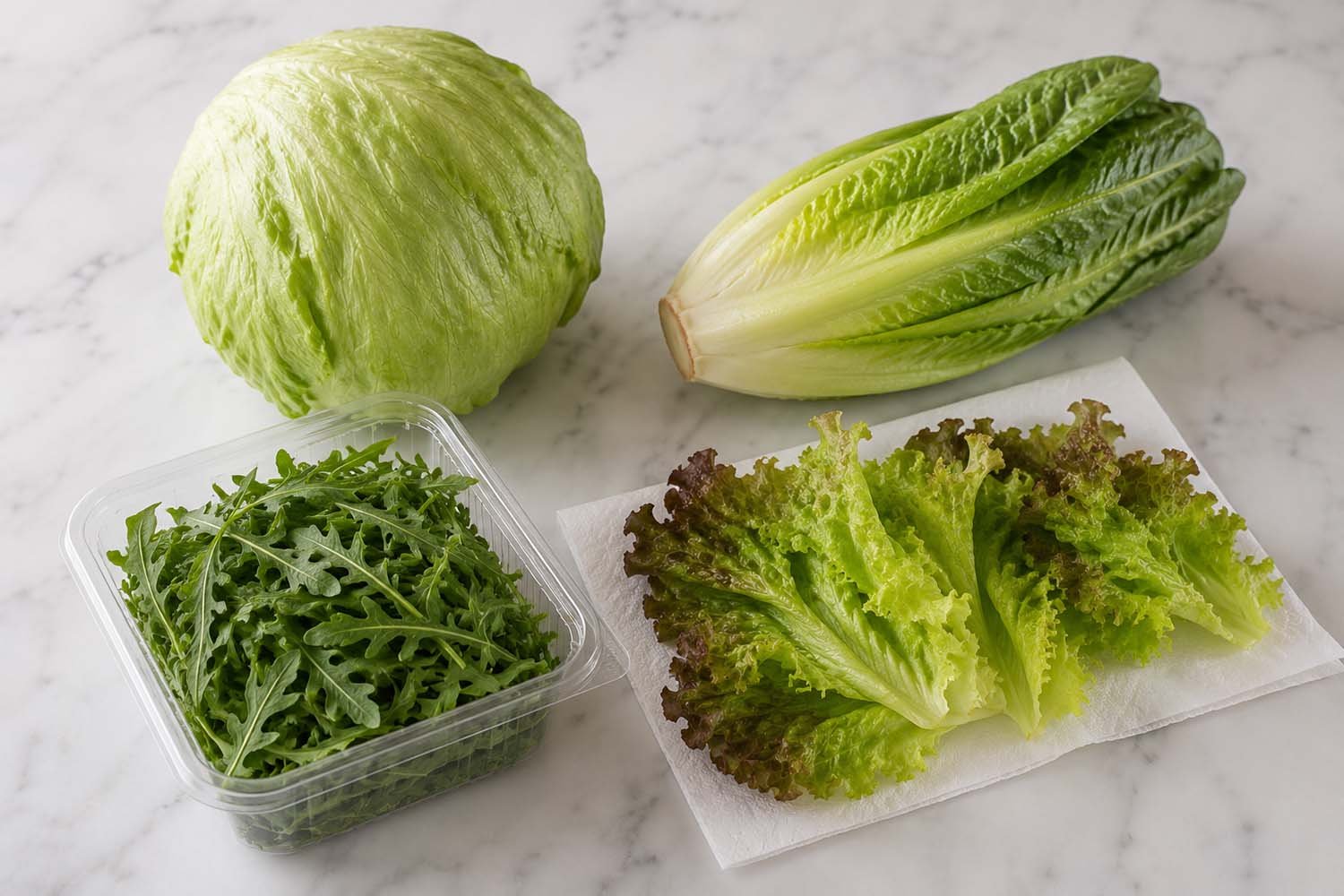
You bought a head of romaine and a bag of mixed greens on Sunday. By Wednesday the romaine is still perfect and the bagged greens are already slimy. Or you washed the whole head of iceberg and put it back in the fridge wet, and now it has gone limp and brown in three days. Lettuce storage is one of the most common sources of produce waste in the kitchen, and almost all of it comes from two mistakes: too much moisture and the wrong humidity setting.
The short answer: Store lettuce in paper towels inside an airtight container or zip-top bag in the crisper drawer set to high humidity. Do not store lettuce wet. Do not rewash pre-washed bagged greens. Opened bagged salad lasts only 1 to 2 days once the seal is broken. A whole head of iceberg or romaine stored correctly lasts 7 to 14 days. Delicate greens like arugula and baby spinach last 2 to 4 days regardless of method.
For a complete reference on storing over 100 foods, see our Food Storage Guide.
Key Takeaways
- Crisper drawer setting: HIGH humidity for all lettuce and leafy greens
- Paper towels absorb excess moisture and are the single most important storage step
- Do not store lettuce wet: excess moisture is the primary cause of slimy leaves
- Do not rewash pre-washed bagged greens: FDA and USDA advise against it
- Opened bagged salad: 1 to 2 days only after breaking the seal
- Iceberg and romaine: 7 to 14 days properly stored
- Butterhead and loose-leaf: 3 to 7 days
- Arugula, baby spinach, mesclun: 2 to 4 days
- Wilted but not slimy: revive in an ice water bath for 15 to 30 minutes
- Keep away from ethylene-producing fruits: apples, bananas, tomatoes
The Crisper Drawer Setting Almost Everyone Gets Wrong
The high humidity setting on your crisper drawer is the single most impactful change you can make for lettuce storage. Most people leave both crisper drawers on the same setting or do not adjust them at all. This is the wrong approach.
Leafy greens need high humidity to stay crisp. When the humidity is too low, lettuce loses moisture through its leaves faster than normal, causing wilting and browning. The high humidity setting restricts the vents on the drawer, trapping moisture-laden air inside. The low humidity setting is for ethylene-producing fruits like apples, pears, and avocados, which need airflow to prevent ethylene buildup. Set one drawer to high for greens and one to low for fruit. USDA and FDA guidance confirms the crisper drawer is the optimal location for all salad greens precisely because of its humidity control.
Equally important: keep lettuce in a different drawer from ethylene-producing produce. Apples, bananas, tomatoes, and pears all produce ethylene gas that wilts leafy greens significantly faster. UC Davis Postharvest Technology research confirms cucumbers and leafy greens are highly ethylene-sensitive and should be stored away from ethylene producers at all times. Keep them on separate shelves or in separate drawers.
How Long Does Lettuce Last by Type?
| Type | Whole Head Unwashed | Washed and Dried | After Opening (Bagged) |
|---|---|---|---|
| Iceberg | 7 to 10 days | 5 to 7 days | 1 to 2 days |
| Romaine (whole head) | 10 to 14 days | 7 to 10 days | 1 to 2 days |
| Butterhead / Boston / Bibb | 3 to 7 days | 3 to 5 days | 1 to 2 days |
| Loose-leaf (red, green) | 3 to 5 days | 3 to 4 days | 1 to 2 days |
| Arugula / baby spinach / mesclun | 2 to 4 days | 2 to 3 days | 1 to 2 days |
| Bagged pre-washed salad (unopened) | 5 to 7 days (use-by date) | Do not rewash | 1 to 2 days |
Shelf life figures per USDA and FDA food safety guidance. Romaine whole head figures per Hitchcock Farms produce industry data. The key variable in all cases is dryness: excess moisture shortens every window significantly. Spinach, kale, Swiss chard, and collard greens follow the same paper towel and airtight container method as loose-leaf lettuce and generally last 3 to 5 days refrigerated. At room temperature, all lettuce varieties wilt and deteriorate quickly. The USDA two-hour rule applies: lettuce left at room temperature for more than two hours should be refrigerated. Do not store lettuce on the counter.
How to Store Whole Head Lettuce
The method depends on whether you wash it first or store it unwashed.
Storing unwashed (recommended for iceberg and romaine): Remove any damaged outer leaves. Do not wash. Wrap the whole head loosely in dry paper towels to absorb any surface moisture. Place in a zip-top bag or airtight container and store in the high-humidity crisper drawer. For iceberg, you can also keep it in its original store packaging until ready to use. This method maximizes shelf life because the uncut head retains moisture internally and the dry paper towel absorbs any condensation from the fridge environment.
Storing washed and dried (recommended for loose-leaf and butterhead): Wash under cold running water per USDA and FDA guidance. Dry thoroughly using a salad spinner or by laying leaves on paper towels and patting dry. Thorough drying is the most important step. Excess water is the primary cause of slimy lettuce. Line an airtight container with dry paper towels. Layer the dried leaves on top. Cover with another paper towel before sealing. Store in the high-humidity crisper drawer. The paper towels absorb condensation throughout storage, extending freshness significantly compared to storing leaves directly in a container or bag without them.
One technique worth trying for romaine specifically: wrapping individual heads tightly in aluminum foil. Hitchcock Farms, a produce industry supplier, reports this method can significantly extend the refrigerated shelf life of romaine beyond what paper towel storage alone achieves. The foil creates a consistent moisture-regulating environment around the head without introducing excess humidity. Remove leaves as needed and rewrap the remainder tightly each time.
Bagged and Pre-Washed Greens: The Critical Rules
The most important rules for bagged greens: do not rewash them, and use within 1 to 2 days of opening the seal. Both are counterintuitive and both matter significantly.
Bagged pre-washed salad greens follow different rules from whole heads, and two of those rules are counterintuitive.
Do not rewash pre-washed greens. This is explicit guidance from both the FDA and USDA, confirmed by USDA and FDA food safety guidance. Pre-washed and packaged greens labeled “ready to eat,” “triple washed,” or “pre-washed” have already been processed under controlled conditions. Rewashing them at home introduces tap water that can carry bacteria from your sink surface and hands onto the greens, potentially increasing contamination rather than reducing it. Use them directly from the bag.
Once opened, use within 1 to 2 days. The sealed bag creates a controlled modified atmosphere that slows respiration and mold growth. Once you break the seal, oxygen enters and mold can spread quickly across the chopped greens. An opened bag of salad mix left in the fridge for four or five days is one of the highest-risk items in your crisper for spoilage and potential foodborne illness. Buy smaller bags if you cannot use a full bag within two days of opening, or transfer opened greens to an airtight container with paper towels immediately after opening.
How to Revive Wilted Lettuce
Wilted lettuce that has not gone slimy or brown is almost always salvageable. Wilting is caused by moisture loss, not bacterial spoilage. The fix is to rehydrate the leaves rapidly in ice water.
Fill a large bowl with cold water and add several ice cubes. Submerge the wilted lettuce leaves completely and let them soak for 15 to 30 minutes. The cold water is absorbed through the cut ends of the leaves and restores turgor pressure in the cells, reviving crispness. After soaking, drain and dry thoroughly before using or returning to refrigerator storage. This technique works for romaine, iceberg, butterhead, and loose-leaf varieties. It does not work for slimy or brown lettuce, which has undergone bacterial decomposition and should be discarded.
How to Tell If Lettuce Has Gone Bad
Signs Lettuce Has Gone Bad
- Slimy texture: The clearest sign of bacterial decomposition. Slimy leaves should be discarded immediately. Do not attempt to rinse off slime and use the leaves. The bacteria causing sliminess have spread throughout the affected area.
- Brown or black edges and spots: Some browning at cut edges is normal oxidation and safe to trim away. Widespread brown or black discoloration spreading through the leaf indicates deterioration. Discard those leaves.
- Strong foul or fermented odor: Fresh lettuce has a mild, clean smell. A sour, rotten, or fermented odor means discard the entire batch.
- Pink or reddish discoloration at stem end: Pink coloring at the cut base of romaine or iceberg indicates bacterial activity. Discard the affected leaves and check the rest carefully.
- Yellowing leaves: Yellow leaves are old and have lost nutritional value but are generally safe to eat unless accompanied by sliminess or off odor. Remove and discard them.
Storage Best Practices Summary
- Set crisper drawer to HIGH humidity for all lettuce and leafy greens
- Line storage containers with dry paper towels; replace when damp
- Store whole heads unwashed; wash loose-leaf only when ready to use or storing washed
- Dry leaves thoroughly before storing: excess moisture causes sliminess
- Do not rewash pre-washed bagged greens
- Use opened bagged salad within 1 to 2 days
- Keep lettuce away from apples, bananas, and tomatoes
- Revive wilted lettuce in an ice water bath before discarding
Further Reading
How to Store Lettuce FAQ
How long does lettuce last in the fridge?
It depends on the type. Iceberg and romaine whole heads last 7 to 14 days when stored unwashed in paper towels in a high-humidity crisper drawer. Butterhead and loose-leaf varieties last 3 to 7 days. Delicate greens like arugula and baby spinach last 2 to 4 days. Bagged pre-washed salad lasts 5 to 7 days unopened and only 1 to 2 days after breaking the seal. The single most important variable is dryness: wet lettuce deteriorates dramatically faster than dry lettuce stored in the same conditions.
Should you wash lettuce before storing it?
It depends on the type. For whole heads of iceberg or romaine, store unwashed and wash only when you are ready to use them. The uncut head retains moisture better and lasts longer unwashed. For loose-leaf varieties you plan to use across several meals, washing and thoroughly drying before storage is practical. The key is thorough drying. For pre-washed bagged greens, do not rewash. The FDA and USDA both advise against rewashing packaged pre-washed greens, as it can introduce bacteria from home sink surfaces.
Can you freeze lettuce?
Not for fresh eating. Freezing ruptures the cell walls in lettuce leaves, creating a limp, waterlogged texture that does not work in salads or sandwiches. However, blanched lettuce can be frozen for cooked applications. Blanch leaves in boiling water for 30 seconds, transfer to an ice bath, dry thoroughly, and freeze in portions. Frozen lettuce works in soups, stir-fries, and smoothies where texture is not critical. For any fresh use such as salads, wraps, or tacos, freezing is not a viable option. Use it fresh or revive wilted leaves in an ice water bath instead.
Why does my lettuce go slimy so fast?
Sliminess is almost always caused by excess moisture. The three most common causes are: storing lettuce wet after washing, keeping it in a low-humidity crisper setting that causes condensation cycles, or storing it near ethylene-producing fruits. Fix: always dry lettuce thoroughly before storing, set the crisper to high humidity, and keep ethylene producers like apples and tomatoes in a separate drawer. If you are storing pre-washed bagged greens, use them within 1 to 2 days of opening. The rapid spread of sliminess in opened bags is caused by oxygen exposure accelerating bacterial activity across the cut leaf surfaces.
What is the best lettuce for meal prep and storing ahead?
Romaine and iceberg are the best choices for meal prep because of their longer shelf life and sturdier leaves. Romaine in particular holds up well in Greek salads, taco bases, and wraps for several days after washing and drying. Butterhead and loose-leaf varieties are better for immediate use. Arugula and baby spinach are the most perishable and should be bought and used within a few days. For salads with multiple components like rainbow spring rolls or easy healthy coleslaw, or dishes using a light dressing like carrot ginger dressing, prep the lettuce and dressing separately and combine just before serving to avoid wilting.
Better Living may earn commissions through affiliate links and may occasionally feature sponsored or partner content. If you make a purchase through our links, we may receive a small commission at no cost to you.
