
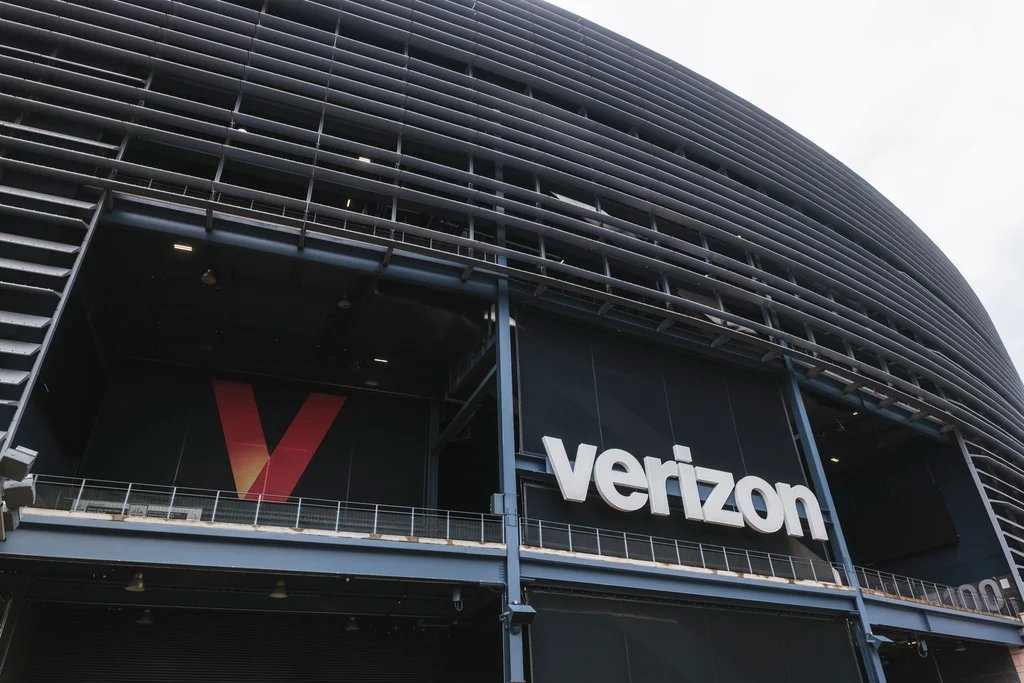
To say the 2026 FIFA World Cup final between Spain and Argentina is the most-anticipated sporting event of the year would be an understatement.
More than 80,000 people are expected to attend the final at the New York-New Jersey stadium, and well over a billion viewers are likely to tune in to the broadcast globally.
Meanwhile, the quarterfinals averaged over 25 million viewers across Fox, Telemundo, and Peacock, according to Nielsen Media Research and Adobe Analytics.
While soccer fans are excited for the game itself, many are also eager for the first-ever halftime show, which is being curated by Coldplay front man Chris Martin and produced by Global Citizen, and will feature Madonna, Shakira, BTS, and Justin Bieber as headliners.
Oftentimes, viewership for sporting events spikes during halftime shows. Take, for instance, the Super Bowl LIX game in 2025, during which Kendrick Lamar drew 133.5 million viewers and garnered a larger audience for his performance than the actual game itself. Bad Bunny’s halftime show from earlier this year at Super Bowl LX also attracted a slightly larger viewership than the regular game.
Given the massive star power of the World Cup performers, it’s safe to say the halftime show could generate just as much—if not more—viewership for those 11 minutes.
But with a global event as massive as the World Cup and a star-studded halftime show, how do the companies involved ensure the technology goes smoothly for the live audience and the millions of viewers watching around the world?
“FIFA is a different animal”
As the official telecommunication services sponsor of the World Cup, Verizon provides the primary network and powers the digital infrastructure for the tournament. Abraham Arencibia, vice president of technology and product development for Verizon, said the company isn’t a stranger to halftime shows of this magnitude.
Verizon previously honed its 5G Ultra Wideband network to power interactive and 360-degree mobile experiences for the Super Bowl LVI halftime show back in 2022, which featured Snoop Dogg, Dr. Dre, Eminem, and Mary J. Blige.
However, Arencibia admitted that the World Cup halftime show will be a different experience, one they’ve been preparing for and building two years in advance.
“FIFA is a different animal,” Arencibia told Fast Company, because of the scale of the events. To understand the scale of the World Cup final, Arencibia described the infrastructure as a “technology layer cake,” with each layer serving a distinct and important purpose.
The first layer starts on the soccer pitch with the high-tech referee body cameras and localized connectivity, which utilizes Verizon’s private 5G networks to provide low-latency, real-time data from the field for the immersive and live moments.
Moving up to the middle layer, Arencibia said the infrastructure has to be able to support the massive data spikes generated by the crowd. More than 60 to 100 cameras capture content from the stands with a wireless network capable of supporting 50 terabytes of data. Since the stadium will hold around 80,000 attendees for the final, Arencibia said Verizon increased the capacity of its wireless network by four times compared with standard operations.
“Think of every single Netflix movie ever streamed at the same time for 90 minutes,” Arencibia said. “That’s the capacity that we’re supporting for the fans.”
The aim is that when fans pull out their phones to record the halftime show, the network will remain flawless. In fact, Arencibia said the two most critical parts his team will pay attention to are the game’s kickoff and the beginning of the halftime show. From there, it’s smooth sailing whether Madonna or BTS is on the stage.
“That is the moment that people are most excited about,” Arencibia said. “They’re going to pull up their phone, and that’s when you see a spike in our network. [We] build for those first few minutes . . . if you survive that, everything else starts straightening up.”
The digital backbone of the tournament
While the stadium relies on the 5G network, the heavy lifting of the global broadcast is handled by the Broadcast Contribution Network (BCN), which is the final layer of the cake.
Think of this as the digital backbone of the tournament. Every camera feed, video asset, and data point from the host stadium is funneled to the International Broadcasting Center (IBC) in Dallas via 80,000 miles of fiber, where the signal is processed and redistributed to a person’s phone or TV screen in a different state or country.
“The center is basically the central nervous system where all the venues are talking to that location,” Arencibia said. “We start at the field and the stands before going wider.”
However, one might wonder how Verizon prepares for any technical difficulties, lags, or frame drops on a broadcast or livestream. Arencibia says they’re well-equipped for that with a lot of checks and balances in place.
He noted that every venue has around four to five “100-gig circuits” (100 gigabits of data per second).
“Our goal is to be invisible”
Behind the scenes, Arencibia said Verizon has a “war room,” which functions as a high-stakes command room with thousands of engineers who monitor every single cell spike and fiber connection in real time.
Arencibia said ultimately, he doesn’t want fans to think of Verizon when they’re at the game. “Our goal is to be invisible, but be involved in that journey from the people getting to the venue when they have to show their tickets, when they actually pull out their phone, and when the cameras are rolling.”
For him, it basically has to be a perfect, seamless recipe for the entire infrastructure—or layer cake—from the private network, wireless network, and fiber network. “You’re not going to be thinking about us,” Arencibia said. “You only think about us if there’s a problem. That’s our job.”
Arencibia emphasized this year’s World Cup is the most technologically advanced and most connected one ever, even more than Qatar in 2022 or the previous tournaments. This one especially, he said, impacts him on a personal level.
“The creation, the implementation of the network, and the connectivity has no comparison to any other World Cup that has ever happened, so we’re very proud,” Arencibia said. “As a Spaniard who grew up in the Canary Islands and tried to be a soccer player at one point, the fact that I’m helping to do this is a dream come true.”
