
Inflation has become more than just an economic headline for Canadian small business owners. It is showing up in day-to-day decisions, from how much inventory to order to whether it makes sense to take on new expenses or delay investments. While inflation is a normal part of the economic cycle, the pace and persistence of recent increases have created a level of pressure that many businesses are still adjusting to.
For many owners, the challenge isn’t just that costs are rising; it’s that multiple pressures are happening at once. Expenses are increasing, customers are becoming more price-sensitive, and borrowing is getting more expensive. This combination can make it harder to plan ahead with confidence.
In fact, in the third quarter of 2024, 50.2% of Canadian businesses reported inflation as their top expected obstacle, making it the most common concern across the country. Understanding how inflation affects your business is the first step toward responding to it in a way that protects both stability and long-term growth.
What Inflation Really Means for Small Businesses
In a business context, inflation is best understood as a steady increase in the cost of running your operations. This includes everything from the price of goods and materials to wages, rent, utilities, and financing. While inflation is often discussed in broad economic terms, businesses feel it in very specific and practical ways.
Unlike consumers, who may adjust spending habits gradually, businesses have to react more directly. If supplier costs rise, those increases often need to be absorbed or passed on quickly. If borrowing becomes more expensive, it affects decisions around growth, hiring, and inventory. Inflation, in this sense, is not a single issue but a collection of pressures that impact multiple areas at once.
This is why inflation can feel particularly challenging. It requires businesses to constantly reassess decisions that were previously stable, from pricing to purchasing to cash flow planning.
Why Inflation Can Increase the Risk of Small Business Closures
Inflation on its own does not automatically lead to business closures, but it can increase risk when multiple pressures build over time. When costs rise faster than revenue and margins begin to shrink, businesses have less flexibility to absorb unexpected changes or setbacks. Over time, this can create financial strain that becomes difficult to reverse.
Small businesses are often more vulnerable in this environment because they tend to have fewer financial buffers. They may have less negotiating power with suppliers, less access to low-cost financing, and a greater reliance on consistent cash flow to operate. This makes it harder to absorb rising costs without making difficult trade-offs.
Rising borrowing costs add another layer of pressure. More than one-third of Canadian businesses (34.1%) reported that interest rates and debt costs were expected to be a major obstacle. When debt becomes more expensive, it reduces flexibility and increases the importance of managing cash flow carefully.
Closures, when they do occur, are rarely caused by a single issue. More often, they are the result of ongoing pressure across costs, revenue, and financing that gradually becomes unsustainable.
The Key Ways Inflation Affects Small Businesses
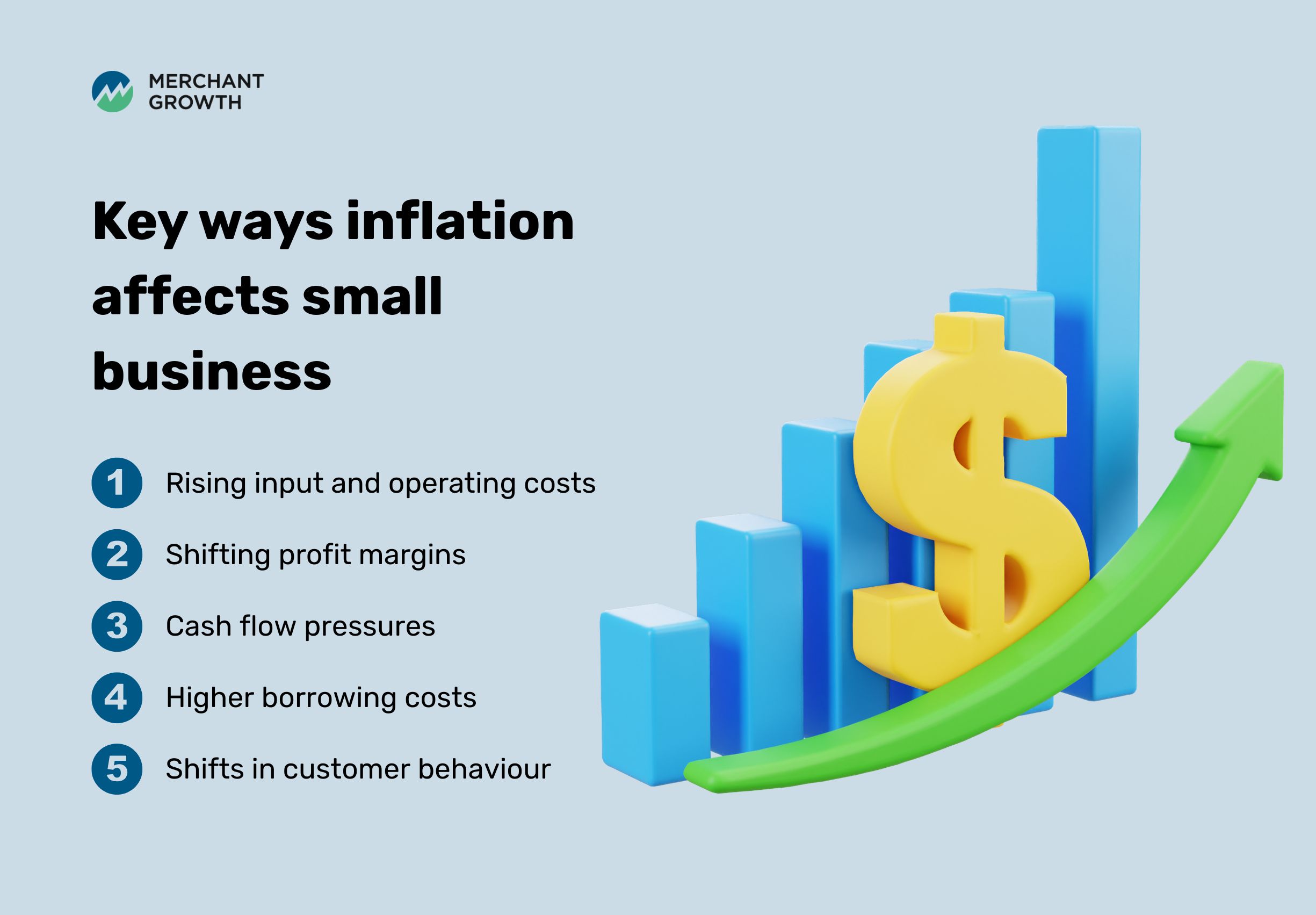
Inflation rarely impacts just one part of a business. Instead, it tends to affect several areas at the same time, creating a cumulative effect that can be difficult to manage without a clear strategy. Costs may be rising across suppliers, labour, and operations, while at the same time, customer demand may be shifting and access to financing becomes more expensive. When these pressures happen together, they don’t just add up; they compound, making it more challenging for businesses to maintain stability without adjusting how they operate.
Rising Input and Operating Costs
One of the most immediate effects of inflation is the increase in input costs. Businesses often see higher prices from suppliers, increased transportation costs, and rising expenses for essentials like utilities and rent. These increases can happen quickly and may not always be predictable, making it harder to plan ahead with confidence.
Because these costs are tied to day-to-day operations, they are difficult to avoid. For example, a restaurant may see higher food costs week over week, while a retail business may face increased shipping and inventory expenses. In response, many businesses start by reviewing supplier relationships, negotiating terms where possible, or identifying areas where small efficiencies can offset rising costs. Even minor adjustments, like optimizing ordering schedules or reducing waste, can help ease pressure over time.
Shrinking Profit Margins
As costs rise, profit margins often come under pressure. While increasing prices can help offset these costs, it is not always a straightforward solution. Customers may become more price-sensitive during inflationary periods, which can limit how much businesses can increase prices without affecting demand.
This creates a balancing act between maintaining profitability and remaining competitive. For instance, a service-based business might choose to gradually increase rates while adding more value to its offerings, rather than implementing a sharp price increase all at once. In many cases, businesses may accept lower margins in the short term to retain customers and maintain stability, while looking for longer-term ways to rebuild profitability.
Cash Flow Pressure
Inflation can also tighten cash flow, even for businesses that remain profitable on paper. Higher costs mean more cash is required to maintain operations, while customer payment timelines may remain unchanged. This gap can create short-term liquidity challenges that are not always immediately visible.
In practice, this might look like needing to pay suppliers sooner while waiting weeks for customer payments to come in. To manage this, businesses often focus on improving invoicing processes, following up on outstanding payments more consistently, or adjusting payment terms where possible. Keeping a closer eye on cash flow timing, not just totals, can make a meaningful difference in maintaining stability.
Higher Borrowing Costs
Interest rate increases often accompany inflation, making borrowing more expensive. This affects everything from lines of credit to long-term financing. For businesses that rely on financing to manage cash flow or invest in growth, higher interest costs can limit options or change the timing of key decisions.
For example, a business that planned to expand or purchase new equipment may choose to delay those investments or explore alternative financing structures. In some cases, reviewing existing debt and understanding how rising rates impact repayments can help businesses make more informed decisions. The goal is not necessarily to avoid financing altogether, but to ensure it aligns with current cash flow realities.
Shifts in Customer Behaviour
Inflation doesn’t just affect businesses; it also changes how customers spend. As consumers face higher costs in their own lives, they may reduce discretionary spending, delay purchases, or become more selective in how they choose products and services.
For businesses, this can lead to noticeable shifts in demand. A retailer, for example, may see customers opting for lower-priced items, while a service provider may experience longer decision cycles. Understanding these patterns allows businesses to adjust their approach, whether that means offering more flexible options, highlighting value more clearly, or refining their product mix to better match customer priorities.
How Canadian Small Businesses Are Responding to Inflation
While inflation creates challenges, it has also led many businesses to adapt and adjust their operations. Rather than reacting passively, many small business owners are taking deliberate steps to manage costs and maintain stability.
Recent data from Merchant Growth highlights how businesses are responding to the tightening of costs in response to the international economic climate:
- 55% are cutting discretionary spending
- 45% plan to take on additional financing
- 29% are negotiating supplier terms
- 25% are reducing inventory levels
- 53% report headcount has remained steady
These actions reflect a mix of cost control and cautious planning. Reducing discretionary spending allows businesses to protect essential operations, while negotiating with suppliers can help offset rising costs. Adjusting inventory levels helps manage cash flow more effectively, particularly when demand becomes less predictable.
At the same time, the fact that more than half of businesses are maintaining headcount suggests a level of cautious resilience. Rather than making drastic cuts, many are choosing to stabilize operations and wait for clearer signals before making larger changes.
Pricing Decisions in an Inflationary Environment
Pricing becomes one of the most important and most challenging decisions during periods of inflation. While increasing prices can help protect margins, it also introduces risk, particularly if customers are already feeling financial pressure themselves. Businesses need to balance the need to remain profitable with the importance of maintaining customer trust and demand.
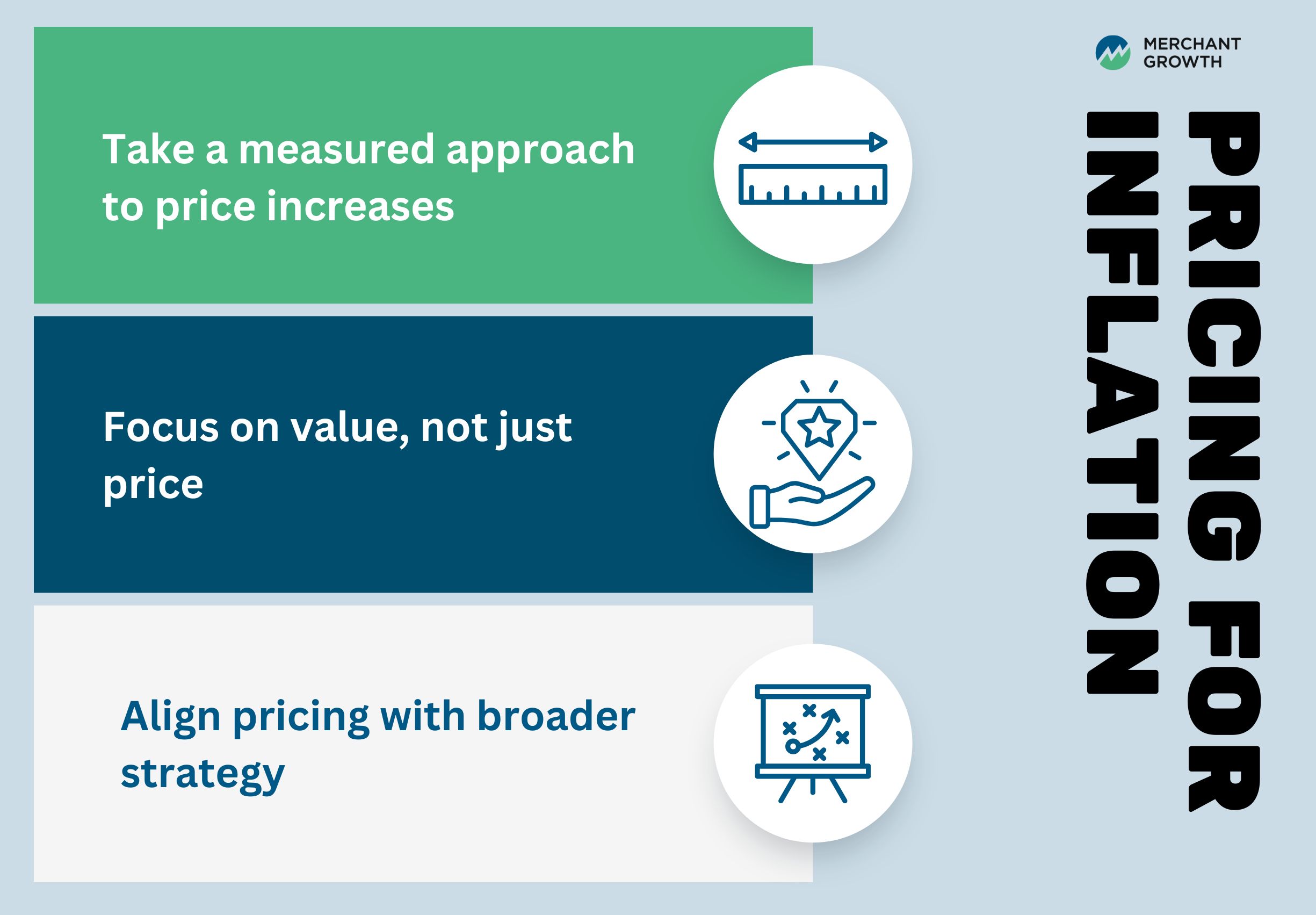
Taking a Measured Approach to Price Increases
Rather than making large, sudden adjustments, many businesses benefit from gradual price increases that are easier for customers to absorb. This approach allows you to monitor how customers respond and adjust accordingly. It also reduces the likelihood of disrupting long-standing relationships or losing repeat business.
Clear communication plays a key role here. When customers understand why prices are increasing, whether due to supplier costs, labour, or broader economic conditions, they are often more receptive. Transparency can help maintain trust even when pricing changes are necessary.
Focusing on Value, Not Just Price
In inflationary periods, competing solely on price becomes more difficult and often less sustainable. Businesses that clearly communicate the value they provide, whether through quality, service, or reliability, are often better positioned to retain customers even as prices increase.
This might involve reinforcing what differentiates your business, improving customer experience, or bundling offerings to create perceived value. Shifting the conversation away from price alone can help protect both margins and customer relationships.
Aligning Pricing with Broader Strategy
Pricing decisions rarely exist in isolation. They are closely tied to cost management, customer retention strategies, and long-term positioning. For example, a business may choose to absorb certain cost increases in the short term to maintain market share, while adjusting pricing more gradually over time.
The goal is not to find a perfect price point, but to create a pricing strategy that supports both short-term stability and long-term sustainability. Businesses that take a more strategic approach to pricing are better equipped to navigate ongoing uncertainty.
Managing Cash Flow and Debt During Inflation
As inflation increases financial pressure, cash flow management becomes even more critical. Even profitable businesses can experience strain if cash outflows begin to outpace inflows, particularly when costs are rising, and payment cycles remain unchanged. Maintaining visibility into cash flow is essential for making informed decisions.
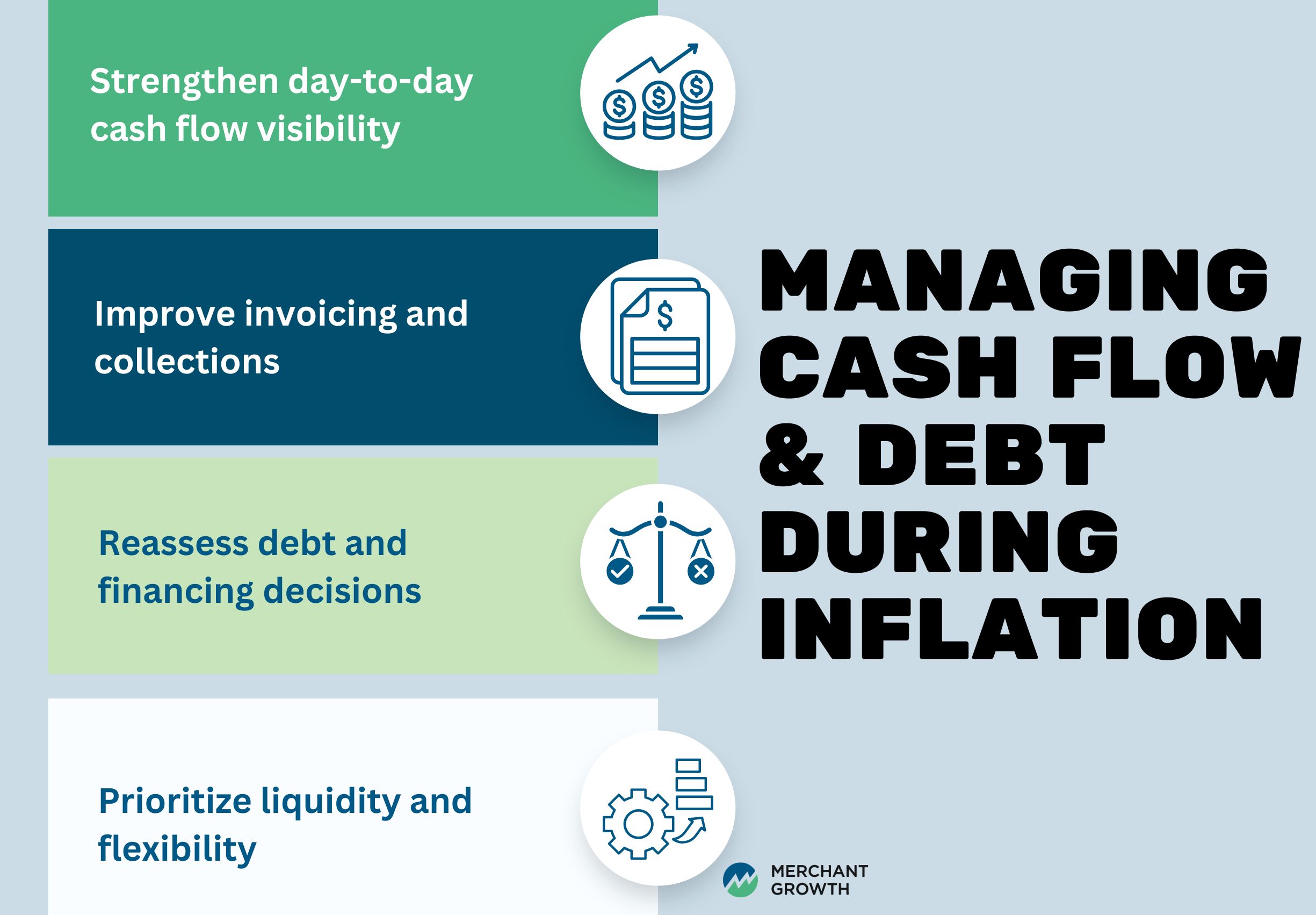
Strengthening Day-to-Day Cash Flow Visibility
The first step in managing cash flow effectively is understanding exactly where money is coming from and where it is going. This includes monitoring incoming payments, tracking expenses closely, and identifying any timing gaps that could create short-term pressure.
Regular cash flow reviews can help businesses spot issues early and adjust before they become larger problems. This level of visibility also makes it easier to plan for upcoming expenses and avoid unnecessary financial strain.
Improving Invoicing and Collections
In an inflationary environment, delays in receiving payments can have a greater impact than usual. Improving invoicing processes, shortening payment terms where possible, and following up consistently on outstanding invoices can help maintain steady cash flow.
Even small improvements in how quickly payments are collected can make a meaningful difference. This reduces reliance on external financing and gives businesses more control over their financial position.
Reassessing Debt and Financing Decisions
With borrowing costs rising, it becomes increasingly important to evaluate existing debt and any new financing decisions carefully. Businesses may need to review repayment terms, interest rates, and overall debt levels to ensure they remain manageable.
At the same time, financing can still play a valuable role when used strategically. For many businesses, access to capital helps bridge gaps, maintain operations, or invest in opportunities. The key is ensuring that any financing aligns with realistic cash flow expectations.
Prioritizing Liquidity and Flexibility
Cash flow management is not just about covering current expenses; it’s about maintaining flexibility. Businesses with stronger liquidity are better positioned to respond to unexpected changes, whether that’s a sudden cost increase or a shift in demand.
By prioritizing liquidity, businesses can reduce risk and create more room to make thoughtful decisions rather than reactive ones.
Planning for Uncertainty: Why Flexibility Matters
Inflation introduces a level of unpredictability that can make even the most well-thought-out plans feel outdated. Costs may rise faster than expected, customer demand can shift, and timelines that once felt reliable may start to move. In this kind of environment, it’s less about having a perfect plan and more about having one that can adapt as things change.
For many business owners, this shows up in small but important decisions. It might mean holding off on a large purchase, adjusting hiring plans, or revisiting pricing more often than usual. Building flexibility into how you plan gives you more room to respond without feeling like you’re constantly starting from scratch.
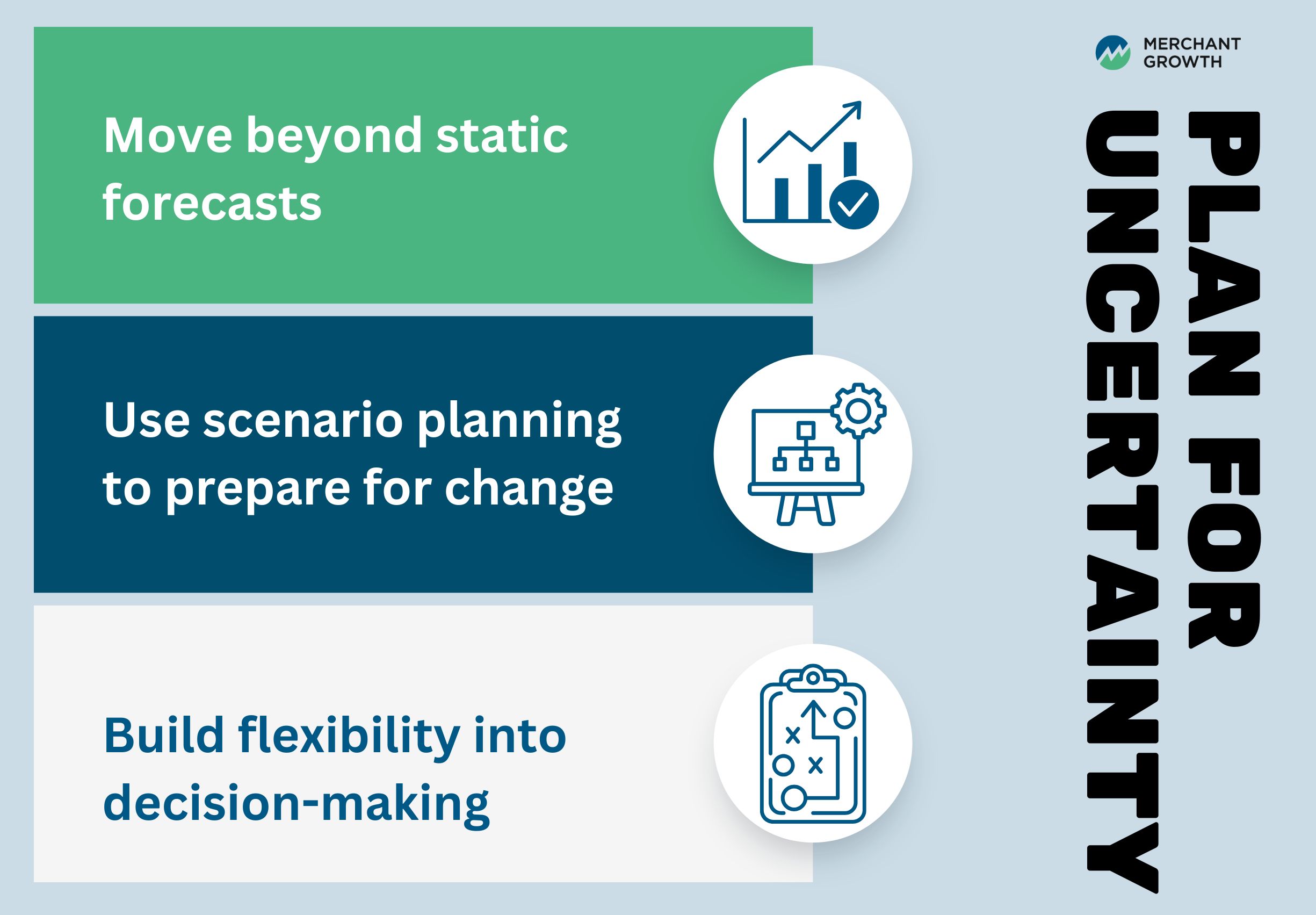
Moving Beyond Static Forecasts
Traditional planning often relies on fixed assumptions about costs, revenue, and growth. During inflationary periods, those assumptions can change quickly, making static forecasts less reliable over time. A budget that felt accurate a few months ago may no longer reflect current conditions.
Instead of treating your plan as something you set once and revisit at the end of the year, it can be helpful to check in more regularly. For example, some businesses are reviewing their numbers monthly instead of quarterly, adjusting projections as new information comes in. This doesn’t require a complete overhaul each time, just small updates that keep your plan aligned with reality.
Using Scenario Planning to Prepare for Change
Scenario planning is a practical way to reduce uncertainty by thinking through a few different “what if” situations in advance. Rather than relying on one expected outcome, you explore how your business would respond under different conditions.
For example, you might ask:
- What happens if supplier costs increase by another 10%?
- How would we adjust if sales slow down for a quarter?
- What changes would we make if borrowing costs continue to rise?
By mapping out these scenarios, even at a high level, you can identify potential risks and outline simple responses ahead of time. This makes it easier to act quickly and confidently if those situations arise, rather than making decisions under pressure.
Building Flexibility into Decision-Making
Flexibility becomes one of the most valuable assets during uncertain periods. In practice, this often means avoiding decisions that limit your options too early. For example, a business might choose to lease equipment instead of purchasing it outright, or stagger hiring rather than committing to multiple roles at once.
It can also mean maintaining a financial buffer where possible, even if it feels conservative in the short term. Having that extra room allows you to respond to unexpected costs or opportunities without disrupting your operations.
Businesses that build flexibility into their decision-making are often better positioned to adapt as conditions evolve. Instead of reacting to every change, they have the space to pause, evaluate, and choose the next step more strategically.
The Balance Between Cost Control and Growth
When costs are rising, it’s natural to focus on tightening spending wherever possible. But while cost control is important, it’s just as important not to lose sight of what helps your business move forward. Cutting too deeply or too quickly can make it harder to compete, serve your customers well, or take advantage of opportunities when they arise.
Finding the right balance often comes down to being intentional about where you reduce and where you continue to invest. For example, a business might delay a non-essential purchase or scale back certain expenses, while still investing in areas that directly support revenue or customer experience. The goal isn’t to stop spending altogether, but to make sure every dollar is working toward something meaningful.
Businesses that take this more balanced approach are often better positioned over time. They’re not just protecting themselves from short-term pressure, they’re also making sure they don’t lose momentum in the process.
Supporting Your Business Through Inflation
Inflation can feel overwhelming at times, especially when multiple challenges are happening at once. But it can also be a moment to step back and strengthen how your business operates. Small improvements in how you manage finances, track performance, and make decisions can add up quickly.
For many business owners, this starts with gaining clearer visibility into their numbers. Understanding where money is going, how cash is flowing, and where adjustments can be made gives you more control over your situation. From there, it becomes easier to make thoughtful decisions rather than reacting to pressure as it comes.
The goal isn’t to have all the answers at once. It’s to stay consistent, review your position regularly, and make adjustments as needed. Over time, that approach builds resilience and confidence, even in uncertain conditions.
How Merchant Growth Supports Canadian Businesses
Navigating inflation often requires a combination of strong financial habits and access to the right support. For many businesses, cash flow can become tight even when the business itself is performing well. Having access to flexible funding can help bridge that gap and provide breathing room when it’s needed most.
Merchant Growth works with Canadian small businesses to provide financing solutions designed to support day-to-day operations and longer-term growth. Whether it’s managing rising costs, smoothing out cash flow, or taking advantage of an opportunity, access to capital can help businesses stay steady without putting unnecessary strain on their operations.
With 45% of businesses considering additional financing, it’s clear that many are looking for ways to stay flexible and prepared. When paired with clear financial visibility and thoughtful planning, the right support can make it easier to navigate uncertainty and continue moving forward with confidence.
