
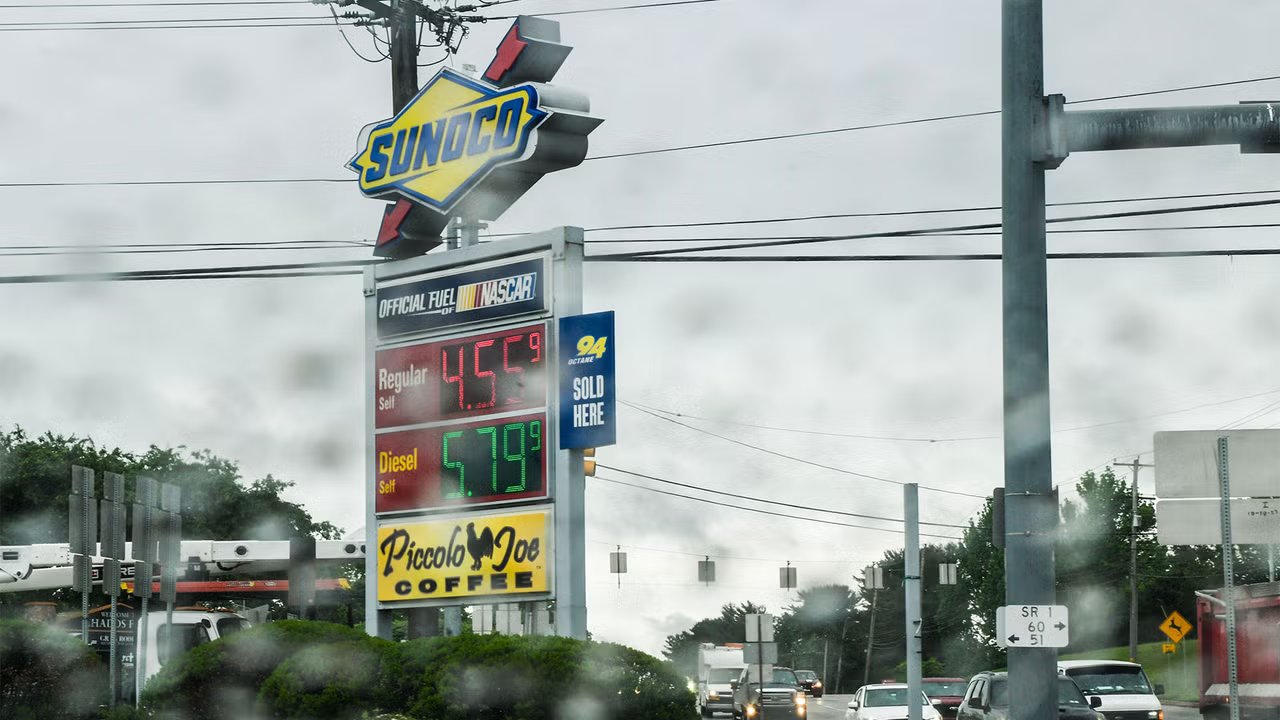
Americans don’t need a press release to know that inflation is rising. Gasoline is above $4 per gallon amid the ongoing conflict in the Middle East and closure of the Strait of Hormuz, and the release of key price data on May 28 underscores why policymakers are worried these pressures could spread into the broader economy.
The report offered a mixed but still uncomfortable picture. The month-to-month rise was softer than expected, but the change year over year still points to concern: a 3.8% jump from a year earlier, the fastest pace since 2021, and a less volatile index that excludes food and energy up 3.3%.
This increase suggests inflation isn’t limited to gasoline. Housing, utilities, and recreational spending are also keeping underlying inflation elevated, even as other data shows a slowing economy and weaker income growth.
As finance and applied investments professors who study how businesses make decisions amid uncertainty, we have been watching this tension build. In our 2026 economic outlook, we warned that recession fears could persist alongside rising prices. Fresh inflation data now suggests the challenge may be deeper and longer-lasting than many expected.
Are all prices rising?
The fresh inflation data comes from the Personal Consumption Expenditures Price Index, or headline PCE, which is maintained and released by the Commerce Department’s Bureau of Economic Analysis. Headline PCE had already been getting hotter, rising to 3.5% year on year in March 2026, up from 2.8% in February. But an even more important metric for the Federal Reserve is core PCE, which excludes the more volatile categories of food and energy. Core PCE matters because it gives policymakers a clearer read on underlying inflation pressures and is generally considered a better predictor of where inflation is headed, the Fed’s chief concern. That has been rising this year as well.
The key question isn’t simply whether gas prices are rising, but whether those higher energy costs are spreading into the rest of the economy.
That’s why energy costs are both a measure of current inflation and a signal of future rising prices. They show up directly in inflation data like PCE but also affect shipping, airline fares, food production, utilities, packaging, business profit margins, and consumer psychology. A onetime bump doesn’t necessarily create lasting inflation. But the risk increases when those higher costs pass through to the broader economy and people begin to expect inflation to remain high. For example, if workers believe costs will be higher in general, they might demand higher wages, which in turn can make inflation even hotter.
There’s already some evidence that the inflationary effect of energy prices is spreading. April’s Consumer Price Index report—another inflation gauge—showed a 3.8% leap, the fastest in three years, with energy prices up 18% and spending on airlines up over 20%, while grocery prices posted their largest monthly gain since 2022. Tariff-sensitive categories like apparel and household furnishings are also still climbing.
And it’s these costs, not core PCE, that households experience every day. Americans buy gas, pay utility bills, purchase groceries, and start changing their spending behavior in response to these pressures. That’s why the Fed is watching to see how energy prices impact other measures of inflation.
What’s the Fed to do?
Kevin Warsh has just been sworn in as the new chair of the central bank, which means the next meeting of the Fed’s policymaking committee on June 16 and 17 will be his first in that role. He’ll face an unusual amount of disagreement among committee members as well as scrutiny over his own positions given his rhetorical shifts on inflation and Fed policy since he was nominated by President Donald Trump. The president has pressured the Fed to cut rates, while Warsh has recently downplayed the significance and accuracy of the PCE gauge.
The Fed’s tool for responding to inflation is to raise interest rates, but it’s not always straightforward. The Fed doesn’t just hike interest rates as a direct response to inflation. If the increase in energy prices looks temporary and inflation expectations remain “anchored”—that is, stable among consumers—the Fed may hold steady on rates or even cut them as consumers continue to dial back spending. But it may have to keep rates higher for longer or even consider additional tightening if those conditions don’t hold and inflation continues rising.
This creates a problem for the Fed’s “dual mandate” to control inflation while supporting economic growth. Higher gas prices are inflationary, but they also reduce households’ spending power and dampen growth. In that sense, higher energy prices can act like a tax on consumers: People spend more to drive, heat and cool their homes, and receive goods, leaving less income for restaurants, travel, retail, and other purchases.
That’s why the Fed doesn’t have a simple answer. If it hikes interest rates to combat inflation, it still won’t resolve geopolitical conflict and increase global oil supplies. But it can reduce demand and slow inflation.
Indeed, according to notes of the most recent Fed policy committee meeting in April, many officials are increasingly concerned that persistent inflation could require additional rate hikes. While the Fed decided to hold rates steady at 3.50% to 3.75% at the time, committee members noted that inflation remains elevated, “in part reflecting the recent increase in global energy prices.”
Another factor: Long-term yields on Treasury bonds, which reflect what investors demand for buying U.S. debt, have reached their highest levels since 2007. That could be a sign that markets expect higher rates or more uncertainty—and it matters because yields influence mortgage rates, business borrowing costs, and the value of retirement portfolios, to name a few examples. In other words, inflation concerns don’t have to wait for another Fed rate hike to affect the economy. If markets believe inflation will stay elevated, borrowing costs can rise on their own.
What to watch at the Fed’s June meeting
The leadership transition at the Fed makes this moment particularly noteworthy. Warsh’s first major challenge may not be whether to raise or cut rates immediately, but how to explain what the Fed is watching. Will he emphasize headline inflation, core inflation, other inflation measures, consumer expectations, financial conditions, or signs of slowing demand? This is especially important, as some of these gauges are closer to 2% and rising more slowly while others rise more rapidly away from the Fed’s 2% target.
Artificial intelligence adds another complication. AI-related investment may be helping hold up growth even as households feel pressured by higher gas and grocery prices. That creates a divided economy: Consumers struggle with higher prices and borrowing costs, but AI-related investment supports markets, infrastructure spending, and business optimism. For his part, Warsh argues that AI also will help drive down prices, allowing the Fed to cut rates sooner.
All of this makes the inflation outlook hard to read. Weakening consumer demand and wage growth argues for caution, while rising inflation expectations and businesses passing on higher costs to consumers and the broader economy argue for higher rates.
Ultimately, the key question for the Fed is not simply whether inflation is rising, but whether energy prices are reopening the inflation fight at the exact moment it’s trying to prove that price stability is still within reach. Warsh’s first months as chair will test whether the Fed can maintain inflation credibility while avoiding unnecessary damage to an already pressured consumer economy.
D. Brian Blank is an associate professor of finance at Mississippi State University.
Brandy Hadley is an associate professor of finance and a distinguished scholar of applied investments at Appalachian State University.
This article is republished from The Conversation under a Creative Commons license. Read the original article.
