
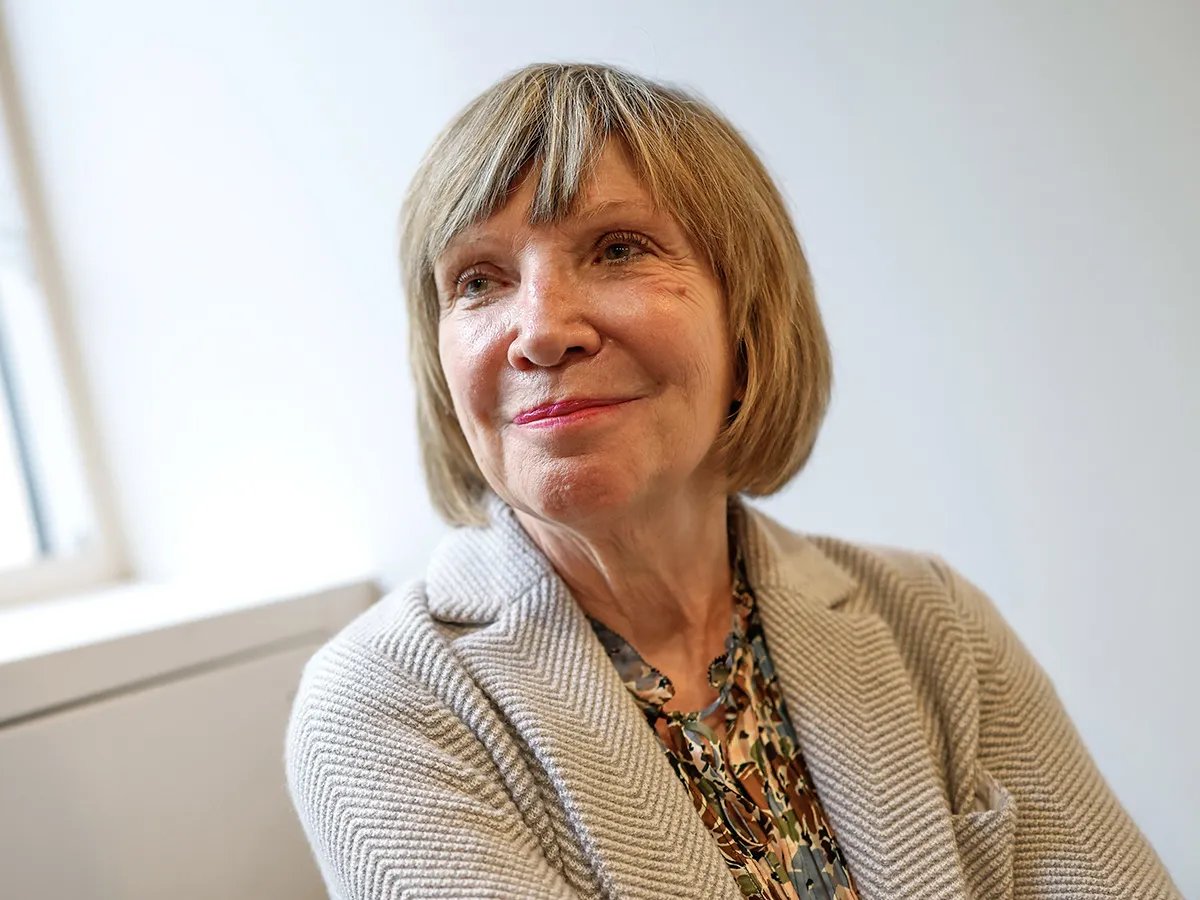
OTTAWA — Eleanor Olszewski jokes that, like most good Albertans, she originally comes from Saskatchewan.
Born in Swift Current, Sask., Olszewski called the small city home for only a couple of years. Her family moved to Medicine Hat, Alta. where she was raised, before leaving for Edmonton to attend university, achieving degrees first in pharmacy and then later law, eventually settling down to raise her own two children in the provincial capital.
Now serving as federal minister for emergency management, the MP for Edmonton Centre is bracing for another wildfire season, one that she comments has so far been quiet, but expects to see light up with alerts come July.
There is another fire smouldering in the meantime that Olszewski, the lone minister representing Alberta around the cabinet table is focused on: That of calls coming from separatists for Alberta to leave the country. With pressure from sovereigntists building, Alberta Premier Danielle Smith has added to a set of provincial referendums this fall a question asking Albertans whether they wish to stay in Canada, or begin the formal process of holding a binding vote on independence .
“Honestly, I’m disappointed in the premier’s decision to put this question, this particular referendum question on a ballot,” Olszewski told National Post in an interview this week. She said citizens are already facing too much uncertainty coming from U.S. President Donald Trump’s tariffs and wider global disruptions.
“This is not the time to be dividing Canadians, or to be … putting a choice to Albertans.”
“Honestly, out of all the times in our history … it’s not the time,” Olszewski says. “This is a time for unity.”
She acknowledges that she has yet to tell the premier her personal feelings on the matter.
The referendum question has triggered what Olszewski describes as an offering of support from her colleagues to assist, including offers to come to Alberta. She says Prime Minister Mark Carney, who was raised in Edmonton, is “very engaged in this issue.”
She suggests that the prime minister’s upbringing and connection to the province, having mentioned in past speeches major milestones in the development of Alberta’s oil industry, means that Carney understands Albertans, “maybe more than other people do.”
Smith herself has complimented Carney for his efforts to improve relations with the province and embrace a more co-operative style of federalism than seen under his predecessor, former prime minister Justin Trudeau, whose energy policies drove much of the anger towards Ottawa and helped fuel the power of the separatist movement.
The centrepiece of Carney and Smith’s attempt to reset the Ottawa-Alberta relationship is the deal the pair struck aimed at getting a new oil pipeline from the oilsands to to the West Coast in exchange for Alberta, the country’s largest oil-producing province, increasing its industrial carbon tax.
Details finalizing that agreement, including setting a deadline for Ottawa to declare Alberta’s pipeline proposal to be in the “national interest” just weeks ahead of October’s referendum vote, were announced days before Smith officially put the independence question on the ballot.
In her view, Olszewski sees the separatist challenge as something much deeper than what can be addressed with one pipeline project.
“It’s not a pipeline issue.”
When it comes to feelings of western alienation, a sentiment that has defined for generations how many Albertans perceive their treatment by Ottawa, she believes it not something those living elsewhere understand.
“You need to have lived in Alberta, and have talked to a lot of Albertans to help understand,” she says, describing it as a sense of feeling disrespected by the federal government and other Canadians, a sentiment that has hit peaks and valleys over the province’s history.
While prime ministers and federal cabinet ministers usually make the trek annually to flip pancakes and shake hands at Calgary Stampede, the province’s biggest tourist draw outside of the Canadian Rockies, Olszewski says she plans to travel the province between now and the October 19 referendum to speak to as many Albertans as possible.
Her stops will include the province’s smaller centres “not just Edmonton and Calgary.”
Olszewski says her portfolio has already taken her to Alberta cities like Red Deer, her hometown of Medicine Hat, Camrose and Airdrie, a booming community on Calgary’s suburban outskirts.
She plans to expand from there, saying “it’s my feeling that it’s even more important to do that now.”
Olszewski unsuccessfully ran as a Liberal candidate several times before stepping into Edmonton Centre in last year’s election when former Liberal cabinet minister Randy Boissonneault declined to run after facing accusations of misrepresenting an Aboriginal heritage , including with a company he co-owned that won contracts from the government.

Today, she says her advice for those living in Central Canada is to take the issue of the referendum seriously and make an effort to listen to Albertans.
“I think that’s fundamentally important.”
Former provincial and federal conservative cabinet ministers who have represented Alberta and have begun organizing to campaign for the “stay” side of the referendum vote have called for a show of support from leaders.
Opposition Conservative Leader Pierre Poilievre, who himself represents the rural Alberta riding of Battle River–Crowfoot, this week delivered a speech in Calgary outlining his pitch for national unity. He promised to speak to those “on both sides of this referendum,” and warning federalists not to engage in “name-calling” or “fearmongering,” warning it would do nothing to aide efforts to convince those who want to leave to decide to stay.
Asked how effective the voice of Liberal cabinet minister from Edmonton will be with those who want to separate in the conservative-blue province, Olszewski says “it’s a really good question.”
While there will be people who have already made up their minds about the vote, she nevertheless believes it is important to show up to talk and answer questions and, also, just listen.
She said she thinks Liberals haven’t always done that.
“Sometimes I do think we could have done a better job,” she said.
National Post
staylor@postmedia.com
Our website is the place for the latest breaking news, exclusive scoops, longreads and provocative commentary. Please bookmark nationalpost.com and sign up for our politics newsletter, First Reading, here.
