
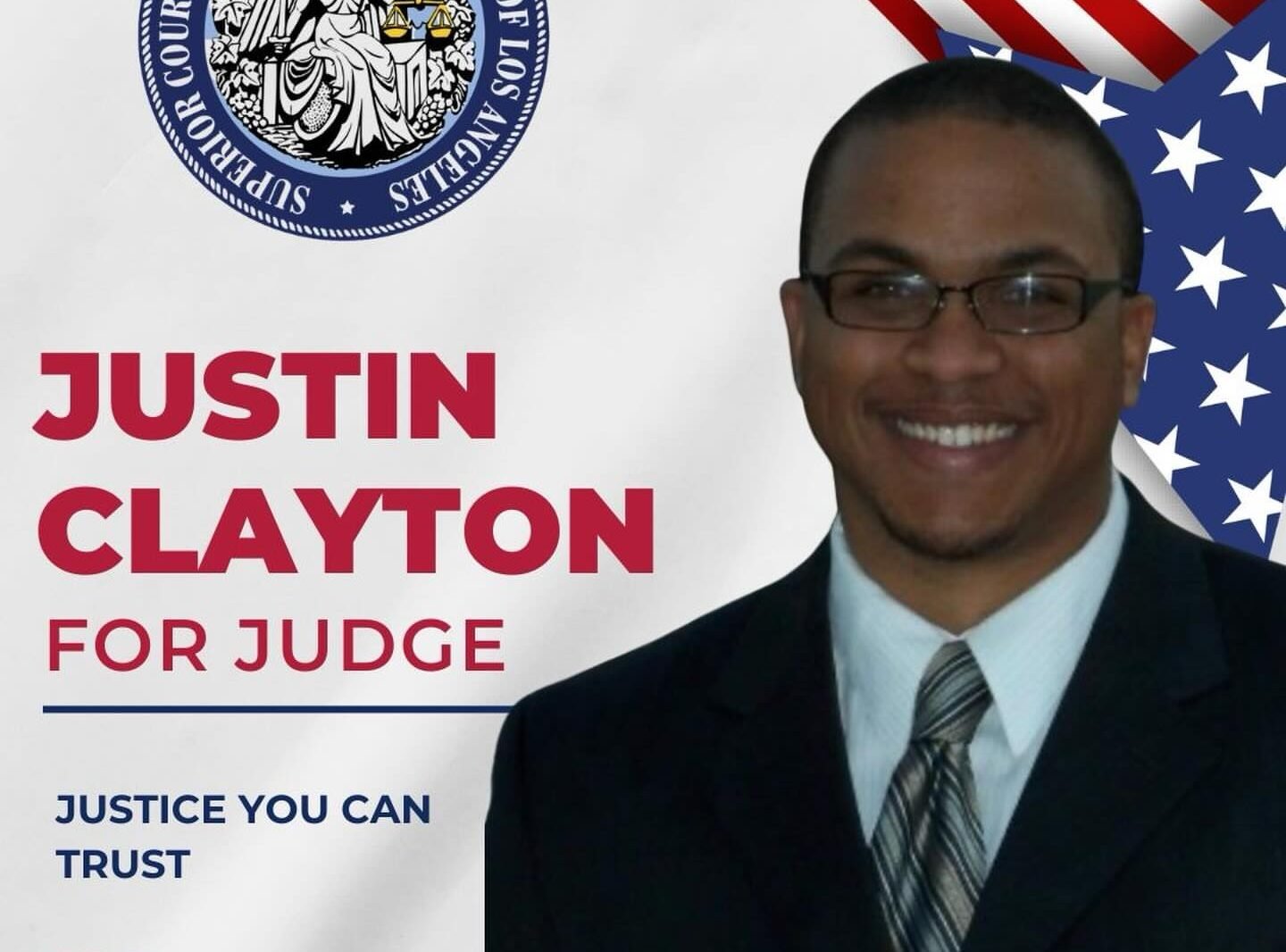
Jamie Foxx endorsed Justin Clayton for Los Angeles Superior Court Judge, office 65, this week. He used Instagram to make the case for a candidate most LA voters have probably never heard of.
The endorsement was brief and personal. On Instagram, Foxx described Clayton as “honest, trustworthy, fair, and experienced in the law.”
Clayton is an LA native with 12 years at the Los Angeles Public Defender’s Office. Foxx also noted that all LA County residents are eligible to vote in the race.
Judicial elections don’t usually attract much attention. Most voters skip them or fill in a name based on ballot position.
Without a named incumbent or a visible controversy, a candidate’s name recognition before Election Day is often close to zero outside legal circles. That’s how low-profile races typically perform.
That’s the environment Foxx stepped into. A celebrity endorsement doesn’t change a candidate’s record or qualifications. What it does is move a name from near-total obscurity into a conversation.
Foxx is a recognizable name in American entertainment. He won an Academy Award for his performance in “Ray” in 2005 and has had a long career as an actor, singer, and producer.
Celebrity endorsements in judicial races are relatively rare. That’s part of why this one stands out.
Clayton’s background at the Public Defender’s Office is worth a closer look. Public defenders represent people who can’t afford private legal counsel. Attorneys there build long, close exposure to how courts work at the ground level.
Twelve years in that role means twelve years of courtroom practice. Many of those cases never attract public attention. It’s a different track than private practice or prosecution, and it produces a different set of instincts.
Foxx didn’t lay out a policy platform or describe Clayton’s judicial philosophy. The case he made was personal rather than institutional: Foxx vouched for Clayton’s character, not his credentials.
That’s a different kind of endorsement from what a bar association or political party might give. It trades on name recognition and personal relationship.
Whether that’s enough to move votes in a county of 10 million people is a separate question. Los Angeles County has many seats on the Superior Court. Office 65 is one among them.
Getting traction in that environment, in a race without a large campaign budget or party infrastructure, is a real challenge.
Foxx’s post gives Clayton one concrete thing: visibility among an audience that would otherwise never have encountered this race. People who follow Foxx for entertainment news found a judicial candidate in their feed.
Whether they follow through to the ballot is the key question. Only the June results will answer it.
The more useful question is simpler: does celebrity-driven awareness of a judicial race, however brief, produce more-informed voters or more-random ones? Foxx appears to believe it’s the former.
