
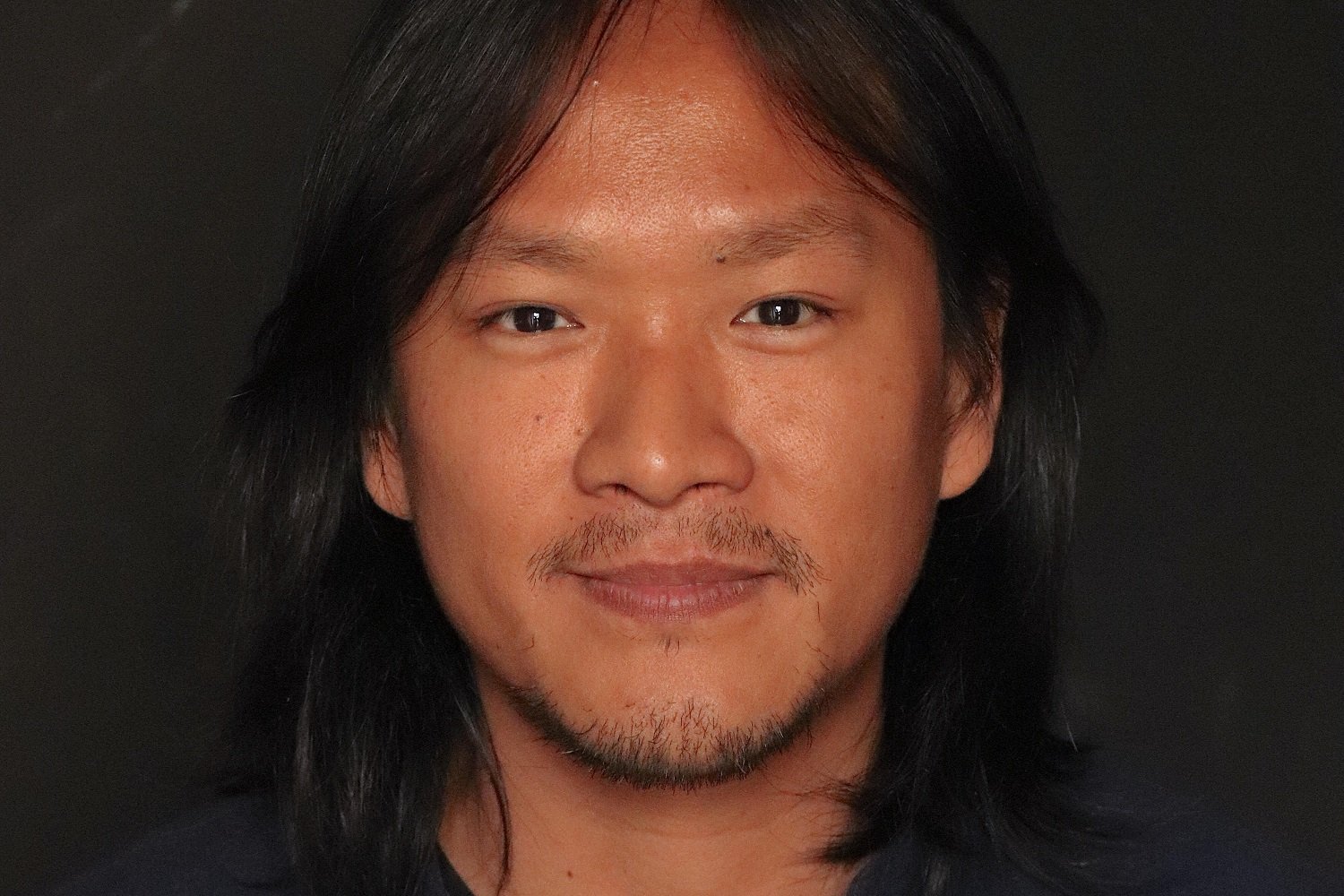
“I believe in the emergence of highly artistic, independent, arthouse animated films made with reasonable budgets”
– The French filmmaker reveals the path which led to him making his first solo animated feature film, produced wholly independently by his own company
(© Thibaud Feyhl)
Unveiled in the 45th Annecy Animated Film Festival’s Contrechamp competition, Muyi is the first feature film Julien Chheng has directed on his own, after co-directing Ernest and Celestine: Trip to Gibberitia (2022).
Cineuropa: Where did you get the idea for this film set in China?
Julien Chheng: I grew up in France, but my heritage is Chinese. I’ve got family over there and I felt the need to rediscover my roots. And I was struck by a visit we paid to a village inhabited entirely by women. Sujuan Xu, my co-screenwriter, had also told me about her childhood in the countryside, watching over fields while riding a buffalo, and she’d told me her mother’s story which was a major inspiration for the film. But I needed to work out how to make a film which would speak to a family audience, but not too young an audience, because the subject-matter is pretty intense. So we wrote a lot of different versions of the screenplay over the course of 5 or 6 years before finally striking the balance of exploring the subject-matter without turning it into a full-on political fable, and making an adventure film about a teenage girl’s coming of age. We worked hard on making the subject-matter accessible and taking the audience on an adventure to discover this culture, but including a subtext that older viewers could understand.
The film also navigates between different time periods.
From the 90s, we jump back to the 6th century to understand the origins of this village of women, to explore that era and the concept that everything that’s going on today relates back to the legacy of an ancient reality. It’s a universal theme, but it’s also the question the main character asks himself. If we’re looking to move forwards, should we distance ourselves from our story, our roots, the story of the people who came before us?
What led you to the myth of the handsome general?
In the central region of China that we focus on in the film, there were warlords whose lives were the subject of legends which were adapted into operas or dances performed in the countryside. That handsome 6th century general did genuinely exist and what fascinated me was the fact that he wore a frightening helmet on the battlefield because he was considered to be the most handsome man who’d ever lived. Given that he was a character who’d lived in the region explored in the film and that he’d never really featured in any films, I connected him with the social reality of these women-only villages. So Muyi, who’s living in the ‘90s, ends up meeting the ghost of this handsome general and even inhabiting his body for the duration of an adventure.
In terms of the film’s graphics, you seem to pay tribute to Chinese calligraphy.
I come from a tradition of drawing, and calligraphy, because I studied illustration. That style always influenced my creations when I was at the École Estienne and then GOBELINS. In fact, my first project as an animator was Ernest and Célestine and our drawing technique was almost calligraphy-like. It was the same when I co-directed Ernest and Célestine: Trip to Gibberitia. In the meantime, I also founded and developed Studio La Cachette which has the same strict editorial line. In the episode I directed of the animated series Star Wars Visions, I also used really calligraphic lines. So for my first solo feature film, it felt natural to pay tribute to that calligraphic line again, but also to 6th century murals (which have a flattened perspective and harsh colours) and the richness of Chinese painting which leans towards impressionism.
The project captured the interest of streaming platforms very quickly, but you chose to develop it independently, within your own production company.
I started my career at Disney in the US, where I worked on films in development. I soon realised it wasn’t the right fit for me, and I came home to France to try to develop 2D animation, primarily through my own studio (Studio La Cachette). That was ten or so years ago. Streaming platforms and teen-adult animation weren’t a thing at that point. So it was a dream as well as a gamble. When I pitched Muyi for the first time at Cartoon Movie in 2020, streaming platforms were booming, and they offered me budgets of between 15 and 20 million euros. But I didn’t have a finished script at that point, and I didn’t want to launch myself into a project which might no longer have the spirit I’d imagined for it. So I decided to bide my time and let the script mature before eventually making the decision not to rely on investments from streaming platforms but to produce the film wholly independently, in France and with a smaller budget.
I belong to a generation of young French people who’ve been raised on 2D arthouse animation, and I believe in the emergence of highly artistic, independent, arthouse animated films made with reasonable budgets, because there’s an incredible pool of talent in France which is envied by the rest of the world. When you’re working on a personal story or a screenplay that isn’t an adaptation, it’s quite hard to promote it to major co-producers or broadcasters. But when you develop it with a lower budget, you have a lot of freedom, and you can impose your vision. That’s what allows us to produce some really unique works. And young generations have to try to be unique, especially at a time when AI is tending to make films, series and content very generic. For traditional animation artists, AI is definitely a worry. So you have to stand out, put your own human stamp on your work, and explore other forms and structures.
(Translated from French)
