
“Hans Christian Andersen’s stories were supposed to prepare people for a world that can be very cruel”
– The Danish directors discuss their film, which present Hans Christian Andersen like you’ve never seen him before
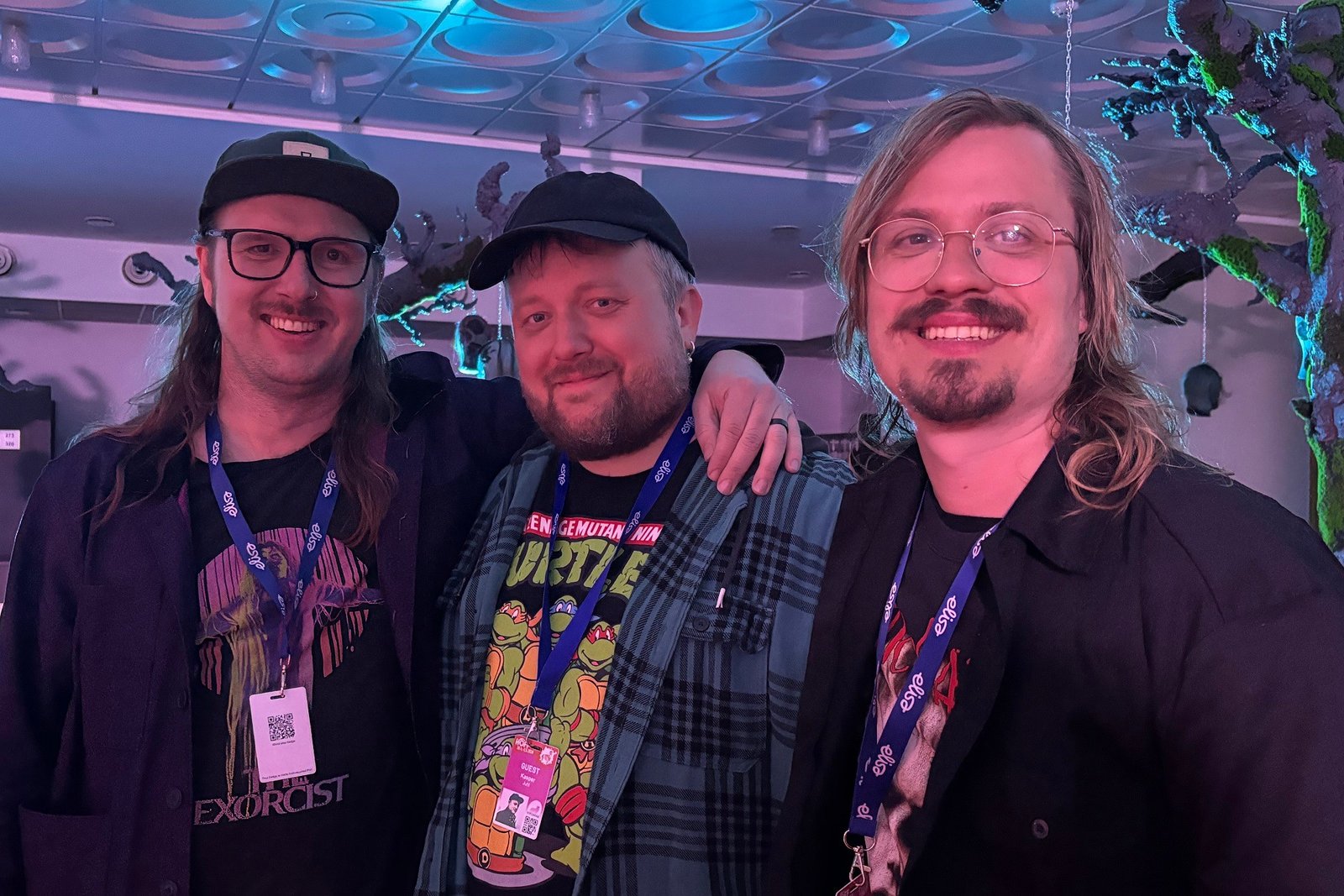
l-r: Michael Panduro, Kasper Juhl and Michael Kunov
Kasper Juhl, Michael Kunov, Michael Panduro and Anders Jon are behind Danish anthology Adorable Humans, inspired by the works of Hans Christian Andersen. In four stories, their characters go through all sorts of emotions, proving just how dark real fairytales can be. The film has now screened at the Haapsalu Horror and Fantasy Film Festival (HÕFF).

Cineuropa: I’ve heard you had a small budget for this film – €70,000 – but it doesn’t show. Was the visual aspect really important to you?
Michael Panduro: Finding great cinematographers was crucial for us. It was a big deal. They showed up with their own equipment! We have so many people to thank, including friends and others who wanted to help out, even though they wouldn’t be getting paid.
Michael Kunov: The whole concept was to the make it look like a proper film. Yes, we had a small budget, but we wanted it to look bigger than it was.
Everyone keeps talking about IPs these days – is that why you decided to adapt Hans Christian Andersen’s stories?
MP: At least at the beginning. We needed something to make these films cohesive. We also talked about making something explicitly Danish, and Andersen is one of the most famous figures we have. Once we dived into his work, we realised there was a wealth of interesting material.
Kasper Juhl: It has to be said that Michael [Panduro] has tested it out before – he made a short The Sunken Convent based on a Hans Christian Andersen poem. He proved that you can be creative with it, so we were inspired by that too.
MP: It was like a litmus test – I wanted to see if people would pick up on it. Almost all the press coverage about that short was related to that: “Hans Christian Andersen like you’ve never seen him before.” We thought: “It’s something we can use.”
You said you wanted to create something “explicitly Danish.” Why?
MP: Just to give it an identity. There are so many horror anthologies out there, so we needed something to set ours apart.
I’m suspicious of anthologies because the films in them don’t always make sense together. Yours do, and despite the craziness, there’s so much sadness here.
MK: That’s the identity of the film. We’re used to this Disney-fied idea of what a fairytale is. We think they’re childish, but when you read his works, they are so dark. So many of these stories are very, very sad and they don’t really have happy endings. I think they were supposed to prepare people for a world that can be very cruel. It’s not actually that hard to make a proper horror film out of them – the material is already there.
MP: We had an interesting screening in Hans Christian Andersen’s hometown. They have a centre dedicated to studying his works and its leader introduced the film. He really delved into the subject, and said that so many of the darker emotions in his fairytales are lost in translation because translators have the preconceived idea that they are working with children’s stories. They tend to make things lighter than in the original text. He was so happy we were doing the opposite – and doing it as Danes. It has become a part of our mission with this film. These stories are very mature and very depressing, and there’s so much suffering. They are not sugar-coated.
MK: When you look at the source material, it’s not just for children or just for adults. But they do say something about the world. It’s ok if you know the Disney version – just keep in mind that these stories are not really like that. I would like people to find their own way in, and realise there’s more to it.
I like it when the film is crazy but the actors play it straight. That’s the case with your film, too.
KJ: We always said that it should feel like one film. We needed similar themes and yes, similar approaches. We didn’t want anything over the top stuff.
MP: If one of us had come along and said: “I want to make something completely exaggerated,” others would probably say no. We weren’t trying to censor ourselves, but we all approached this genre as a metaphor for actual human emotions, so it made sense to do it in a natural way. Personally, these are the films I enjoy watching and creating.
How does it work when you direct together? Did you keep in touch throughout the entire process?
MP: We had a similar idea with Anders 10 years ago, but we just couldn’t get it off the ground. We ended up making short films instead, but I felt there was more to it – that it was worth another try. We were in touch pretty much the whole time. We established some ground rules, and then we went off and found our stories. We gave each other feedback and talked about how we could interconnect them. I was at Anders’s shoot and helped to edit Michael’s film. There were only two DoP and one sound designer. Everyone communicated with each other.
KJ: Especially in the writing – we really did it together. As you said before, some “anthology” films are just a gimmick. One director doesn’t know what the other is doing, and the movie ends up all over the place. This needed to be coherent. Michael brought us all together, so maybe he just knew it would be a good fit?
MP: One of the first meetings we had was with a big Danish producer who said: “This is going to collapse within weeks. You have four egos and it’s never going to work out.” And here we are, five years later. We all still friends – and still together.
KJ: Expect for Anders, who’s not here. He was too much of a diva [laughter].
Now that you’ve proven everyone wrong, are you going to do it again?
MP: I think now we want to make our own feature films. We still have ideas for other short stories, and some people have suggested we should make a TV series, but it’s not something we’re pursuing at this point. Kasper has already made two films [Bloodsucker and Rotten Flowers] in the last five years!
When you were choosing these stories, was there something about them that spoke to you personally?
MK: I was looking for something darker and then I found it: The Dying Child. It was actually sadder than I expected, but it just spoke to me.
KJ: The one I chose, about The Snow Queen, is well known and that’s was I wanted it – the guys chose ones that no one knows. But I have always loved it, and when I read it again, I got lots of new ideas.
MP: It was so funny that Kasper chose it because the story goes that Frozen is loosely based on it. That’s quite a contrast [laughter]. I just started reading, and connected with Aunty Toothache. Firstly, it’s pure horror. Secondly, it’s about creative struggle. It was an interesting take on the subject.
You end on a comedic touch with this one.
MP: We always wanted to end with a song. In the first part of the film, everything is so intense. People are crying and dying.
MK: We wanted the audience to leave the cinema without feeling completely depressed [laughter].
Is Denmark genre-friendly, also when it comes to funding? It doesn’t feel like it, or am I mistaken?
MP: No, you’re right. Denmark does not have a tradition of making genre films. Occasionally, there’s an odd one out, but horror films are few and far between. There’s been a tendency to market them more towards younger audiences. It feels like something the Danish Film Institute is not interested in doing.
MK: For now.
MP: I think Speak No Evil opened some doors, and you could put some of von Trier’s work in this category, but his films are still arthouse. To be honest, we didn’t even apply. It felt completely pointless, so we found private funding and made it by calling in all the favours we could muster. Maybe it will be different now, because we have an example of what we can do.
KJ: It was a bit easier because we could say we were making a “fucked-up version of Hans Christian Andersen’s stories.”
MK: That should have been our tagline.
