
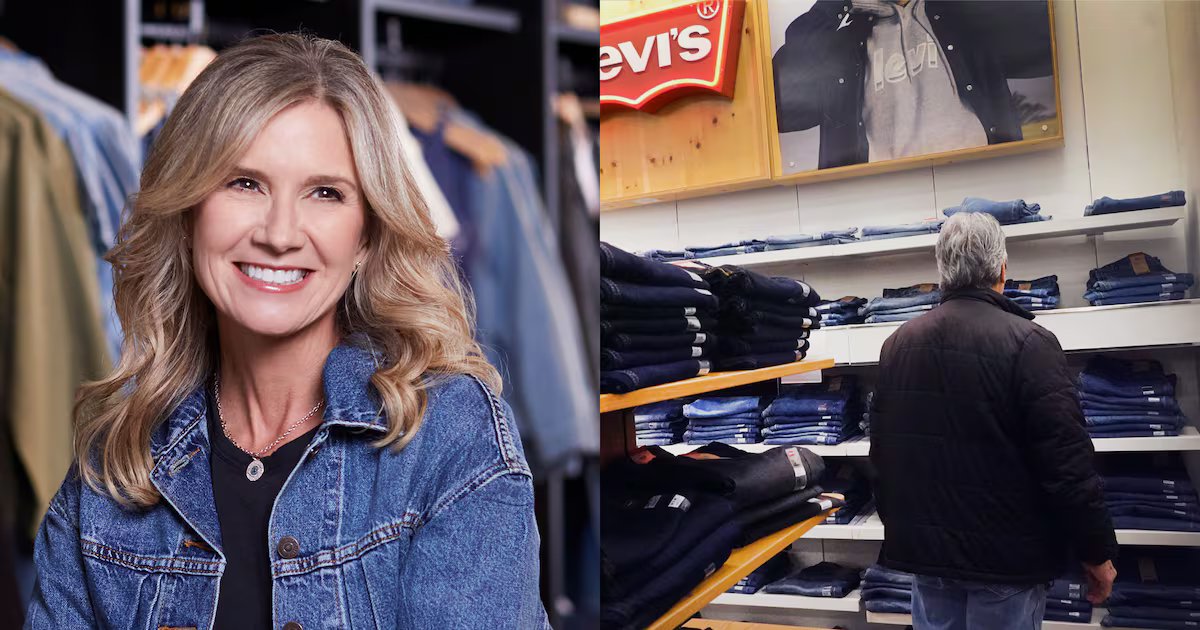
Levi’s was off to a good start at the outset of 2025. It was growing gross margin alongside its direct-to-consumer business, and had even made headlines with a Beyoncé campaign after the star name-dropped the brand on her album “Cowboy Carter.”
It was a reassuring moment for Michelle Gass, who had taken over as chief executive in January 2024 as Levi’s was in the midst of a course correction. The 170-year-old US denim giant had become a bit sleepy, bogged down by declining wholesale, underperforming business units and unwieldy inventory mixes — often resulting in heavy discounting.
Then came the US tariffs, which plunged the industry into disarray.
The duties have redrawn fashion’s supply chains, pinching brands’ margins while testing their agility and the strength of their supplier partnerships.
Amid the chaos, Levi’s has emerged as a standout for its tariff playbook. The company has enacted both fast mitigation tactics, like bringing forward holiday inventory and cutting slower-selling SKUs, and long-term strategic initiatives, including maintaining a diversified supply chain and consumer base, reducing intricacies in its design process, creating a more efficient inventory mix and growing higher margin sales.
The quick work paid off. In October 2025, Levi’s reported a 7 percent year-on-year increase in quarterly sales, with margins coming in above guidance, though it did warn tariffs would hit margins in the fourth quarter. Even so, the company raised its full-year revenue outlook.
BoF: In recent years, the words ‘unprecedented’ and ‘uncertainty’ have been used to describe the market to the point where they’ve almost lost meaning. How would you describe the environment in 2026?
Michelle Gass: Complex, [among other things]. There are macroeconomic forces, there are geopolitical, there’s the state of the consumer, there’s massive disruption in technology and AI. As a leader in the retail industry, it’s very complex, and you have to be really thoughtful on how you navigate [it].
BoF: Fashion is being rocked from top to bottom right now by shifts in the global trade system as the US enacts its most comprehensive tariffs in nearly a century. What levers has Levi’s pulled already to address the trade situation?
MG: From a company standpoint, we are structurally advantaged: approximately 60 percent of our business is international. Many of our domestic competitors are much more heavily penetrated in the US, therefore the tariff burden is going to be higher. We are working with our vendors to see what opportunities we have. We have been, over time, working to get greater cost efficiencies. That will help mitigate the tariff impact.
And then pricing. There’s [three] parts to that. We are taking some surgical and targeted pricing [increases], as probably most apparel or retailers are. There’s only so much you can absorb from the tariffs, because they’re just very high. Two is promotional levers. [We are] pulling back on the amount of promoting we do — less of your ‘20 percent off’ events or ‘friends and family.’ That helps elevate the brand, and it’s also good for margins and helps us mitigate the tariffs. The third piece is where it makes sense, pricing for innovation. When you’re coming in with a new product, consumers are likely willing to pay more for that, so therefore we can take advantage.
BoF: When you were appointed CEO in 2024, you were tasked with transforming Levi’s into a ‘head-to-toe denim lifestyle’ brand. That means expanding beyond jeans and taking risks, which becomes harder to do in a tough economy and volatile environment. How do you balance those demands?
MG: We have to stay really close to the consumer and understand what they want, what they need — and bring them things they don’t realise they need. We will diversify in [lifestyle], but it has to make sense to the consumer and what Levi’s can distinctly own. Quite literally it means you start with all the amazing things you can do with denim, whether it’s this Blue Tab shirt [from our premium line] to denim dresses, skirts, jumpsuits, trench coats. But it’s also [finding] the right products that do complement our denim. It significantly expands our addressable market.
We’re operating in a complex environment, but we ourselves are becoming less complex.
BoF: Levi’s made an early call to stop offering less popular styles during the holiday season to avoid having to discount. Do you anticipate that this lever will be pulled again in the year ahead?
MG: Simultaneous to us thoughtfully expanding our assortment into denim lifestyle, we’re also being deliberate about where we can pare back and reduce less productive SKUs. It’s a journey we’ve been on the last two years. We operate in 120 countries. It’s a very complex network of how we go to market. Over time, our SKUs had proliferated. If you’re not in control of that, you create a lot of complexity.
We are seeing sequential improvement on our gross margin and our EBIT margin. As we become more profitable, it is giving us more leverage to mitigate the tariffs. [Now we are] activating the things we had in place: greater full-price selling, less promotion, looking for pricing opportunities on innovation.
BoF: How will the assortment change next year based on everything that you’ve learned this year?
MG: We are quite truthfully rewiring this company end-to-end and top-to-bottom. We had different assortments all over the world. Even though [product] was coming from [our headquarters in San Francisco], what Japan might need, versus what the US might want, versus the UK, was different things. Not that long ago, what was common across all of our stores, it was less than 10 percent [of product]. Now, about 40 percent of product is common globally. That’s a game-changer for how our teams design, develop, source, how we work with vendors, how we merchandise, how we market. It creates a tonne of efficiency. We’re operating in a complex environment, but we ourselves are becoming less complex.
BoF: Right now with tariffs, challenges in the supply chain are hard to predict. Is diversification enough? How have you collaborated with your suppliers to tackle tariffs head on?
MG: We’re all in this together. Our teams are talking to our suppliers 24/7, trading information, figuring out what our plans are, what our forecasts are. This is a relationship business. Just like we build relationships with our consumers, we build very strong relationships with our vendors. We want to make sure they get what they need from us as well. On some of our key products, we source from multiple countries. Whether tariffs or any kind of supply chain disruption, it does give us flexibility.
BoF: The US consumer in particular is historically resilient, continuing to spend through downturns. But the full effect of all of these higher costs due to tariffs is only starting to trickle into the marketplace. The strength of this shopper will be tested in the year ahead. What do you foresee in terms of price sensitivity?
MG: Our consumer has proven to be resilient; we’ve just posted our fourth consecutive quarter of high-single-digit growth. If consumers are feeling pressure, they’re going to be more choiceful with their dollars, and look to brands that do have that value in the broadest sense. Consumers are still going to buy, [but] as the walls get tighter, we have to work harder. We have to continue to make sure that our brand is relevant. All the investments we’ve made to be at the centre of culture, the partnerships we have, the collaborations with Nike, makes us relevant, interesting and loved. For that consumer who may feel more pressed financially, we have a [range of price points].
BoF: International markets are really driving growth for Levi’s. Are there any emerging markets that Levi’s is doubling down on in the year ahead?
MG: Asia is a very big opportunity for us, and India is a key growth opportunity market. There’s over a billion people, a growing middle and upper class. It’s youthful and they already love the brand.
BoF: Are there any macro-shifts or other currents that you think are underappreciated by fashion right now?
MG: The world is in the midst of a major disruption on what AI is going to mean to our business. One of my top priorities is having our teams across the company embrace and see what’s possible with AI. Over the last year there really has been a sea change in how the company is deploying AI. [We’re looking at how it can] help us achieve our strategies better [and] faster. [We’re] embedding AI in a lot of our processes, inventory management and planning and financial processes. We’re in the earlier stages of [using AI as part of our design process], but we see the potential and how that can not only help us reduce cycle times but even open up new ideas.
BoF: This year ahead is set to test the operational prowess and pricing power of brands at every level. How do you think it will shake out?
MG: You want to be entering into this time from a position of strength and momentum. Disruptive times can create more separation between stronger companies and the weaker companies.
This interview has been edited and condensed.
This article first appeared in The State of Fashion 2026, an in-depth report on the global fashion industry, co-published by BoF and McKinsey & Company.
