
Listen to this article
Estimated 2 minutes
The audio version of this article is generated by AI-based technology. Mispronunciations can occur. We are working with our partners to continually review and improve the results.
Loblaw has reversed its decision to drop country-of-origin labelling on produce signs following widespread customer backlash.
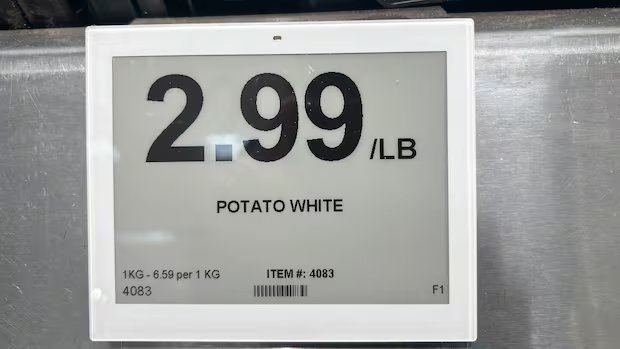
The outcry began earlier this month after shoppers noticed the area on produce displays which used to indicate where food was grown had been left blank.
“We should know what we’re eating,” said Karla Hennig of Penticton, B.C. The committed “Buy Canadian” shopper says she was disappointed when she discovered the missing information last week at her local Superstore.
“I just think it’s terribly disrespectful of my time and my money,” she said. “They want me to support them, but they are not giving me what I’ve asked for.”
Produce signage at Loblaw stores across Canada reflected the same change, except in Ontario in Quebec; Canada’s largest grocer continued providing origin details in those two provinces because provincial regulations mandate certain types of labelling transparency.
But in other provinces, many Loblaw shoppers took to social media to denounce the policy change — which the grocer initiated just before Canada-U.S. trade talks collapsed, sparking a fresh trade war and renewed interest in buying Canadian products.
“They’re probably thinking, ‘Boy, we picked the wrong [time] to pull the labelling,’ ” said Ellen Goddard, an agricultural economist at the University of Alberta in Edmonton.
She anticipated current customer pressure may ultimately force the grocer to reverse course and drop its new policy.
“The emotion is much higher now,” she said. “I suspect they’re counting the number of messages and social media blogs they are seeing and phone calls they’re getting from customers.”
Goddard’s prediction turned out to be accurate. Following a CBC News inquiry to the grocer, Loblaw responded by email that, “as Canada enters another period of trade uncertainty with the United States,” the grocer is taking steps to help shoppers buy Canadian products.
The grocer said those efforts include reintroducing country-of-origin information in produce aisles and a “T” symbol on shelf labels for American products affected by U.S. tariffs.
More to come
