
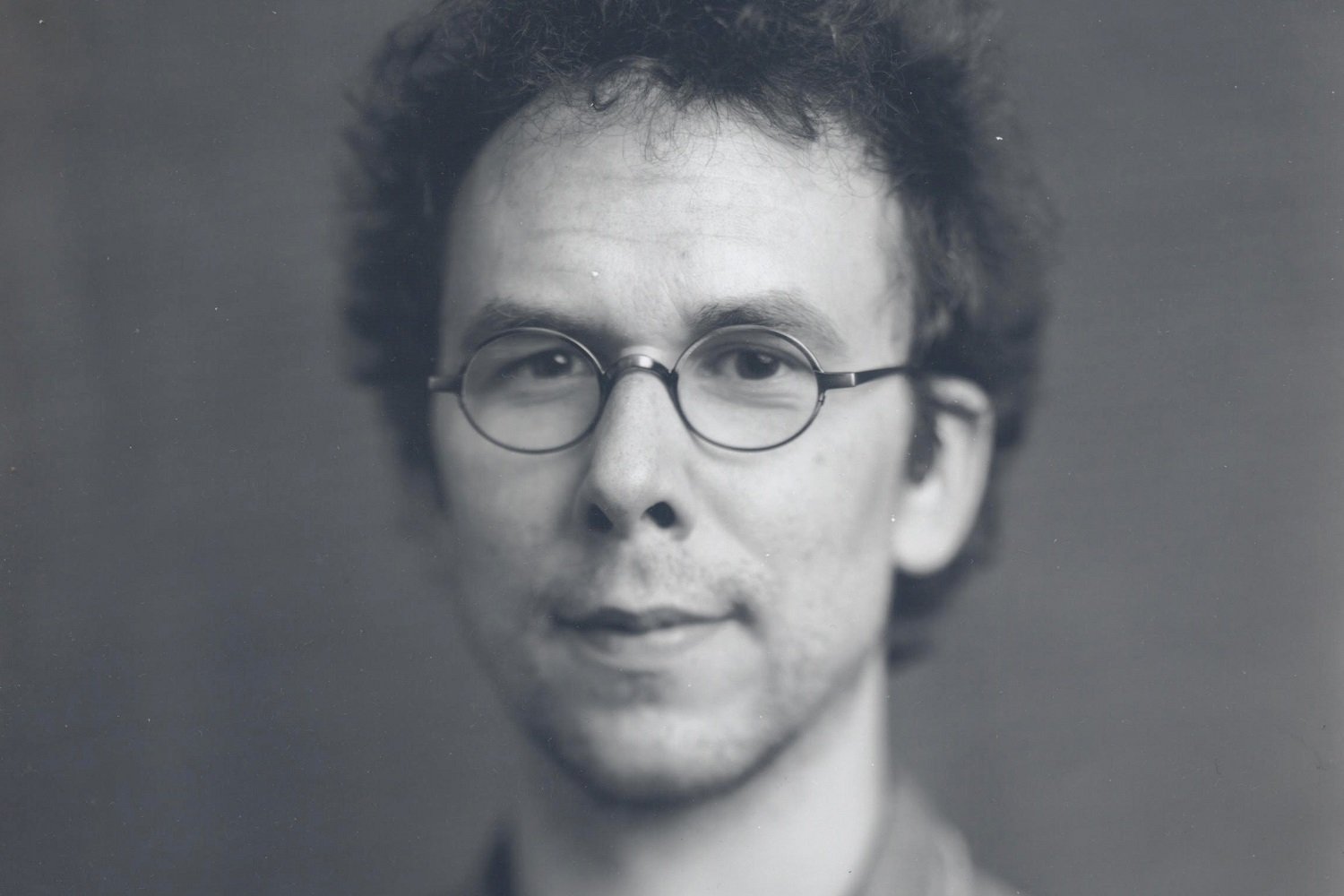
“At the age of forty, I realised that with 3D, I’d lost something along the way”
– CANNES 2026: The French filmmaker discusses his autobiographical inspirations and the aesthetic choices that shaped his animated film
(© Louis Clichy)
To mark his first solo project, French director Louis Clichy spoke to us about his artistic approach, animation techniques and the autobiographical elements behind Iron Boy, which scooped the Special Jury Prize in the Un Certain Regard section at the 79th Cannes Film Festival.
Cineuropa: Why did you choose this subject for your first film?
Louis Clichy: I’ve worked on a lot of commissioned films and, at the age of forty, I realised that with 3D, I’d lost something along the way. I also wanted to talk about the disability I had as a teenager – a difficult time at that age. In the film, there are some very autobiographical elements, and then there are things that are borrowed. I don’t play the organ, for example. I used it for narrative reasons. It struck me as the equivalent of a farm tractor with its pedals, pistons and chimneys… That choice led me towards a more powerful kind of music than I’d originally planned, one closely associated with the Church.

Christophe seems torn between his family’s expectations and his desire for freedom. Is that the idea behind the back brace? The idea of confinement?
That’s certainly part of it. I realised that in French, ‘ferme’ (farm) comes from ‘enfermé’ (locked up), and that the ‘fermes’ (farms) I’m talking about are enclosed spaces designed to protect against the wind. That implies a kind of withdrawal into oneself, like a brace. There are several levels of confinement in the film. I had this urge to break the back brace, just as Christophe smashes the tractor or the organ pedal. There’s a huge amount of frustration in him, much like in teenagers as they start to grow up: parents’ lack of understanding, a sense of injustice… These are fairly classic themes, but ones I wanted to explore in my own way.
Strangely enough, the brace ultimately helped me become more of myself. It’s funny. Because of it, I looked elsewhere and discovered other ways of doing things. A disability or a constraint can lead to something richer, even though, when I was a teenager, I experienced it mainly as a painful hindrance.
The film is both dreamlike and almost documentary-like in its portrayal of the Beauce region and nature. How did you develop this visual style?
I drew on techniques I’d already developed in my short films. To work quickly, I used a broad brush, without getting bogged down in the details. That allowed me to bring things out instinctively. I kept that intention for this film. Obviously, I had to go further and be a bit more precise, but the initial idea remained. Then there was the colour. With that very prominent black line, simply adding colour on top can quickly seem naive. The colour had to tell a different story. At times, the line disappears and the colour takes over, and vice versa. Watercolour was the natural choice because it doesn’t cover the whole image. This is what we call “white space”. These unpainted areas create a particular light that gives it that dreamy quality. It allows me to convey emotion when I need to.
Do you already have a new project in mind?
I have some ideas, but it’s still too early to talk about them. I’ve started work on an animated film that’s more traditional in style. I also have a commissioned project that’s very 3D-focused, but it’s an interesting one to work on, and I’ll be starting on it soon. Alongside that, I’d like to develop another project, not necessarily a more personal one, but one centred on subjects that deeply interest me. I’m very troubled by the state of the world at the moment, so I’d like to try not to remain indifferent to it all. I don’t yet know what shape the film will take.
(Translated from French)
