
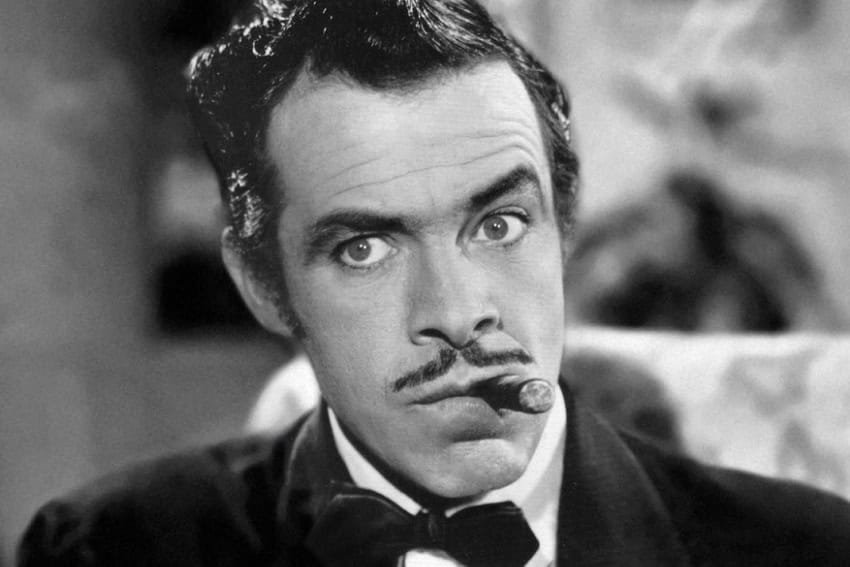
In Mexico, the first binational icon may be the mestizo: 500 years of cultural collision condensed into what Octavio Paz once called a contradictory soul. But there are many Mexicos, and one that rarely makes it into English-language coverage is that of the pachucos — young Mexicans in Los Angeles who appropriated U.S. slang and style on their own terms. The pachuco was everything official Mexico preferred not to see: despised by the upper classes, nothing like the charro masculinity of Jorge Negrete or Pedro Infante, and a world away from the cosmopolitan chilangos of mid-century Mexico City.
One actor changed how that figure was seen and, alongside Cantinflas, became a pillar of Mexican comedy: Germán Valdés, better known as Tin Tan. Dressed in an oversized zoot suit and singing in a jazz-inflected cadence, he exploded onto the screen shouting, “¡Ya llegó su pachucote!” What he announced, without quite knowing it, was a future that looks a lot like our present: the binational, border-born self.
A binational legacy
Germán Genaro Cipriano Gómez Valdés y Castillo was born in Mexico City on September 19, 1915: his mother was from Aguascalientes; his father, Rafael, was a customs agent whose work would carry the family north.
Rafael was first posted to Veracruz and then, in 1931, to Ciudad Juárez. Germán was sixteen. He arrived at the border just as a generation of young people on both sides was inventing something new: a hybrid culture stitched together from Mexican migration, African American jazz, Hollywood swagger and Depression-era poverty. Historians would later call them the “Mexican American generation.” On the street, they called themselves pachucos.
Germán took to it immediately. A poor student pushed to work, he was hired as a janitor at XEJ, the local radio station. One afternoon, alone in the studio, as the legend goes, he began imitating the announcers for his own amusement, unaware that the microphone was live. Station owner Pedro Mesenes heard him and turned the janitor into an on-air personality.
In 1943, impresario Paco Miller arrived in Juárez with a traveling company. When one of his comedians suddenly quit, Miller heard Tin Tan on the radio and hired him almost immediately.
Pachucos under suspicion
Pachucos were young, mostly working-class Mexican Americans who emerged in border cities in the 1930s and 1940s. Influenced by Black jazz culture, they wore zoot suits — oversized jackets with padded shoulders, baggy trousers pegged at the ankle, wide-brimmed hats, two-tone shoes — popularized by performers like Cab Calloway and adopted by Mexican American youth as a visible statement of identity and refusal. They spoke a slang that blended Spanish, English and their own inventions: a kind of early Spanglish that dominant cultures on both sides of the border found incomprehensible and vaguely menacing. In the eyes of two nations, they were simultaneously the wrong kind of Mexican and the wrong kind of American.

In June 1943 — just as Germán was preparing to leave Juárez with Miller’s troupe — the Zoot Suit Riots exploded in Los Angeles. White U.S. servicemen, with the tacit cooperation of the LAPD, attacked Mexican American youths, stripping them of their suits and beating them. The Mexican government, allied with the United States during the Second World War, struggled to respond.
From punchline to protagonist
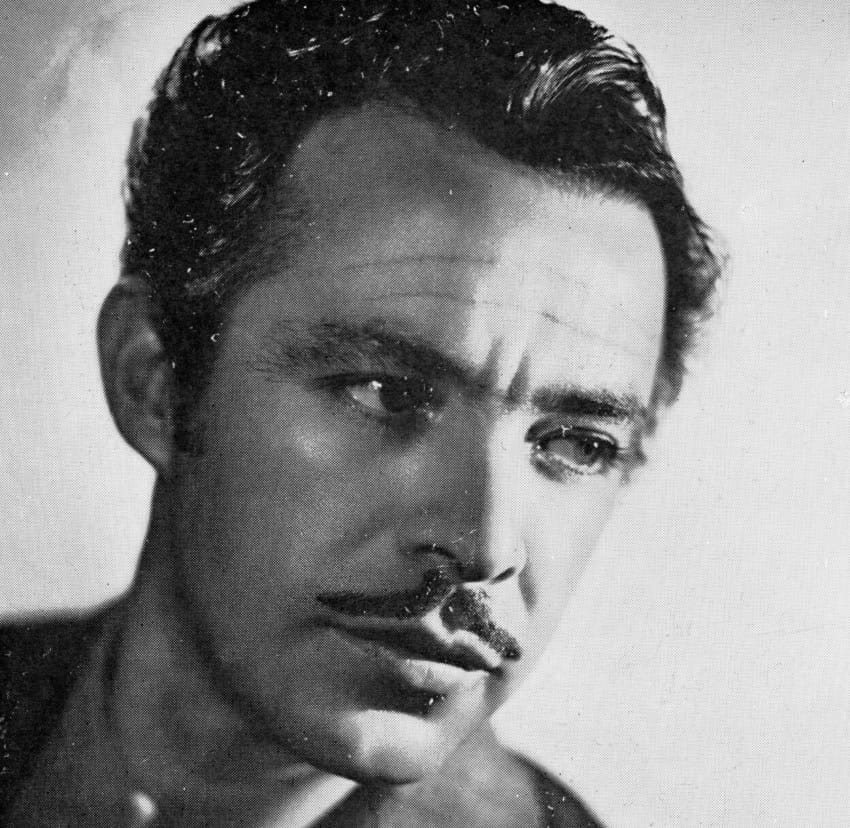
Other comedians had already dressed up as pachucos, but only to mock them, using the slur pocho to mark their distance from “real” Mexicans. In their hands, the pachuco was a walking punchline.
Tin Tan inverted the formula. He didn’t perform the pachuco as a caricature; he played him as a protagonist — sly, charming, musically gifted, romantically successful and linguistically inventive. He was the hero of his own story. That, more than the zoot suit or the slang, is what scandalized cultural nationalists. José Vasconcelos — one of the architects of post-revolutionary national identity — denounced such foreign influences. To mix Spanish with English, to dress in foreign clothes and dance to foreign music, was, for him, a betrayal of the patria.
Octavio Paz, writing in “The Labyrinth of Solitude,” was more sophisticated but no kinder. For Paz, the pachuco was a figure of negation, defined by his refusal to belong to either culture that had produced him. His defiance was a kind of self-humiliation: “Su voluntad era la de no ser” — their will was not to be.
It’s one of Paz’s most quoted observations and also one of his most incomplete. Paz was looking at pachucos from the outside, as pathology. Tin Tan had grown up among them in Ciudad Juárez; he knew them as friends and neighbors, and carried that sensibility into Mexican mass culture with a generosity Paz, writing from California, could not see.
A radically modern way of being funny
On set, he improvised constantly, pushing directors to give him space “to do and undo” as he pleased. As critic Carlos Monsiváis noted, he didn’t leave a single word in peace: he twisted, stretched and jazzed the language until it broke into something new. He did the same with the camera — in an era when most actors behaved as if the audience were sealed off in the dark, Tin Tan looked straight into the lens, treating it as another character and the audience as an accomplice. The effect feels surprisingly modern: a proto-YouTube directness in the middle of the Golden Age of Mexican cinema.
Five films as an entry point
Tin Tan made more than 100 films. A handful are enough to open the door:
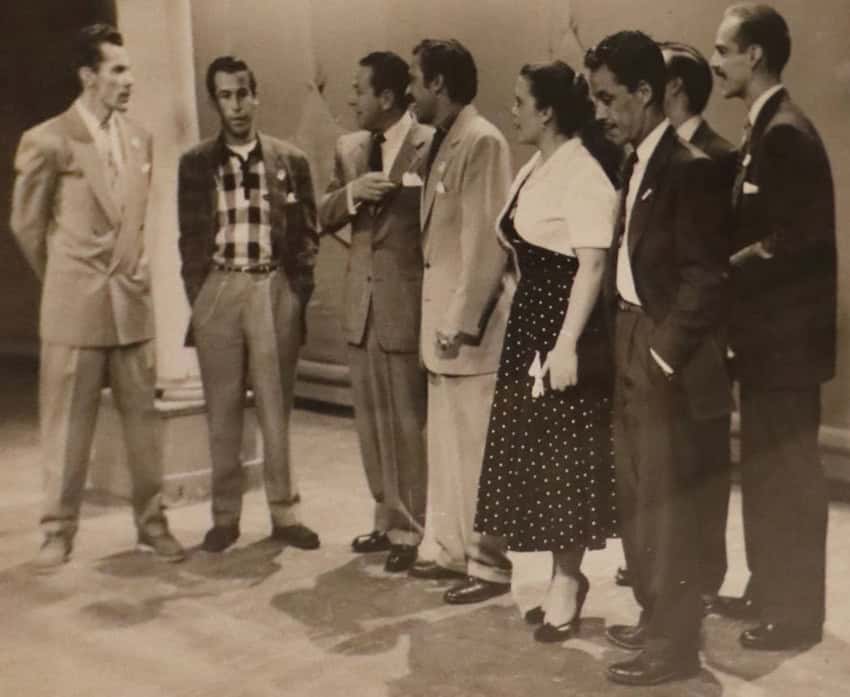
- “El hijo desobediente”: His first leading role, and the debut of actress Marga López. Watch it to see him still working out the character.
- “Calabacitas tiernas”: Directed by Gilberto Martínez Solares — his most important collaborator — this 1949 film is the one that made him a star.
- “El rey del barrio”: If you only watch one Tin Tan film, make it this one. He plays a railway worker by day and the leader of a hopeless band of thieves by night, a Robin Hood of the vecindad whose schemes collapse with the elegance of a Buster Keaton routine. This is widely regarded as one of the great achievements of Mexican cinema.
- “El ceniciento”: A 1951 parody of Cinderella featuring one of the most joyful dance sequences of his career, set to Beny Moré’s “Dónde estabas tú.”
- “El revoltoso”: A meddlesome shoeshine boy gets entangled in a plot that lands his girlfriend in jail — a reminder that Tin Tan’s characters lived in the barrio, fought for the barrio and never aspired to leave it.
The other voice you already know
Almost every Mexican parent eventually learns a small, delightful fact: Tin Tan is the Spanish-language voice of Baloo in Disney’s “The Jungle Book“ (1967) and of Thomas O’Malley in “The Aristocats” (1970). Listen to Baloo singing “Busca lo más vital” and you’ll hear it immediately — the rasp, the swing, the way he hangs slightly behind the beat, turning “vital” into a word that carries an entire philosophy of life. This is why Mexicans of a certain age sometimes become unexpectedly emotional during an old Disney cartoon. They’re not crying about a bear. They’re remembering Tin Tan.
A legacy that took its time
Tin Tan died on June 29, 1973, at age 57, from complications related to cirrhosis and pancreatic cancer. He left no fortune. One of the few formal honors he received in his lifetime was the Virginia Fábregas Medal, awarded for 25 years of professional service.
The rest came later. Today, the verb tintanear circulates in Mexican Spanish alongside Mario Moreno’s cantinflear. Where cantinflear means to talk in circles and say nothing, tintanear is its opposite: to express everything by mobilizing every available resource. Tin Tan was not corrupting Spanish; he was expanding it. Words he popularized — chido, chale, carnal, nel, ya sábanas — are now so embedded in Mexican Spanish that removing them would feel like amputating the language itself.
And that hybrid border identity Paz once treated as a symptom? It has quietly become the dominant cultural reality of a continent. Around 37 million people of Mexican descent live in the United States. Spanglish is the everyday language of an enormous demographic. Zoot suits hang in museums; pachucos are studied in Chicano Studies departments; the grandchildren of those young men beaten in Los Angeles in 1943 now run cities, write novels and win Oscars.
On a Saturday night in a dance hall in Tepito, you can still find men in their seventies and eighties wearing zoot suits and two-tone shoes. Ask them where the look came from and they won’t say Los Angeles or Cab Calloway. They’ll say: Tin Tan.
That, in its way, is the deepest kind of immortality — when a person’s name stops referring only to him and starts referring to a way of being in the world. And for the record: in 2026, Tin Tan has more monthly Spotify listeners than Sammy Davis Jr. — 710,700 to 636,500. The pachucos, it seems, are still very much alive in the algorithm.
Maria Meléndez writes for Mexico News Daily in Mexico City.
