
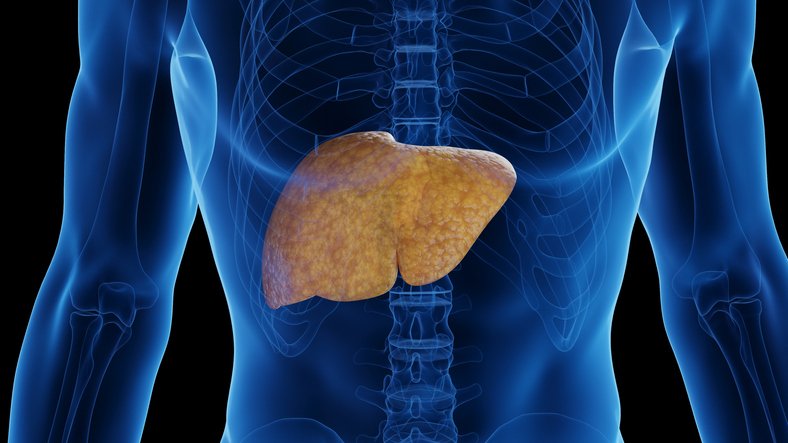
Madrigal Pharmaceuticals, maker of the first FDA-approved medicine for the fatty liver disease MASH, has been exploring combinations of that small molecule with other drugs as a way to potentially achieve even greater patient benefit. The strategy has a new piece with Madrigal securing rights to a clinical-stage RNA therapy from Arrowhead Pharmaceuticals.
Madrigal announced Tuesday that it has licensed rights to Arrowhead’s ARO-PNPLA3, a small interfering RNA (siRNA) therapy. A siRNA therapy uses small pieces of RNA to stop production of a disease-causing protein. This approach first achieved clinical and regulatory validation in rare liver diseases. A siRNA therapy for metabolic dysfunction-associated steatohepatitis, or MASH, could bring the modality to a much broader patient population.
Arrowhead’s ARO-PNPLA3 is designed to target PNPLA3, a gene that when mutated, contributes to the progression of MASH, a disease in which fat buildup in the liver leads to inflammation and fibrosis of the organ. In Phase 1 testing, Arrowhead reported its siRNA therapy led to a 46% reduction in liver fat in patients who inherited the genetic mutation from both parents. The results also showed the drug was safe and well tolerated. Detailed Phase 1 results were published in 2024 in the New England Journal of Medicine.
ARO-PNPLA3’s early clinical testing was conducted by Johnson & Johnson, which developed the therapy under a collaboration with Arrowhead that began in 2018. In 2023, a pipeline reprioritization led J&J to end the program and return rights to the therapy to Arrowhead.
Madrigal’s Rezdiffra has experienced strong market uptake since its FDA approval in MASH. For 2025, the product’s first full year on the market, the company reported $958.4 million in revenue from the drug. Rezdiffra is an oral small molecule designed to target and activate THR-beta, a receptor in the liver that mediates metabolic activity. The company frames this daily pill as the foundational piece of a MASH strategy exploring combinations with other drugs. Those drugs are coming from business deals.
Last July, Madrigal licensed a preclinical oral GLP-1 agonist from CSPC Pharmaceutical Group for $120 million up front. In January, Madrigal paid Pfizer $50 million up front to license ervogastat, which inhibits a target called DGAT-2 to reduce triglycerides in the liver. The following month, Madrigal made its first foray into genetic medicines, paying $60 million up front to license preclinical siRNA programs from Suzhou Ribo Life Science Co. The targets of these siRNA therapies remain confidential.
The Arrowhead deal has Madrigal paying $25 million up front with up to $975 million more tied to the achievement of milestones. Arrowhead would also receive royalties from Madrigal’s sales an approved and commercialized ARO-PNPLA3. In the announcement of the licensing agreement, Madrigal CEO Bill Sibold said MASH is a complex disease that has multiple drivers, and the company believes patients will benefit from therapies that target key genetic risk factors. Those risk factors include the PNPLA3 mutation, which is found in about 30% of MASH patients with moderate-to-advanced fibrosis. This mutation is also highly prevalent in the Hispanic population.
In a research note, Leerink Partners analyst Thomas Smith said the Arrowhead deal is economically prudent with a modest upfront fee considering that the drug has established proof of concept and demonstrated safety in Phase 1 testing. He added that the Arrowhead drug is a logical combination partner with Rezdiffra.
“We continue to view [Madrigal] as the clear leader in MASH with optionality to pursue double or triple combos / [fixed-dose combinations] over time, and see today’s deal as further reinforcing both the company’s pipeline depth and Rezdiffra’s franchise durability via potential IP/exclusivity extension on co-formulations,” Smith said in the note.
Madrigal will likely have more to say about its latest business deal on Wednesday during the company’s conference call to discuss first quarter 2026 financial results.
Image: Sebastian Kaulitzki/Science Photo Library, Getty Images
