
Key Points
- There are six different rating systems on manuka honey labels. Only two of them tell you something meaningful about antibacterial potency. The others measure purity, pollen count, or nothing independently verified at all.
- UMF is the most comprehensive and trustworthy system. It tests four compounds simultaneously and is regulated by an independent New Zealand nonprofit. It is the one rating worth prioritizing.
- MGO is a reliable secondary measure but tests only one compound. A jar with only MGO on the label has not been independently verified to the same standard as a UMF-certified jar.
- KFactor, BioActive, and Active labels do not measure antibacterial potency. A KFactor number and a UMF number cannot be compared directly. They measure entirely different things.
- For everyday wellness, UMF 10 from a licensed producer is the best value starting point. For skin and targeted use, UMF 15 or above. The grade should match the job.
The manuka honey buying guide most people need does not exist yet. There are plenty of articles explaining what UMF means. There are brand pages telling you their system is the best one. What is missing is a clear, editorially independent guide that explains every rating system on the market, which ones actually measure what they claim, which ones are misleading, and how to use that information to buy a jar you can trust.
This is that guide. We have no label to sell and no grading system to defend.
Here is exactly what each number on a manuka honey jar means.
Why There Are So Many Different Manuka Honey Ratings
The short answer is that the manuka honey market grew faster than any single standard could control it. When scientists first identified the unique antibacterial properties of manuka honey in the 1980s, the measure used was called Non-Peroxide Activity (NPA). From there, the industry developed multiple competing systems, some rigorous and independently verified, others created by individual brands for marketing purposes.
Today a consumer standing in front of a shelf of manuka honey jars might see UMF, MGO, MGS, NPA, KFactor, BioActive, or Active on the label, sometimes in combination, sometimes alone. These numbers look similar but they measure very different things. Some measure potency. Some measure purity. Some measure pollen count. And some measure nothing independently verified at all.
Understanding the difference is the most important thing you can do before spending $40 to $200 on a jar. Our full guide to why manuka honey is so expensive explains the pricing picture. This guide explains what the labels actually mean.
The Two Categories of Manuka Honey Numbers
Before diving into each system, it helps to understand that all manuka honey numbers fall into one of two categories.
The first category is full grading systems. These measure multiple compounds in the honey and typically involve independent third-party testing and certification. UMF and MGS fall into this category. They test for more than one marker and give you a more complete picture of the honey’s quality, authenticity, and potency.
The second category is single compound measurements. These measure one specific chemical marker in the honey, typically MGO or NPA. They are useful but incomplete because they tell you only one part of the story. A jar with only an MGO number has not been independently verified for authenticity, freshness, or shelf life the way a UMF-certified jar has.
Then there is a third unofficial category: marketing labels. KFactor, BioActive, and Active labels belong here. They do not measure antibacterial potency at all and should be treated with significant skepticism.
If a jar does not display a UMF trademark from a UMFHA-licensed producer, or a verifiable MGO concentration from a reputable brand, it has not been independently tested to the standards that make manuka honey worth the premium. The label should show either a UMF number with the UMF logo, or an MGO number from a brand whose testing you can verify. Everything else requires scrutiny before you trust it.
Every Manuka Honey Rating System Explained
UMF — Unique Manuka Factor
UMF is the gold standard. It is the most comprehensive, most rigorously tested, and most independently verified rating system in the manuka honey market. It is regulated by the UMF Honey Association (UMFHA), an independent nonprofit organization formed by New Zealand beekeepers that licenses producers and funds ongoing scientific research into manuka honey.
A UMF rating tests for four specific compounds simultaneously:
- MGO (Methylglyoxal) — the primary antibacterial compound. The higher the MGO, the more potent the antibacterial properties.
- Leptosperin — a compound found only in genuine manuka flower nectar. Its presence confirms the honey is authentically from manuka and not blended with other floral sources or adulterated.
- DHA (Dihydroxyacetone) — the precursor to MGO. DHA converts to MGO over time during storage. The DHA level tells you how long the honey will maintain its MGO potency, which is effectively a shelf life indicator for the thing you are actually paying for.
- HMF (Hydroxymethylfurfural) — a freshness marker. High HMF indicates the honey has been overheated or stored too long, both of which reduce potency. A UMF rating will not be granted if HMF is too high.
Because it simultaneously verifies potency, authenticity, remaining shelf life, and freshness, UMF gives you more information in a single number than any other system. A UMF 10 jar from a licensed producer is not just telling you the MGO level. It is telling you the honey is genuinely from manuka, is fresh, and will maintain its potency throughout the shelf life stated on the jar.
UMF ratings run from UMF 5 to UMF 28 and above. UMFHA members represent nearly 70 percent of all exported retail packs of manuka honey from New Zealand, so the certified producer base is substantial.
UMF Grade at a Glance
| UMF Grade | MGO Equivalent | What It Means |
|---|---|---|
| UMF 5+ | ~83 mg/kg | Entry level. Genuine manuka, minimal functional antibacterial benefit. Good for general flavor and sweetening. |
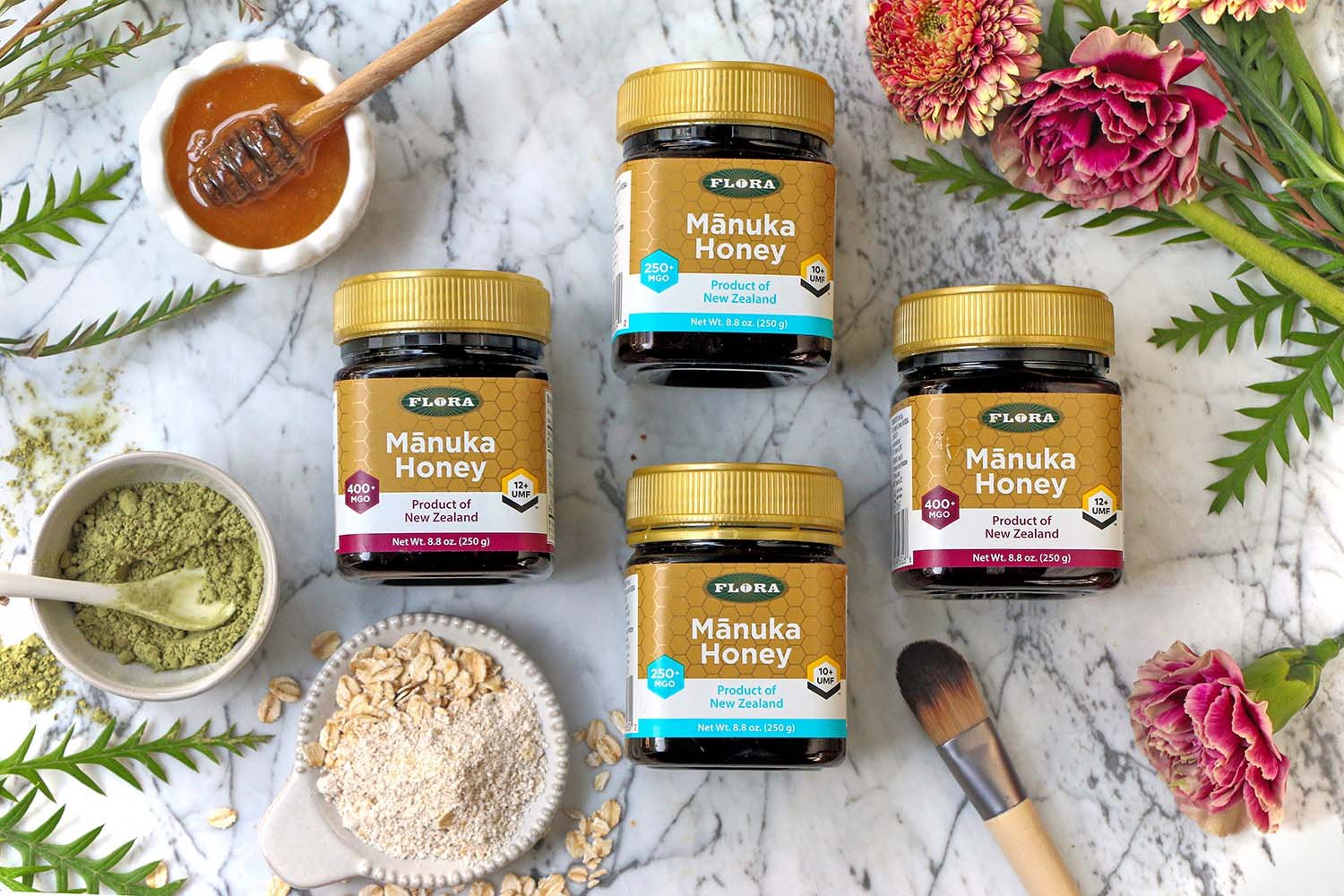
| UMF 10+ | ~263 mg/kg | Best everyday value. Daily wellness spoonful, warm drinks, gut support, cold preparations. |
| UMF 15+ | ~514 mg/kg | Recommended for skin and topical use. Face masks, spot treatments, sore throat support. |
| UMF 20+ | ~829 mg/kg | High potency. Targeted topical applications. Not necessary for daily consumption. |
| UMF 25+ | ~1200+ mg/kg | Ultra-rare, ultra-potent. Represents a very small fraction of total manuka production. Reserve for specific targeted uses. |
MGO — Methylglyoxal
MGO is the most common number you will see on manuka honey labels globally, and it is a meaningful measure of one important thing: the concentration of methylglyoxal in the honey in milligrams per kilogram. Since MGO is the primary compound responsible for manuka honey’s unique antibacterial properties, this is genuinely useful information.
The limitation of MGO as a standalone rating is that it measures only one compound. It does not verify that the honey is authentically from manuka (no Leptosperin test), does not tell you how long the MGO potency will last (no DHA measurement), and does not confirm freshness (no HMF check). There is also no independent governing body overseeing MGO claims the way UMFHA oversees UMF claims, which means the number on the label is the brand’s own claim rather than an independently verified fact.
That said, MGO from a reputable producer is still a meaningful and useful number. Brands like Manuka Health have built credible MGO grading systems with genuine lab testing behind them. The issue is not that MGO is wrong. It is that without independent verification, you are trusting the brand rather than a third party.
A practical note: MGO numbers and UMF numbers are not directly interchangeable. MGO 263 roughly corresponds to UMF 10, but the UMF rating also accounts for three additional factors that the MGO number does not reflect. A jar showing MGO 263 is not equivalent to a UMF 10 jar in terms of total verified quality.
NPA — Non-Peroxide Activity
NPA was the original measure of manuka honey’s unique antibacterial properties, developed by Professor Peter Molan at Waikato University in New Zealand in the 1980s. It measures the antibacterial activity of the honey after hydrogen peroxide has been neutralized, which isolates the activity specific to manuka and not shared by other honeys.
NPA values align numerically with UMF grades: an NPA of 10 corresponds to UMF 10. In the United Kingdom, NPA is a common label alongside MGO and functions as a reliable potency measure. It is not as comprehensive as UMF since it measures one activity rather than four compounds, but it is a legitimate and meaningful number when it appears on a label.
NPA is less common on US labels than UMF or MGO but worth understanding if you encounter it.
MGS — Molan Gold Standard
MGS was created in honor of Professor Peter Molan, the New Zealand scientist who first identified manuka honey’s unique antibacterial properties. It is tested and certified by accredited laboratories under the ISO 17025 standard, which means it has genuine independent oversight behind it.
The MGS system measures both MGO and DHA levels, making it more comprehensive than a standalone MGO rating. A jar must have a minimum of MGO 100 mg/kg to qualify for an MGS grade, placing the entry point at a meaningful potency level. From there the scale rises with higher MGO concentrations. MGS is less widely used than UMF or MGO but is a trustworthy rating when you encounter it from a reputable producer.
KFactor — Wedderspoon’s Proprietary System
KFactor is a rating system created by and used exclusively by one company: Wedderspoon. It does not measure MGO, NPA, Leptosperin, or any of the compounds that drive manuka honey’s antibacterial properties. What KFactor measures is pollen count, specifically what percentage of the pollen in the honey came from manuka flowers, alongside five general quality pillars including non-GMO status, traceability, and absence of pesticides and antibiotics.
These are legitimate quality indicators in a general sense, but they tell you nothing about the antibacterial potency of the honey you are buying. A KFactor number and a UMF number cannot be compared directly because they measure entirely different things. A high KFactor number indicates a high pollen percentage from manuka flowers and a commitment to general quality standards. It does not indicate high MGO concentration or strong antibacterial activity.
There is an additional authenticity concern with pollen-based systems: manuka and kanuka pollen are visually identical under a microscope. A pollen count cannot distinguish between the two plants, and kanuka does not have the same NPA properties as manuka. A pollen-based certification system cannot guarantee what a Leptosperin test can.
Wedderspoon is a reputable company and their honey is a reasonable choice for general consumption. But if you are buying manuka honey specifically for its functional antibacterial properties, KFactor alone is not sufficient verification. Look for UMF or verified MGO alongside it.
BioActive and Active Labels
BioActive and Active are the labels most worth being skeptical of. They are not standardized grading systems. They are marketing terms applied by individual brands without a consistent, independently verified standard behind them.
In a UK store in 2013, three manuka honey products were found labeled “12+ active,” “30+ total activity,” and “active 12+” respectively, using different definitions for the same style of number. None of the three were labeled for the specific non-peroxide antimicrobial activity that makes manuka honey unique. This confusion was documented and has not been fully resolved in the years since.
A related label you may encounter in the UK is Total Activity (TA), which measures the combined peroxide and non-peroxide antibacterial activity of the honey. Since regular honey already has peroxide-based antibacterial activity, a high TA number does not mean the honey has high non-peroxide MGO-driven activity specific to manuka. A Total Activity 20 label is not equivalent to a UMF 20 or MGO 829 jar. It is a measure of combined activity that does not isolate what makes manuka honey distinct.
A jar labeled BioActive 24, Active 16, or Total Activity 20 tells you very little you can verify about manuka-specific potency. Look for UMF or verified MGO from a verifiable source instead.
How All the Systems Compare
| System | Tests MGO? | Tests Authenticity? | Independent Body? | Trust Level |
|---|---|---|---|---|
| UMF | Yes | Yes (Leptosperin) | Yes (UMFHA) | Highest |
| MGS | Yes | Yes | Yes (ISO 17025) | High |
| MGO | Yes | No | No | Medium (brand-dependent) |
| NPA | Indirectly | No | No | Medium |
| KFactor | No | Partially (pollen) | No (brand only) | Low for potency |
| BioActive / Active | Sometimes | No | No | Low. Not standardized. |
How to Actually Buy Manuka Honey
Now that you understand what each system measures, here is the practical buying framework.
Step 1: Look for UMF First
Start with UMF. It is the only system that simultaneously verifies potency, authenticity, freshness, and shelf life from an independent body. Look for the UMF logo on the label and a license number from a UMFHA-certified producer. You can verify any producer’s license directly on the UMFHA website before you buy.
Step 2: If No UMF, Look for Verified MGO from a Reputable Brand
If a UMF-certified product is not available or is outside your budget, MGO from a reputable producer is a reasonable second choice. Brands like Manuka Health have established credible MGO grading with genuine independent lab testing. Check whether the brand publishes certificates of analysis or batch testing results. If they do not, treat the MGO claim with caution.
Step 3: Match the Grade to the Job
This is where most first-time buyers go wrong. They buy the highest grade they can find and use it for everything including cooking, which destroys the MGO and wastes the premium entirely. Our guide to how to use manuka honey covers every application in detail, but the simple rule is: UMF 10 for daily consumption and warm drinks, UMF 15 and above for skin and targeted use.
Step 4: Be Skeptical of Low Prices for High Grades
A UMF 20 jar from an unknown producer at a discount price is almost certainly not what it claims to be. The counterfeiting and mislabeling problem in the manuka honey market is significant. If the price seems too good for the claimed grade, it probably is. More manuka honey is sold globally each year than New Zealand produces, and the difference ends up on supermarket shelves with labels that look legitimate. Stick with licensed producers whose certification you can verify.
Step 5: Ignore KFactor, BioActive, and Active as Potency Measures
If the only rating on a jar is KFactor, BioActive, or Active, you cannot determine the antibacterial potency of the honey from that number alone. These labels are not useless in every context, Wedderspoon’s general quality standards are legitimate, but they are not measures of the thing that makes manuka honey worth the premium. If potency matters to you, look for UMF or MGO alongside any of these labels.
Trusted Brands to Know
These brands carry verifiable UMF certification and are consistently referenced by independent reviewers and consumer organizations:
- Comvita — one of the largest and most established UMF-certified producers. Strong traceability and consistent testing standards.
- Manuka Health — uses their own MGO grading system with credible independent lab testing. Also produces UMF-certified products.
- Manukora — UMF-certified with QR code batch traceability linking to exact hive location, beekeeper, and MGO test results. B-Corp certified.
- Wedderspoon — uses KFactor rather than UMF. Reputable for general quality but KFactor does not verify antibacterial potency. A reasonable choice for flavor and general sweetening.
- Flora Health — the brand we use across our Better Living manuka honey collection. UMF-certified and consistently sourced from New Zealand.
Every UMF-certified jar carries a license number from the producer. You can verify this number directly on the UMFHA website. If the number does not appear in their licensed producer database, the certification is not legitimate. This takes about thirty seconds and is the single most reliable thing you can do before buying a jar you have not purchased from before.
Frequently Asked Questions
What is the difference between UMF and MGO?
UMF tests four compounds simultaneously and is verified by an independent nonprofit. MGO tests one compound and has no independent governing body. Both measure the same primary antibacterial agent, but UMF also verifies authenticity, freshness, and shelf life in a single rating. A jar showing only MGO has not been independently verified to the same standard.
Is KFactor 16 the same as UMF 16?
No. These numbers cannot be compared directly because they measure entirely different things. KFactor 16 indicates a monofloral manuka honey based on pollen count, certified by the New Zealand government as genuine manuka honey, but it does not show an antibacterial potency rating. UMF is a potency measure. KFactor is a purity and quality measure. The two systems serve different purposes and their numbers are not on the same scale.
Can I convert MGO to UMF?
Not precisely. There are approximate equivalence tables, and MGO 263 roughly corresponds to UMF 10 in terms of methylglyoxal concentration. But UMF accounts for three additional factors that MGO does not, so the numbers are not truly interchangeable. An MGO-rated jar at a given concentration is not equivalent in total verified quality to a UMF-rated jar at the corresponding grade.
Which manuka honey grade should I buy?
Match the grade to the application. UMF 10 is the best value starting point for daily wellness, warm drinks, and cold preparations. UMF 15 or above for skin treatments and face masks. UMF 20 and above for maximum potency targeted applications. There is no benefit to buying UMF 20 for everyday sweetening. The MGO is destroyed by heat anyway and the premium is wasted.
What does BioActive mean on a manuka honey label?
BioActive is a marketing term without a standardized definition or independent verification requirement. It may refer to total antibacterial activity including hydrogen peroxide, which is a property of all honeys and not specific to manuka. It should not be used as your primary purchasing criterion. Look for UMF or MGO from a verifiable source instead.
Does Australian manuka honey have the same ratings as New Zealand manuka honey?
Australian manuka honey has its own certification body, the Australian Manuka Honey Association (AMHA), with a simpler grading system that essentially confirms whether the honey meets a minimum MGO threshold. The AMHA system is much less detailed than UMF. An AMHA-certified Australian manuka honey is roughly equivalent in potency to a UMF 10 or below, though there is no way to determine the exact grade without additional testing. New Zealand UMF certification remains the more comprehensive standard.
For everything you need to know about the benefits each grade delivers, see our manuka honey benefits guide. For the practical side of using it correctly once you have bought it, see how to use manuka honey. And for our complete collection of manuka honey recipes, beauty treatments, and wellness guides, everything is organized at The Better Living Manuka Honey Guide.
Better Living may earn commissions through affiliate links and may occasionally feature sponsored or partner content. If you make a purchase through our links, we may receive a small commission at no cost to you.
