
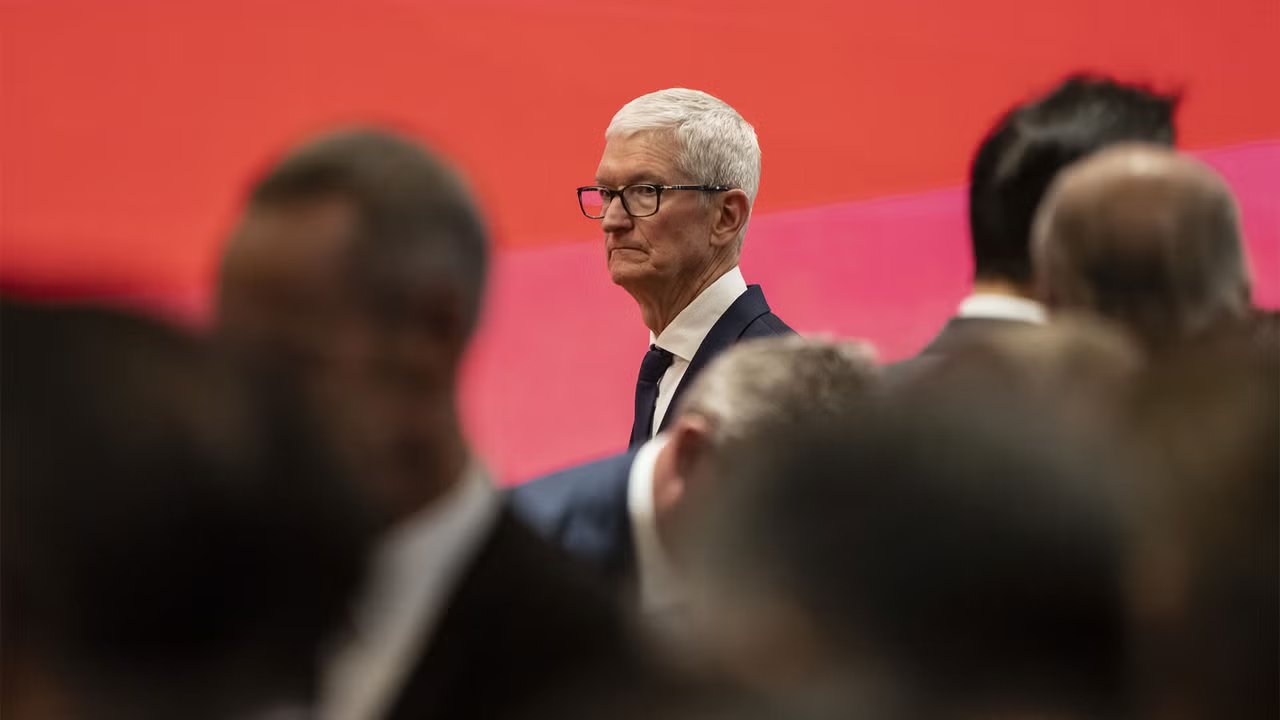
If you’re in the market for a new Apple device later this year, you should prepare yourself for a price increase. That’s not speculation—it’s coming right from CEO Tim Cook’s mouth.
This week, Apple’s outgoing chief executive confirmed that the company will raise prices, calling such rises “unavoidable.” Here’s why, and potentially how much more you might pay for a new iPhone when it ships in September.
What’s happened?
Yesterday, outgoing Apple CEO Tim Cook confirmed that the company will be raising prices on its devices. Cook made the comments to the Wall Street Journal. The reason? The AI-fueled memory chip shortage crisis that is engulfing the industry.
“Unfortunately, price increases are unavoidable,” Cook told the Journal. “We’re doing our best to mitigate the huge increases that are being passed to us, and we’ve been trying to shield our customers from the increases, but the situation has become unsustainable.”
The memory chip crisis is not a new phenomenon. It has been going on for well over a year now, but has especially accelerated since the beginning of 2026. At the heart of the crisis is industry demand for RAM and storage chips used by AI servers.
AI companies are trying to get their hands on as many of these components as possible so they can pack even more AI servers into the data centers that are being built around the world, with tech hyperscalers like Nvidia, Amazon, Google, Meta Platforms, and OpenAI leading the way.
Because of these companies’ insatiable demand for memory and storage chips, prices have skyrocketed—and memory makers have shifted their manufacturing capabilities to favor the more expensive chips AI servers require over the less costly ones used in consumer devices.
As a result, the chips used in consumer devices are in much shorter supply, which means it costs device manufacturers like Apple more to acquire them.
Until now, Apple has either absorbed the increased costs or cut entry-level devices from its lineup, so consumers haven’t borne the burden of rising memory chip prices.
But as Cook said, that course of action is no longer sustainable.
How much could the new iPhone 18 Pro cost?
The big question on Apple consumers’ minds now is how much more they will need to pay for Apple devices after the company confirmed it will raise prices. Unfortunately, there is still much uncertainty over the answer.
Cook didn’t reveal which Apple devices would see price increases or by how much. But given that memory and storage chips are a critical component of every device Apple sells, it’s likely all Apple devices will see price increases in the near future.
And that’s bad news for those who were planning to buy the new iPhone 18 Pro or iPhone 18 Pro Max this fall.
Both phones, the successors to the iPhone 17 Pro and iPhone 17 Pro Max, are expected to go on sale in September. (The iPhone 18, the successor to the iPhone 17, is not expected to be unveiled until Spring 2027.)
- Currently, the iPhone 17 Pro costs $1,099 (256GB), $1,299 (512GB), or $1,499 (1TB).
- The iPhone 17 Pro Max costs $1,199 (256GB), $1,399 (512GB), $1,599 (1TB), or $1,999 (2TB).
As the Journal notes, research firm TechInsights said Apple would need to raise prices on its Pro iPhone models by $270 to maintain its current margins despite memory price hikes.
If Apple did this, it means the iPhone 18 Pro would start at a staggering $1,369. The iPhone 18 Pro Max would start at $1,469. Both of those prices would be for a phone with just 256GB of storage.
Whether that significant a price increase occurs remains to be seen.
Still, it doesn’t seem likely that Apple will pass on the full increase in memory and storage costs to its customers. The company may find cost efficiencies elsewhere, allowing it to absorb more of the increases in memory and storage costs rather than having consumers bear the full burden.
But given Cook’s announcement that Apple will raise its prices, at least a $100 price hike for the new iPhone 18 Pro models seems almost a certainty. Even a $200 price increase seems plausible.
Chipmaker stocks rise
The stock prices of four of the biggest memory and storage manufacturers are rising in premarket trading after Cook’s comments yesterday. Currently:
- Micron Technology, Inc. (Nasdaq: MU): up 4.4%
- Sandisk Corporation (Nasdaq: SNDK): up 3.7%
- Western Digital Corporation (Nasdaq: WDC): up 5.6%
- Seagate Technology Holdings plc (Nasdaq: STX): up 4%
While the stock price boost for these companies may not be directly related to Cook’s comments, the gains suggest that investors believe demand for memory and storage components will continue to boost the respective manufacturers’ bottom lines.
As for Apple Inc (Nasdaq: AAPL), as of this writing, the company’s stock price is relatively flat, up around 0.3% in premarket trading.
As of yesterday’s close, since the year began, AAPL shares have risen nearly 9%, while memory and storage companies’ stock prices have skyrocketed.
Year to date, MU stock is up more than 265%, SNDK stock is up more than 725%, WDC stock is up more than 313%, and STX stock is up more than 287%.
