
A team of international scientists, including Mexican researcher Nora Vázquez Laslop, has discovered an antibiotic whose mechanism of action could open new ways to fight bacterial resistance to medicines, according to new research published in the science journal Nature.
Vázquez, acting professor at the Department of Pharmaceutical Sciences at the University of Illinois at Chicago, helped identify the compound manikomycin from soil bacteria (Streptomyces rimosus), known for decades for producing other antibiotics such as terramycin and oxytetracycline, one of the antibiotics in the tetracycline family.
Classic antibiotics usually act on the ribosome – the cellular structure that manufactures the proteins that the bacteria need to live – but manikomycin attaches to an area of the ribosome that had not previously been identified as a target for antibacterial antibiotics.
“This new antibiotic is amazing because it targets a site of the ribosome that has never been targeted by any other molecule before,” Dmitrii Travin, assistant professor of pharmaceutical sciences in the Retzky College of Pharmacy and one of the lead authors of the paper, told UIC Today.
By attaching to that area, manikomycin blocks normal ribosome movement and prevents the bacterial cell from making proteins that are essential or its growth and survival.
“None of the antibiotics currently used in clinical practice bind to that site on the bacterial ribosome,” Vázquez told the newspaper La Jornada. “Therefore, pathogenic bacteria have no way to defend themselves; they don’t know how because it’s something new.”
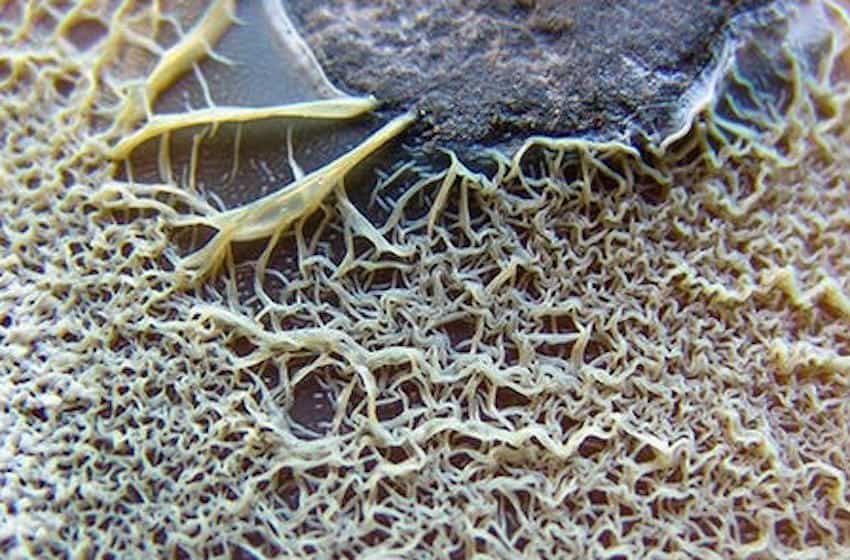
Manikomycin is naturally produced by Streptomyces rimosus, which also produces geosmin, the compound responsible for the smell of damp earth. Found globally, this bacterium plays an important role in soil health.

Although Streptomyces rimosus has been studied for over 70 years, researchers found that it still harbored previously undescribed compounds with antimicrobial activity, confirming that widely studied microorganisms can still contain valuable molecules that had gone unnoticed.
“It’s as if all you see on your plate is a piece of meat, and that’s what you want to eat; but if you move it a little bit, you’ll see the caviar,” Vázquez explained. “Imagine that this new methodology has led to the discovery of caviar.”
Manikomycin derives from the word manik, used in Hindi and Punjabi to refer to a precious stone, alluding to the fact that the compound is produced in small quantities but with considerable scientific value.
Although manikomycin cannot yet be considered an antibiotic ready for clinical use, researchers hope this finding will help chemists create stable analogs of it.
Mexico News Daily
