
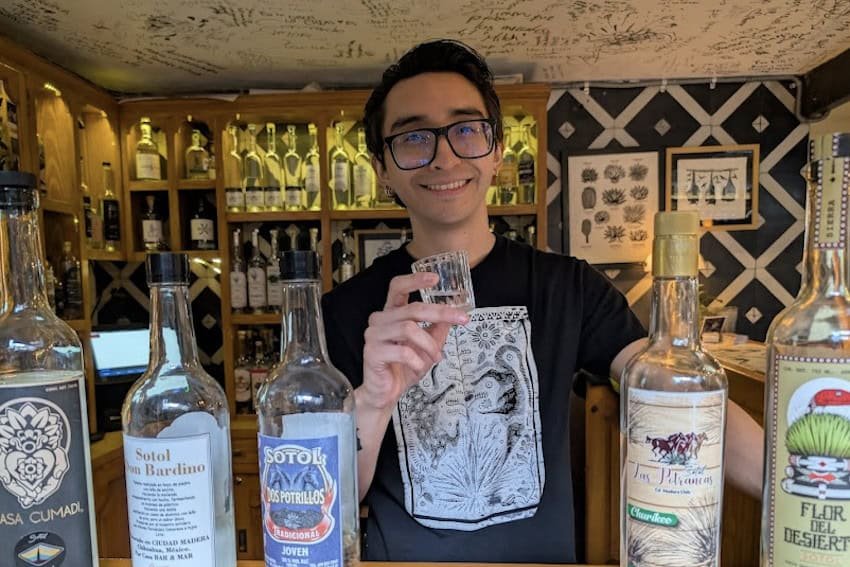
There are few spirits anywhere in the world that are as intimate and remain as familial and ancestral in craft, process and heritage as mezcal is in Mexico.
Nearly a decade ago, I explored the vibrant, multisensory mezcal offerings in Oaxaca, visiting small pueblos and palenques around the central part of the sprawling Pacific-side state. Though mezcal has a centuries-long history and has always been a deep-rooted part of Mexican identity, particularly in the arid, elevated communities where it is grown, my visit happened to coincide with an international boom in mezcal’s mainstream popularity. At the time, mezcal — both as a standalone spirit and as the base for cocktails inside trendy craft bars — felt especially contemporary, experimental and nascent. Nowadays, mezcal feels as ubiquitous as tacos or tequila, but there was certainly a time when that wasn’t the case. And as the global demand for mezcal has risen beyond the lunarsphere — leaving significant environmental concerns in its wake — the beverage’s appeal, consumption and availability have evolved and grown.
Mezcal in Mexico City
Mexico City, as always, is a microcosm of mezcal’s boom. In many ways, Mexico City is the primary gateway into mezcal’s acclaim: a confluent hub where both foreigners and locals can enjoy the spirit’s diverse complexity without having to leave the city’s boundaries or trek into the country’s far-flung outskirts (which, for the record, is equally worthwhile in its own ways).
In Mexico’s capital, families of intergenerational mezcaleros have passed along their traditions from not just Oaxaca, but also from states like Zacatecas, Puebla, Guerrero and Tamaulipas, where mezcal is also, albeit less visibly, cultivated. Meanwhile, the flourishing — if not oversaturated — amount of mezcalerias in Mexico City also gives the beverage a certain cool factor and cachet, particularly in its cosmopolitan format. Today, that’s more apparent than ever before.
“The truth is, the change has been enormous,” says Adair Robles, the director of Mezcalería Finca Robles in Roma Norte and Condesa, which opened in 2018 and 2025, respectively. Robles is a fourth-generation mezcal producer whose family is from Sola de Vega, Oaxaca, and boasts over 350 years of mezcal making in the sierras of Southern Oaxaca. Naturally, Robles serves his family’s own small-batch mezcal, also named Finca Robles, at his mezcalerias.
Mezcal’s rise in popularity and cachet
“A few years ago, mezcal still carried the stigma of being a harsh, somewhat rough-around-the-edges, almost niche spirit. Today, the story is completely different. It has evolved into something that people actively seek out, appreciate and respect, even outside of Mexico. Of course, this growth also brings its own set of challenges. Demand is constantly rising, which compels us to think critically about how to protect the agave plant, how to implement reforestation efforts and how to strike a balance between expansion and preserving the spirit’s essential nature.”
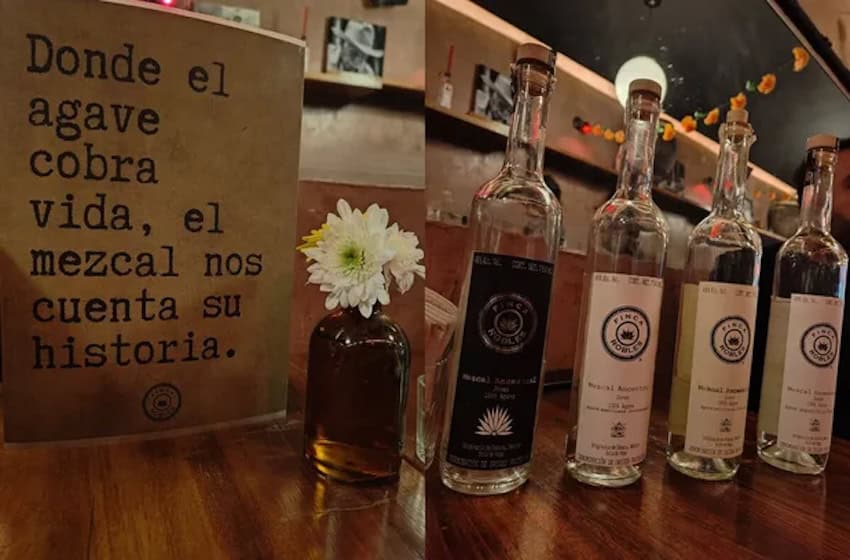
Mezcalería Finca Robles maintains an old school feel with its no frills decor and dimly lit spaces. Of course, you can order any of the family-made mezcals as a straight-up pour or as a rotating flight of caballitos. But they also offer a surprising array of cultural events (salsa dancing and West Coast hip-hop nights, for example) while keeping contemporary mixology at the forefront of their mezcal-based cocktails.

The philosophical basis of the mezcaleria is grounded in a sense of historical lineage and appreciation for the craft and, for lack of a better phrase, spirit of the spirit, rather than blindly pulling a mezcal bottle off the shelf without any context. They offer private tastings filled with informative explanations on the beverage, for those interested in learning more, as well as rotating art and photography exhibits, like “Ríos de Mezcal,” a black and white photo series of Oaxacan landscapes. Add a round of chips and guacamole with chapulines, esquites con tuétano or Oaxacan tlayudas and memelitas to complement the intensity of each mezcal bottle.
An increasing appreciation for the finer aspects of the spirit
“In the past, people would simply walk in and ask for a mezcal, and nothing more,” Robles says. “Now, they ask what type of agave it’s made from, which region it comes from and how it was produced. There is a much deeper interest in understanding the story behind every bottle, from the craftsmanship of the maestro mezcalero to the specific distillation method used. Ultimately, our role is to serve as a bridge. We introduce mezcal to them not merely as a beverage, but as something imbued with history, a specific origin and a tremendous amount of labor behind it.”
Robles reminds us of how earthly mezcal truly is: “In terms of environmental impact, we operate as a sustainable brand. We oversee the entire production chain, cultivating nearly 20 hectares of maguey, comprising approximately 50,000 plants. We allow harvested land to lie fallow for two years, and we leave 10% of our agave plants unharvested. We plant beans, corn and squash to nourish both the soil and the plants themselves, and we do not use any chemicals.”
There are plenty of other mezcaleros and mezcalerias in the city’s wide radius who would agree with Robles and his approach. As the beverage grows, its narrative and purpose need to be preserved, too.
How the Mexico City mezcal scene has changed
If anything, the autochthonous Mexican alcohol seemingly knows no limits and reaches far beyond any one definition. Victor Hugo Gonzalez Rodriguez (or, El Agave Santo) is a “mezcal storyteller,” currently based in Oakland, California, where he purveys rare and hard-to-find mezcal bottles as private tastings. Formerly, he was a mezcal director at Odin Mezcaleria — arguably the best commercial supplier of diverse artisanal mezcales in the San Francisco Bay Area.
Before immigrating to California in 2013, Gonzalez was raised in the Xochimilco neighborhood of Mexico City. He admits that at the time he wasn’t very familiar with mezcal, but he grew interested in the spirit later in his life, eventually leaving behind his job as a construction worker to explore mezcal traditions in Mexico. Nowadays, Gonzalez travels all over Mexico and treks into the mountainsides for days to learn about mezcal making with maestro mezcaleros, before returning to California with unmarked bottles and plentiful lore to disseminate.
When asked about Mexico City’s current mezcal atmosphere, he says it is significantly different from when he was growing up in the city. It’s everywhere now.
Where to sip and savor
He points me in the direction of some of his favorites: Casa Murcielago, a quaint mezcalería in Coyoacán with over 200 bottles at the ready; El Tigre Mezcal, which boasts a beautiful tasting room near Santa María la Ribera that focuses on Guerrero-produced mezcales, in particular; Tlecān, a hyper-famous Top 5 Bar in North America, which Gonzalez facetiously says can feel like an Aztec Disneyland in its gaudy presentation, but offers a world-class range of mezcales.
In the city’s historic center, there’s Gusto Histórico (located inside the Mercado de San Juan), a small joint where you can snack while imbibing a flight of agave distillates from various regions of Mexico; down the road, also in the city’s center, you’ll find Mezcaleria Cuish, an intimate tasting room that pours up rounds and delivers their Oaxacan-produced goods. For those on the go or who want to take something back home with them — even if home is in Mexico City or nearby — there’s Mis Mezcales in Roma Sur, with an impressive array of artful bottles from all over the Mexican republic.
Within Mexico City’s limits, these handfuls of mezcalerías have laid the groundwork to push the beverage’s profile and versatility forward — a culmination of old-world Mexican ingenuity and contemporary flavor.
Alan Chazaro is the author of “These Spaceships Weren’t Built For Us” (Tia Chucha Press, 2026), “Notes from the Eastern Span of the Bay Bridge” (Ghost City Press, 2021), “Piñata Theory” (Black Lawrence Press, 2020), and “This Is Not a Frank Ocean Cover Album” (Black Lawrence Press, 2019). He is a graduate of June Jordan’s Poetry for the People program at UC Berkeley and was selected as a Lawrence Ferlinghetti Poetry Fellow at the University of San Francisco. His work can be found in NPR, The Guardian, SLAM, GQ, L.A. Times, and more. He is currently based in Veracruz.
